 Many languages
Guides
Language
EnglishCurrency
US dollar · $On GetYourGuide you see prices in this currency.
Guide · The market
Omicho Market: how to eat your way through Kanazawa's kitchen
Omicho Market is where Kanazawa shops for dinner and where visitors come for breakfast. Here is how to time your visit, what to eat standing up, and where to sit down.
Check availabilityfrom $45 · cancel at no cost
Editorial team, kanazawafoodtour.comUpdated October 25, 2026Reading time about 6 minutes30 sources
Quick answer
- 01What it is
- A market of more than 170 stores, many of them fishmongers.1
- 02When to go
- Stores run about 9:00-16:00, each to its own clock.2
- 03What to order
- A kaisen-don: raw seafood over hot rice.3
- 04Crowded weeks
- Around November, when crab and yellowtail arrive.4
- 05With a guide
- Our food walk spends 1 hour here, from $45.
Kanazawa's kitchen for more than 300 years
The Kanazawa City Tourism Association dates Omicho Market to the Edo period and says it has been part of the city's food culture for more than 300 years.5 The market's own website puts it more simply: it calls itself the kitchen of the people of Kanazawa, a retail market that serves their everyday lives.6 Keep that in mind before you go. This is a working market where residents buy fish for supper, not a food hall built for visitors.
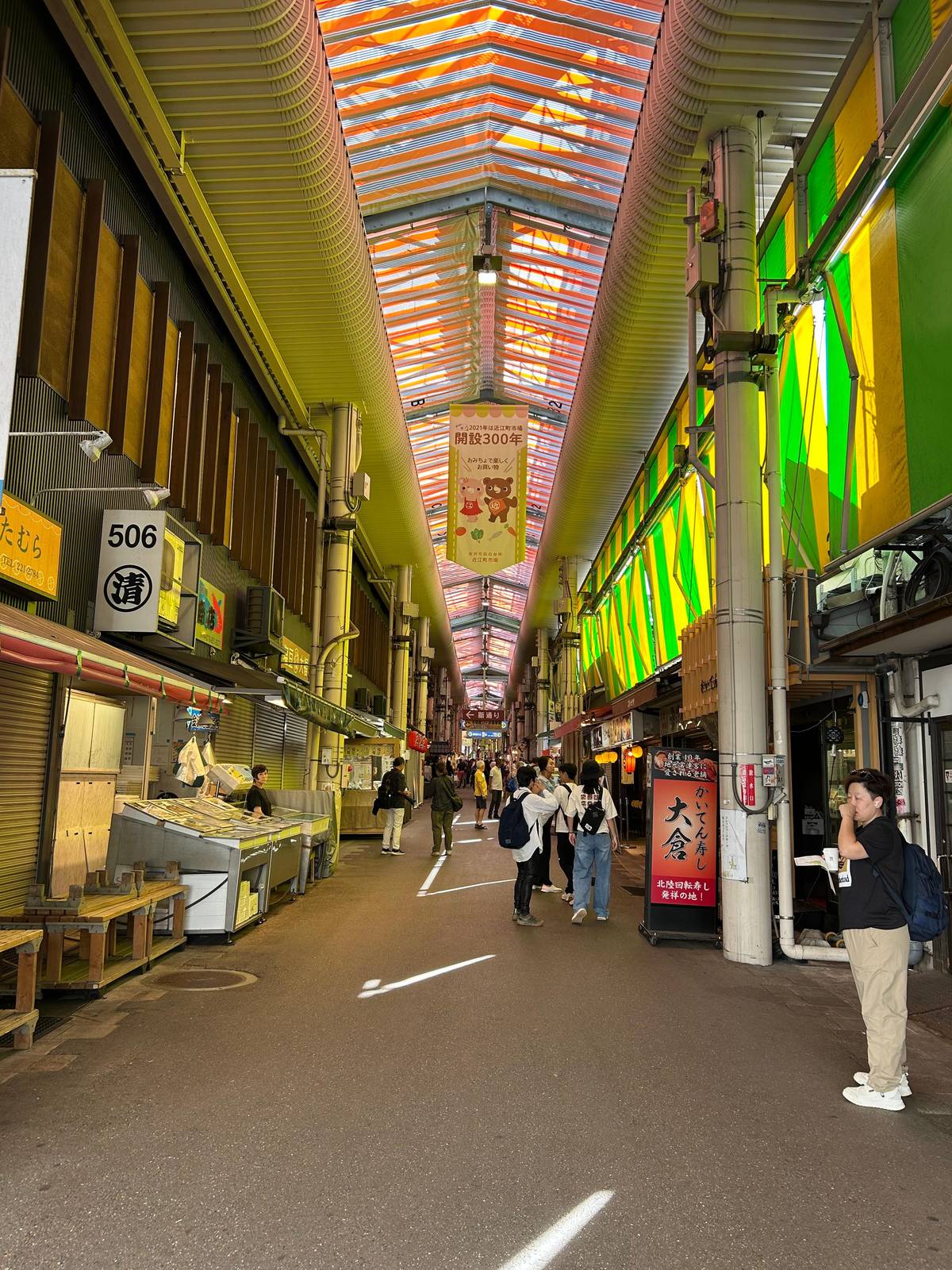
It is also bigger than it looks from the street. More than 170 stores fill its covered lanes, many of them fishmongers selling seafood from the Sea of Japan, alongside fruit and vegetable shops, marine product dealers, grocers, clothing stores and restaurants.17 JNTO lists fresh fish, meat, oysters, pickles, produce, sweets, sake and coffee among what you can buy.8
The market sorts its own shop list into fresh fish, fruit and vegetables, restaurants, meat, food and drink, and household goods.9 Walk it in that spirit, without a list of must-eats. Look at the fish counters first to see what the sea gave this week, then the produce, then decide where to eat. Shopkeepers call out to passers-by, the aisles are narrow, and a slow loop tells you more than any list.
A morning at Omicho
From the first queue to the last bite
-
Before 7 a.m.
A queue for nodoguro rice
Breakfast lines form before one restaurant opens.10
-
9:00
Stores start trading
The tourism association's hours begin; each store varies.2
-
Mid-morning
Graze the lanes
Croquettes, skewers and seasonal sashimi.
-
Lunch
Sit down for kaisen-don
Restaurants in and around the market serve it daily.3
-
Afternoon
Shops wind down
The association's listed hours end at 16:00.2
Omicho Market hours and the right time to arrive
The tourism association gives Omicho Market hours of 9:00-16:00, with the warning that each store keeps its own times, and says the market closes over the New Year holidays.2 JNTO describes the lanes as busy from 9 a.m. to around 5 p.m. every day.11 Read both as a guide rather than a timetable: a stall that sold out at lunch may already be hosing down its counter. Mornings give you the full display on ice and more room to talk with the shopkeepers, and the light under the arcade is kinder for photos.
Weekdays matter too. JNTO notes that many shops close on Wednesdays and Sundays, worth checking before you plan your only morning around the market.12 Some places open earlier for breakfast: a nodoguro rice restaurant on the market's south side draws a queue before its 7 a.m. opening.10 Arrive early if seafood for breakfast is the point of your trip.
Evenings are usually quiet, with exceptions. The market's own site announced an Omicho night market on Saturday 3 October from 17:30 to 20:30, with about 20 shops selling along the fresh-fish street.13 Events like that are announced on the official site, which is in Japanese, so a translated look at its news page before you travel is worth a minute.
The guided walk
Our food walk's itinerary, in minutes
min
What the market sells
Omicho's counters & what to look for
| Counter | What you find | Tip |
|---|---|---|
| Fishmongers | Sea of Japan seafood | See what came in |
| Produce | Local fruit & vegetables | Buy a single piece |
| Restaurants | Seafood bowls, nodoguro rice | Queue early |
| Food & drink | Pickles, sweets, sake | Ask before photos |
Shop types from the tourism association and JNTO; the photo advice comes from a market tour's operator.78
Three ways in
Market and teahouses, market only, or a tasting walk
Many languages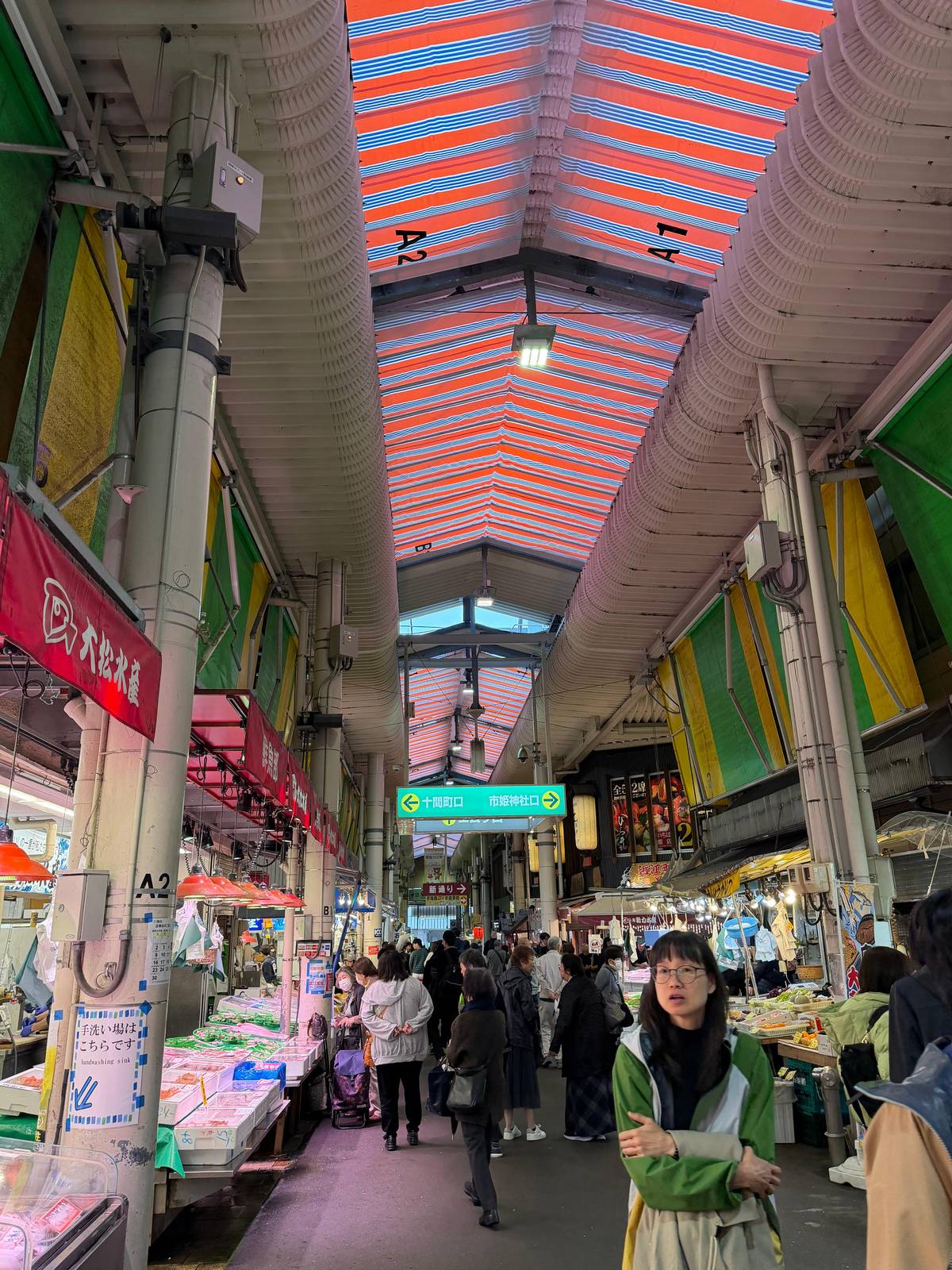 Market focus
 Most reviews
Tasting walk
Market, Kazuemachi, Higashi
- Length
- 2 hours
- Extra
- Wagashi tasting
- Price
- from $47
Decision helper
How should you do Omicho?
Pick by time, budget and appetite
Go early on your own
One nodoguro restaurant draws a queue before its 7 a.m. opening.10
Our food walk
The guide recommends food and souvenirs and shapes the route around you.
The Omicho market tour
2 hours in and around the market, from $49.
Come after 6 November
That is when the crab fishing ban lifts in Ishikawa.14
Check the shops first
JNTO says many of the market's shops close on those days.12
The sprawling market features more than 170 stores, including a large number of fishmongers that sell freshly caught seafood from the Sea of Japan.
Grazing from stall to stall
Much of the pleasure is eating on your feet. The listing for our food walk names what its guide steers you toward in the market: crisp croquettes, Noto beef steak skewers, grilled eel skewers and seasonal sashimi. Oysters are on sale here too, along with pickles and sweets.8 Point, pay, eat, and keep moving so the next person can reach the counter.
A market-only tour on GetYourGuide describes samples of freshly prepared seafood and fruit at stalls such as Oguchi Suisan and Fruits Sakano, with takeout and eat-in options. Its operator adds practical advice worth following on your own: most vendors take cash only, the lanes get crowded at weekends and on holidays, and you should ask before photographing a stall.
Keep your expectations about fruit honest. Japanese market fruit is sold as a gift item, beautifully packed, and a single perfect piece can be an event in itself. Buy a single ripe thing to eat on the spot rather than a box to carry around for the rest of the day, and let the seller pick it for you. And look for a bin or take your rubbish with you, since public bins are rare in Japanese cities.
Map
Where Kanazawa eats: the market, the chaya lanes and the port
Central Kanazawa from the station to Omicho Market, the teahouse districts by the Asano River and the Katamachi bars, then the soy sauce town of Ono by the port.
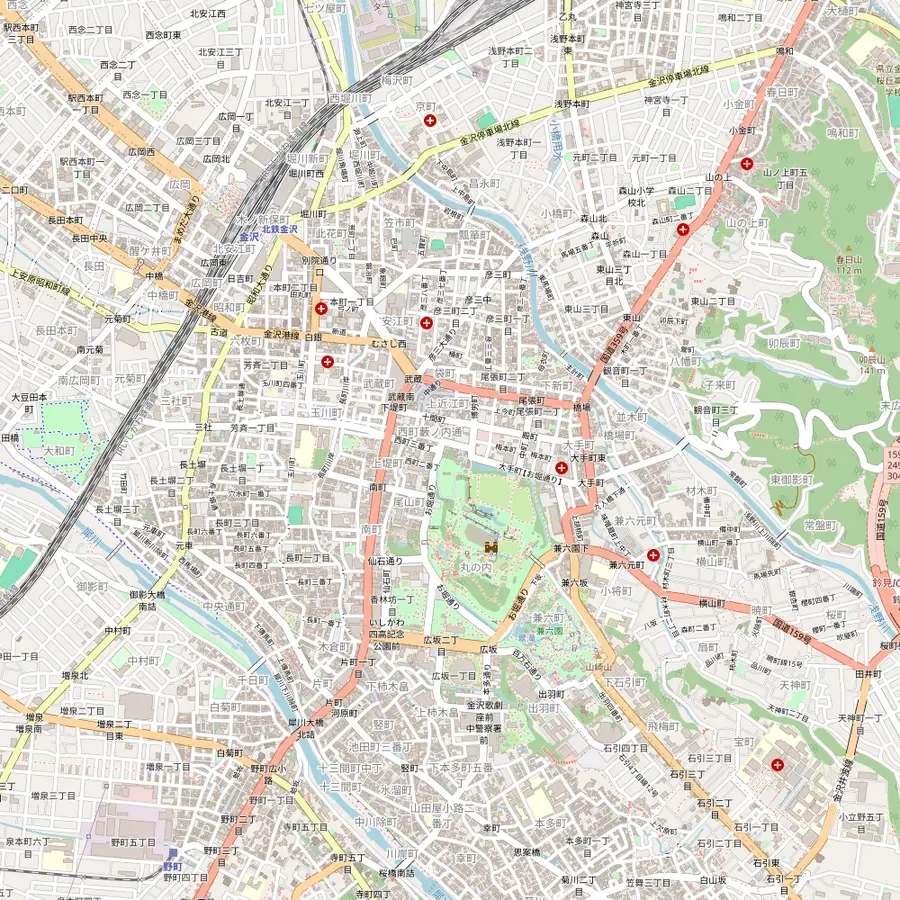 1Kanazawa Station2Starbucks at M'ZA3Omicho Market4Asanogawa Ohashi police box5Kazuemachi Chaya District6Higashi Chaya District7Korinbo8Katamachi
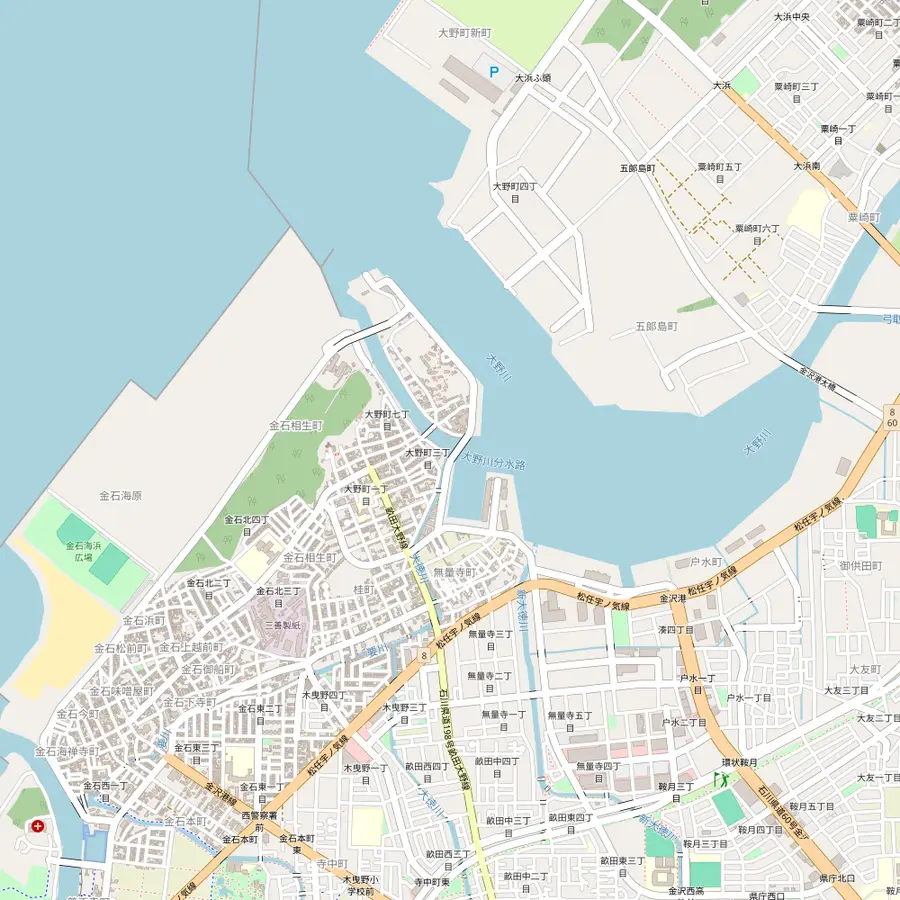 9Yamato Koji Park10Naogen soy sauce
- 1Kanazawa Station
About 2 hours 30 minutes from Tokyo Station on the Hokuriku Shinkansen; Omicho Market is a 15 to 20 minute walk or a short bus ride away.1516
In Google Maps ↗ - 2Starbucks at M'ZA
The food walk's meeting point: wait outside and the guide comes to greet you.
In Google Maps ↗ - 3Omicho Market
More than 170 stores at 50 Kamiomicho, open 9:00-16:00 by the tourism association's count.12
In Google Maps ↗ - 4Asanogawa Ohashi police box
Where the guide of the evening izakaya walk waits for the group.
In Google Maps ↗ - 5Kazuemachi Chaya District
A 15-minute stop on one tasting walk between the market and Higashi Chaya.
In Google Maps ↗ - 6Higashi Chaya District
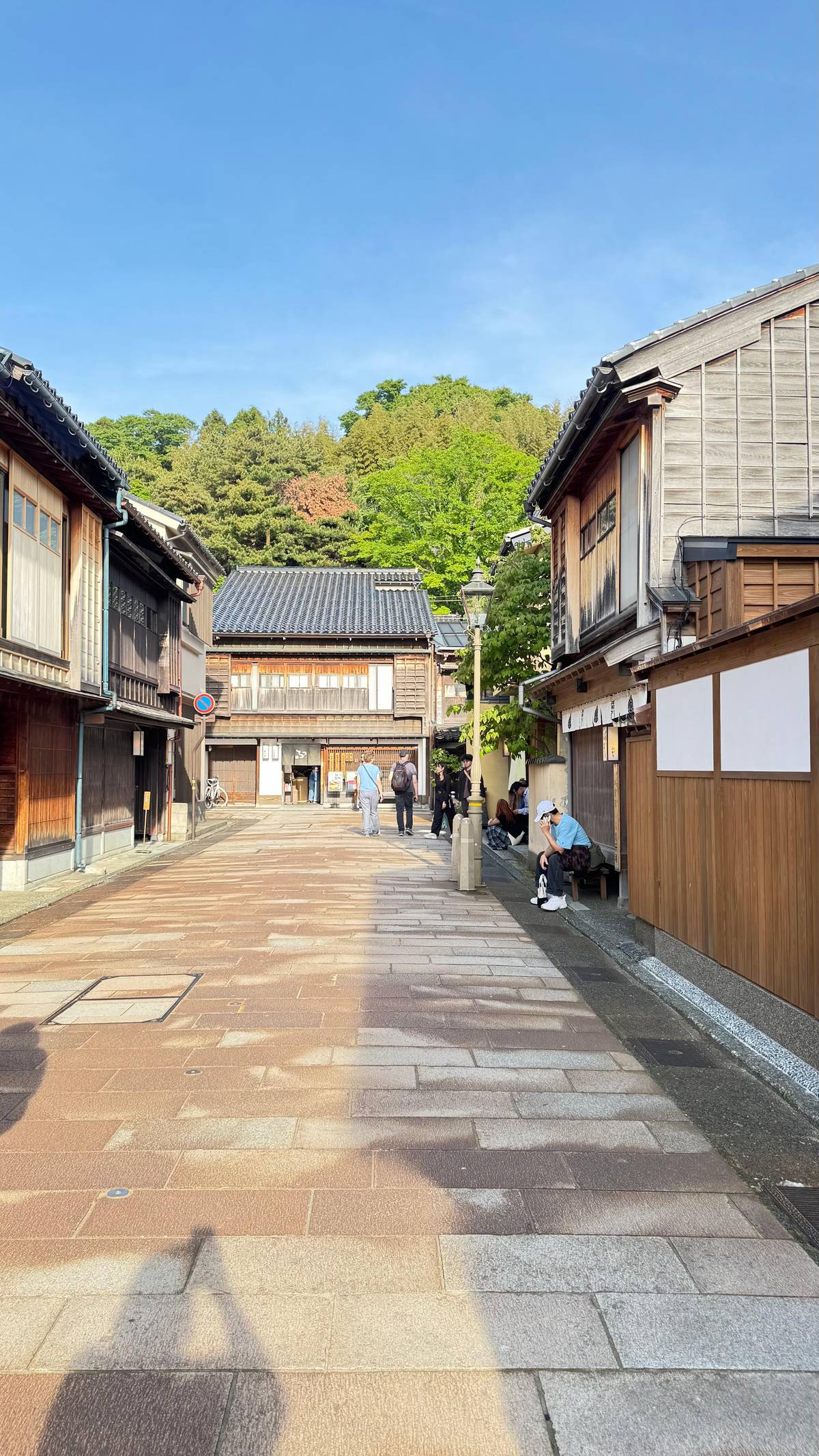
The food walk ends here; after 5:00 p.m. many cafes and shops close and gas lamps light the lanes.17
In Google Maps ↗ - 7Korinbo
The evening foodie walk starts outside a store in the Korinbo Ramoda building.
In Google Maps ↗ - 8Katamachi
The area is packed with bars and small restaurants.18
In Google Maps ↗ - 9Yamato Koji Park
A fermentation park in Ono where visitors tour a koji cellar and taste miso and soy sauce.19
In Google Maps ↗ - 10Naogen soy sauce
A soy sauce maker in Ono, where over 60 breweries worked at the peak.20
In Google Maps ↗
Checklist
Before a morning at Omicho
01
Plan
- Arrive early; stores keep their own hours
- Many shops close Wednesdays and Sundays
- Bus to Musashigatsuji/Omicho Market
02
Bring
- Cash for the stalls
- An empty stomach and a bag for rubbish
- Patience in the narrow lanes
Cost calculator
Price a guided market visit for your group
Type in how many of you are going to compare the walks.
People
Total from$89
from, per person $45
Check availabilityfree cancellationTotals: the cheapest GetYourGuide price of each listing, multiplied by your head count and converted with the ECB's euro reference rate for today; only checkout is binding.
Video
A long walk through Omicho Market's street food
The player loads on your tap, not before.
The seafood bowl at Omicho Market
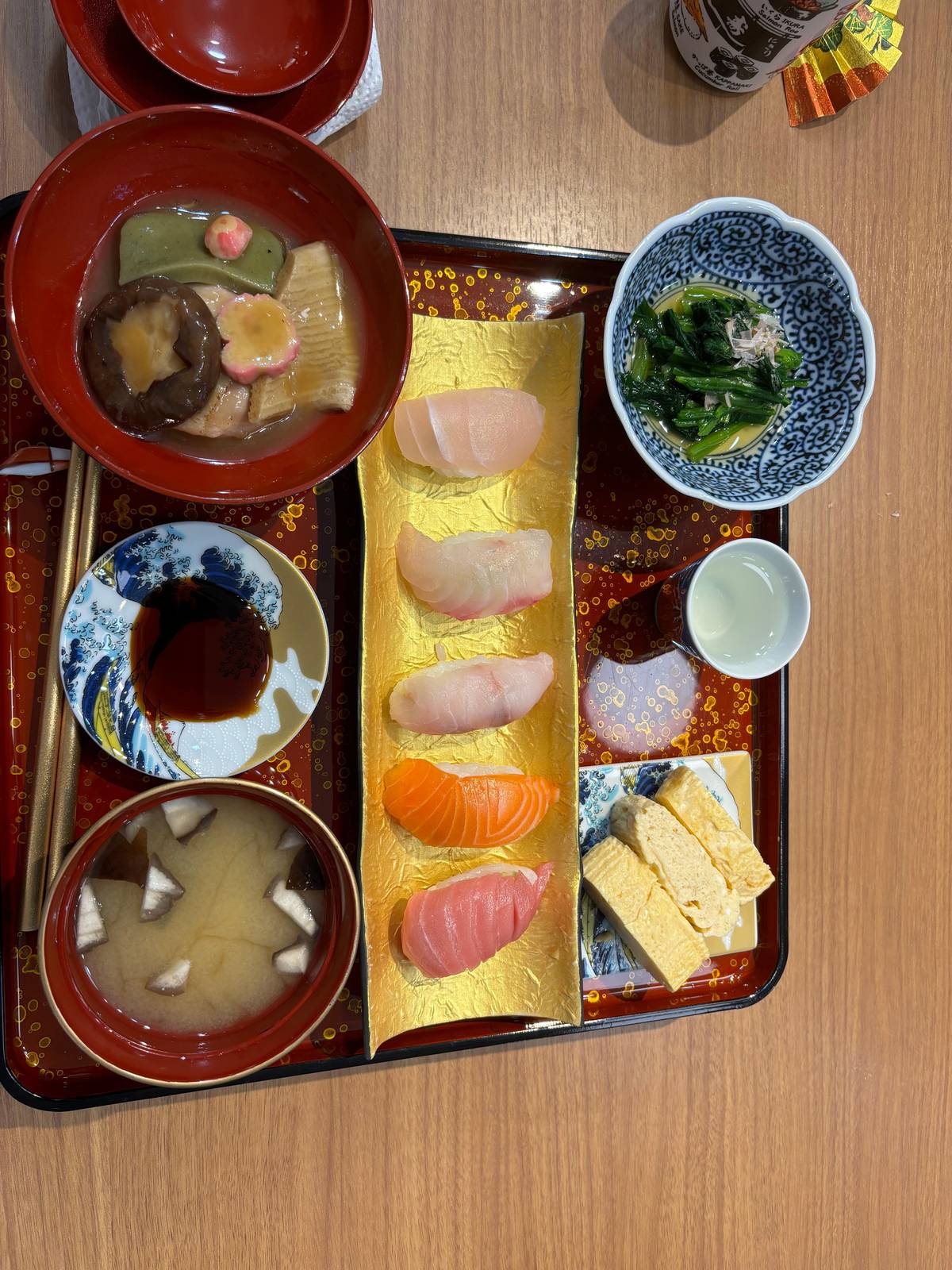
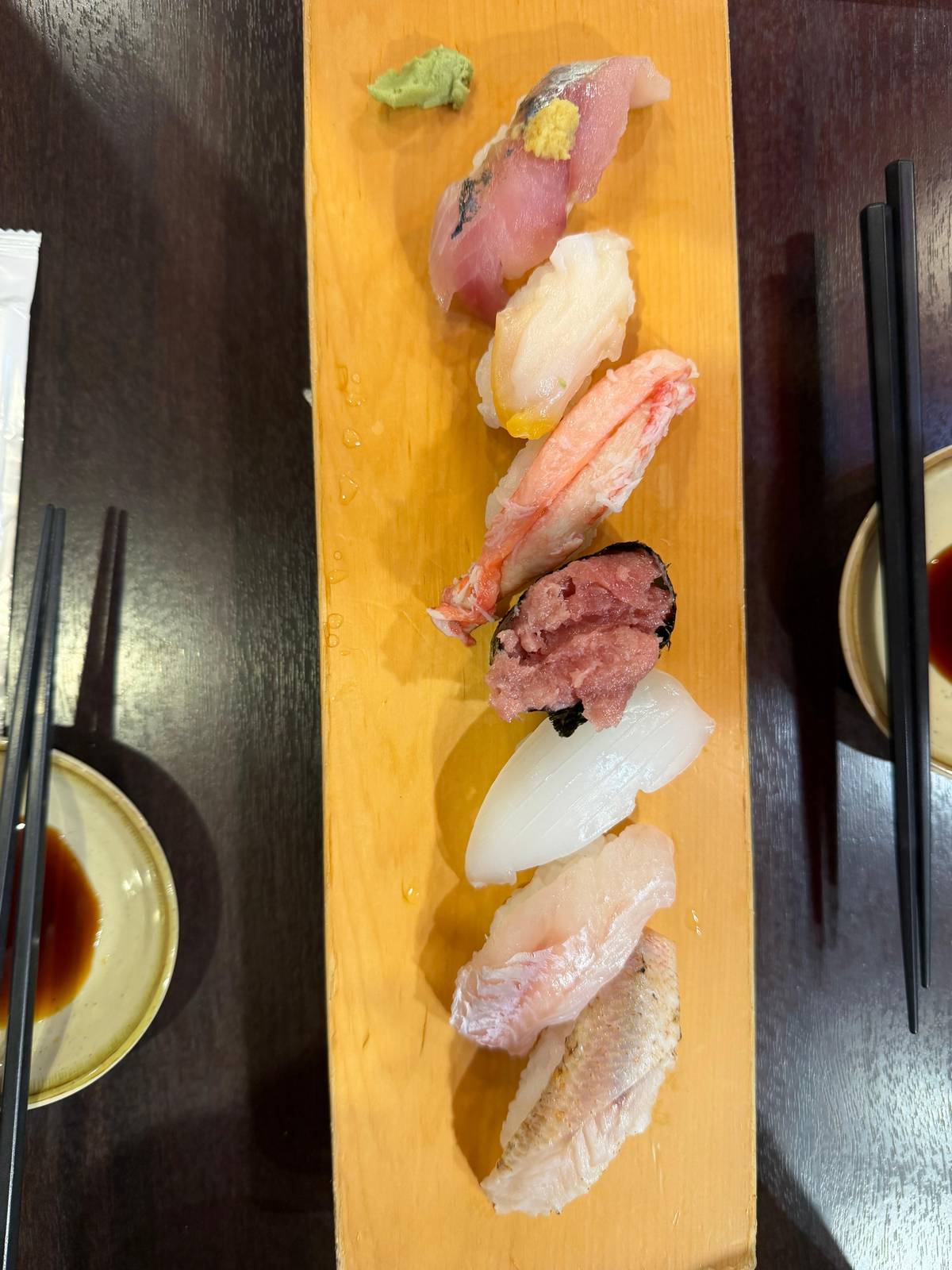
If you sit down for one meal, make it a seafood bowl at Omicho Market. The tourism association calls kaisen-don, raw seafood over a hot bowl of rice, one of the best ways to enjoy Kanazawa's fish, and says many restaurants in and around the market serve it because the market sells fresh seafood daily.3 JNTO describes it the same way: a large bowl of rice topped with sashimi.21
For more choice under one roof, head to Omicho Ichibakan, a refurbished building with a number of popular restaurants and stores.22 If one place has a long line, walk on: many restaurants in and around the market serve the bowl.3 Where there is a picture menu, pointing at the bowl you want is all the Japanese you need.
Look out for nodoguro, the rosy seabass that JNTO calls one of the most expensive and sought-after fish, caught all year but best in winter.23 One restaurant on the market's south side serves only nodoguro dishes, a pot rice called kamameshi and ochazuke, and the kamameshi takes twenty minutes to cook.24 Order it first and browse the stalls while you wait, or pair it with a short walk through the produce lanes nearby.
Crab, yellowtail and the November rush
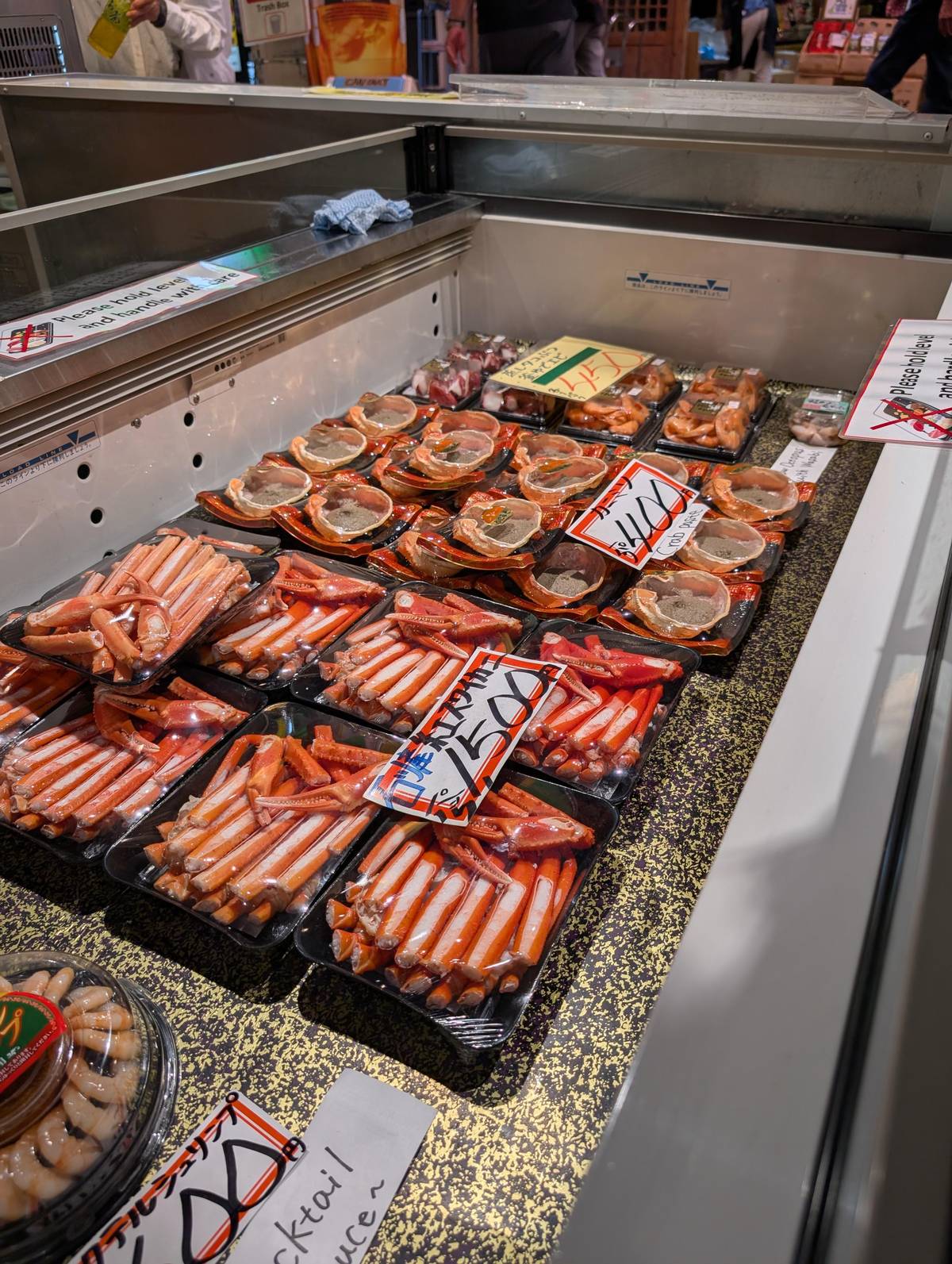
The calendar changes the market. In Ishikawa the ban on crab fishing lifts on 6 November, and red crabs then appear at the shop fronts of Omicho.14 Kanazawa calls the male snow crab zuwaigani and the smaller female kobakogani.25 The tourism association warns that crab, yellowtail and shrimp from the Sea of Japan draw crowds of locals and tourists around November.4
Yellowtail follows soon after. Mature fish reach the market late in November, in the cold weeks of winter thunder, and buri daikon, yellowtail simmered with radish, is the home dish that goes with them.26 The tourism association adds that snow crab is only available for a limited time in the cold season, for conservation reasons, and that sweet shrimp are said to be best then.27
Winter is when the fish of the Sea of Japan are at their best, the association says, but the stalls trade all year.28 Come in the warm months for fruit and rock oysters, and in the cold months for crab and fat yellowtail, accepting the November crowds as the price of the season.294 Whatever the month, ask the fishmonger what is good today: the answer tells you what the restaurants around you will be serving.
Finding the market and seeing it with a guide
Omicho sits between Kanazawa Station and the old town, a 15 to 20 minute walk from the station or a short bus ride: take a bus toward Korinbo and get off at Musashigatsuji/Omicho Market.16 From that stop the market is a minute's walk, and the Kanazawa Loop Bus, Hokutetsu Bus and West Japan JR buses all serve it.30 The address is 50 Kamiomicho.2
The food walk this site recommends meets outside the Starbucks at Kanazawa M'ZA, a 5-minute walk from the market, then spends 1 hour inside Omicho before walking 15 minutes to the Higashi Chaya District. It lasts 2.5 hours, has 92 reviews with a 4.73 rating, and starts from $45. One honest note: the listing excludes food and drink costs, so you pay for what you choose.
What the guide adds is choice. The listing promises food and souvenir recommendations, a route shaped by your interests and help booking restaurants after the tour. If you only want the market, a separate 2-hour Omicho tour runs from the plaza outside the market and starts from $49. Either way, come hungry and bring cash.
Hungry yet?
Taste Kanazawa with a local guide.
Pick a date, meet at M'ZA and cancel free up to 24 hours before.


You ask,we answer.
What are Omicho Market's opening hours?
About 9:00-16:00. Each store sets its own hours, and the market closes over the New Year holidays.2
Which days are shops closed?
Many close Wednesdays and Sundays. JNTO says many of the shops close on those days, so check before you plan around them.12
How do I get there from Kanazawa Station?
Walk or take a short bus ride. It is a 15 to 20 minute walk, or a bus toward Korinbo to Musashigatsuji/Omicho Market.16
What should I eat at Omicho?
A seafood bowl, then snacks. Kaisen-don is raw seafood over hot rice; croquettes and skewers are sold along the lanes.3
When is crab season at the market?
From 6 November. The crab fishing ban lifts that day in Ishikawa, and crabs appear at Omicho's shop fronts.14
Do the stalls take cards?
Bring cash. The operator of a market tour says most vendors accept cash only.
Does the food walk include the food?
No, you pay as you eat. The listing excludes food and drink costs; the guide helps you choose.
Sources
The sources for this guide
- 1Kanazawa City Tourism Association (Visit Kanazawa)Omicho Market↩
- 2Kanazawa City Tourism Association (Visit Kanazawa)Omicho Market↩
- 3Kanazawa City Tourism Association (Visit Kanazawa)The Cuisine of Kanazawa↩
- 4Kanazawa City Tourism Association (Visit Kanazawa)Omicho Market↩
- 5Kanazawa City Tourism Association (Visit Kanazawa)Omicho Market↩
- 6Omicho Market shopping street promotion associationOmicho Market official site (近江町市場)↩
- 7Kanazawa City Tourism Association (Visit Kanazawa)Omicho Market↩
- 8Japan National Tourism OrganizationOmicho Market↩
- 9Omicho Market shopping street promotion associationOmicho Market official site (近江町市場)↩
- 10Kanazawa City Tourism Association (Visit Kanazawa)Kanazawa: a food city unlike any other↩
- 11Japan National Tourism OrganizationOmicho Market↩
- 12Japan National Tourism OrganizationOmicho Market↩
- 13Omicho Market shopping street promotion associationOmicho night market, 3 October (おみちょ夜市)↩
- 14Kanazawa City Tourism Association (Visit Kanazawa)Kanazawa Cuisine: A Delight to the Senses↩
- 15Japan National Tourism OrganizationKanazawa Gold Leaf Crafting and Activities↩
- 16Japan National Tourism OrganizationOmicho Market↩
- 17Kanazawa City Tourism Association (Visit Kanazawa)See Kanazawa By Night! Recommended night spots and walking areas↩
- 18Kanazawa City Tourism Association (Visit Kanazawa)A Visitor's Guide To Kanazawa After Dark↩
- 19Kanazawa City Tourism Association (Visit Kanazawa)The Secret Flavor of Kanazawa: A Journey into Fermentation↩
- 20Kanazawa City Tourism Association (Visit Kanazawa)Kitamae-bune: Shaping Kanazawa's Rich Culinary Culture↩
- 21Japan National Tourism OrganizationOmicho Market↩
- 22Kanazawa City Tourism Association (Visit Kanazawa)Omicho Market↩
- 23Japan National Tourism OrganizationOmicho Market↩
- 24Kanazawa City Tourism Association (Visit Kanazawa)Kanazawa: a food city unlike any other↩
- 25Kanazawa City Tourism Association (Visit Kanazawa)Kanazawa Cuisine: A Delight to the Senses↩
- 26Kanazawa City Tourism Association (Visit Kanazawa)Kanazawa Cuisine: A Delight to the Senses↩
- 27Kanazawa City Tourism Association (Visit Kanazawa)The Cuisine of Kanazawa↩
- 28Kanazawa City Tourism Association (Visit Kanazawa)Kanazawa Cuisine: A Delight to the Senses↩
- 29Kanazawa City Tourism Association (Visit Kanazawa)Kaga Cuisine: a culinary tradition filled with seasonal blessings and aesthetic sensibility↩
- 30Kanazawa City Tourism Association (Visit Kanazawa)Omicho Market↩
Keep reading