 The classic
Jibuni
Duck in thick broth
- Served
- Kaga restaurants
- Season
- Year-round in some
- Pairs with
- Rice, sake
Guides
Language
EnglishCurrency
US dollar · $On GetYourGuide you see prices in this currency.
Guide · Local dishes
Deciding what to eat in Kanazawa is easier once you know which dishes belong to the city. This is the short list, with the season each one is at its best and where to find it.
Editorial team, kanazawafoodtour.comUpdated October 25, 2026Reading time about 6 minutes47 sources
The dishes to know
Several Kanazawa food specialties trace back to Kaga cuisine, the cooking of the old Kaga domain. The tourism association says it developed in the Edo period under the Maeda family, in a samurai society that valued ceremony and etiquette.6 The association adds that the city's cooking has its roots in Kaga cuisine, which brings many sides of Japanese culture together.7
That history now has official weight. Kaga cuisine was recognized as a National Intangible Cultural Property of Japan in December 2025, only the second such recognition in Japanese cuisine after Kyoto cuisine.89 The presentation is part of the dish: Kutani porcelain, Wajima lacquerware and Yamanaka woodwork carry the food to the table.10
You do not need a formal dinner to taste it. The same ingredients run through everyday cooking: rice from the Kaga Plain, Kaga vegetables, water from the Hakusan Mountains and fish from the Sea of Japan.11 Learn a handful of dish names and you will start spotting them on lunch menus, at market stalls and in izakaya across the city. Menus outside the big restaurants are often in Japanese only, and recognizing a word like jibuni or oden is often enough to order with confidence.
A year of eating
Spring
Kaga cuisine's spring seafood.12
Summer
The summer catch in Kaga cuisine.12
6 November
The ban on crab fishing lifts in Ishikawa.3
Late November
Mature fish reach the market in the cold.13
Early Nov to late Dec
The female snow crab oden is served.14
January to March
A shop's hands-on workshop runs in winter.15
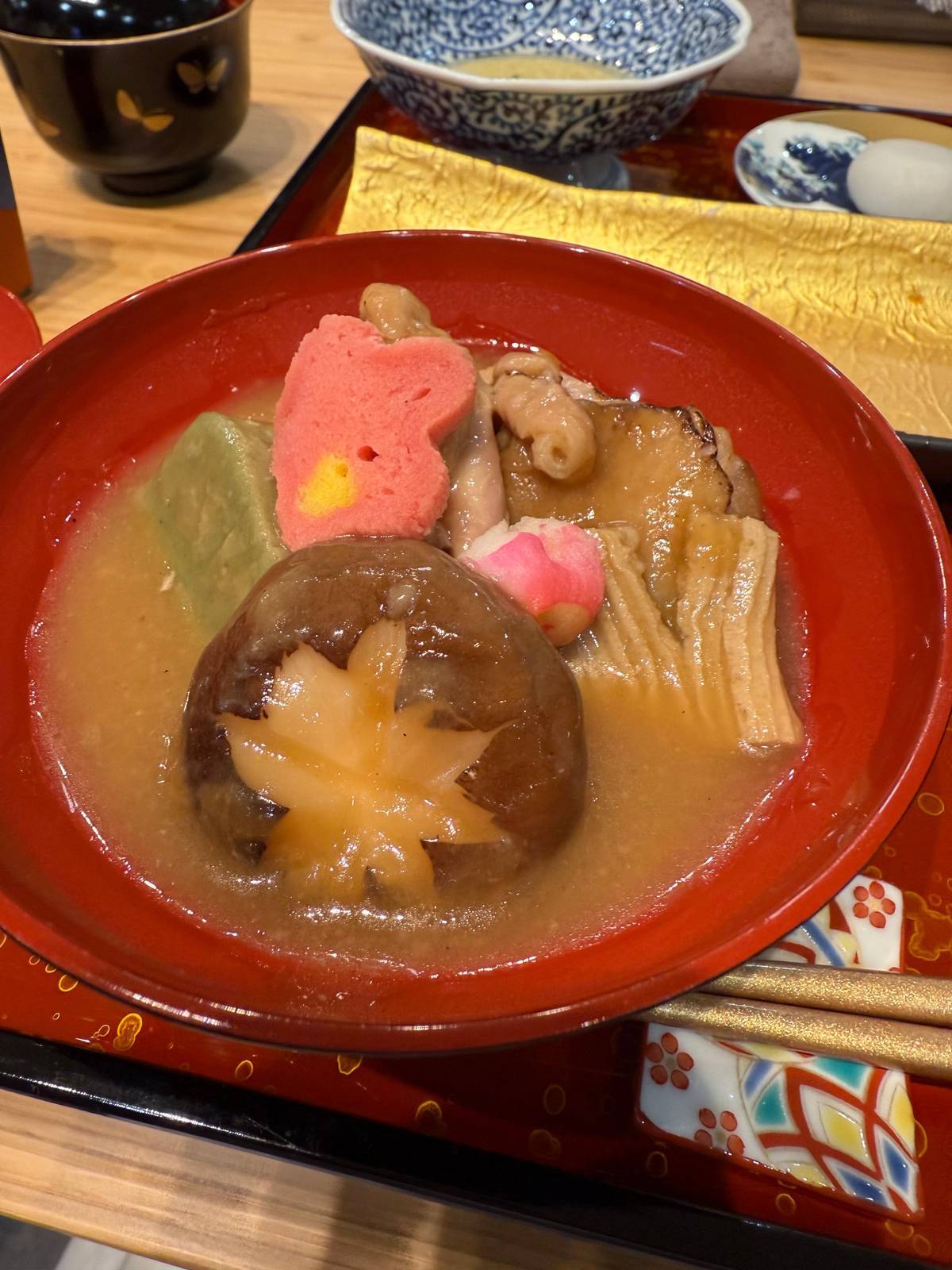
If you eat a single traditional dish, choose jibuni. The tourism association describes it as seasoned duck coated with wheat, served with wheat gluten and vegetables in a thick soup.1 JNTO adds the detail: the duck is dusted with flour or starch and simmered in a dashi of kombu and bonito with shiitake, bamboo shoots and fu.16
The name has a story. The tourism association says jibu-ni is said to be named after the jibu-jibu sound of the simmering broth.17 It was once an autumn and winter dish, but today some Kanazawa restaurants serve it all year.17 The texture is the surprise: the coating thickens the broth around the meat, and each spoonful is glossy and gently sweet.
Where to find it? JNTO says jibuni is served in traditional restaurants and ryokan throughout Ishikawa and often appears in a multi-course kaiseki meal.18 A cooking class near Kanazawa Station teaches it alongside sushi and rolled omelette, if you would rather make it than order it.
Cheat sheet
| Dish | What it is | Best time | Where |
|---|---|---|---|
| Jibuni | Duck in thick broth | Autumn, winter | Kaga restaurants |
| Oden | Hot pot in kombu broth | All year | Oden counters, izakaya |
| Kabura-zushi | Yellowtail in pickled turnip | Winter | Pickle shops |
| Snow crab | Zuwaigani & kobakogani | From 6 Nov | Omicho Market |
| Buri daikon | Yellowtail with radish | Late Nov onward | Izakaya, home cooking |
| Hanton rice | Omelet rice & prawns | All year | Western-style diners |
| Kanazawa curry | Thick curry, cutlet | All year | Curry shops |
Seasons and descriptions from the Kanazawa City Tourism Association's food pages.17243131920
If you only eat three things
The classicDuck in thick broth
 All year
 Winter only
Jibu-ni was said to have been invented in Kanazawa during the Edo Period and is said to have been named by the sound made by the simmering broth, "jibu-jibu."
Oden is a hot pot of ingredients simmered in broth that most of Japan eats in winter, but the tourism association says Kanazawa oden is loved year-round, ideally with a cup of hot sake.2 The broth is built on kombu and bonito and rounded with Ono soy sauce, the city's own, which gives it a gentle sweetness.22
Look for the local pieces. Kuruma-fu, a wheel of gluten, soaks up the broth, and kani-men, a whole female snow crab, appears only in winter.23 The tourism association's oden guide narrows the crab to early November through late December.14 Gensuke daikon, one of the Kaga vegetables, and baigai, a conical sea snail, are other Kanazawa favorites in the pot.2425
Ordering is easy. In an oden restaurant you often choose from a menu or a display, and pointing is fine.26 Popular places draw long lines, especially from autumn through winter; arrive early or late.27 Oden with these ingredients is also served at many izakayas, not only at the old specialist counters.28
Checklist
Cost calculator
Enter your group size to compare food experiences.
Total from$89
from, per person $45
Check availabilityfree cancellationTotals: the cheapest GetYourGuide price of each listing, multiplied by your head count and converted with the ECB's euro reference rate for today; only checkout is binding.
Video
The player loads on your tap, not before.
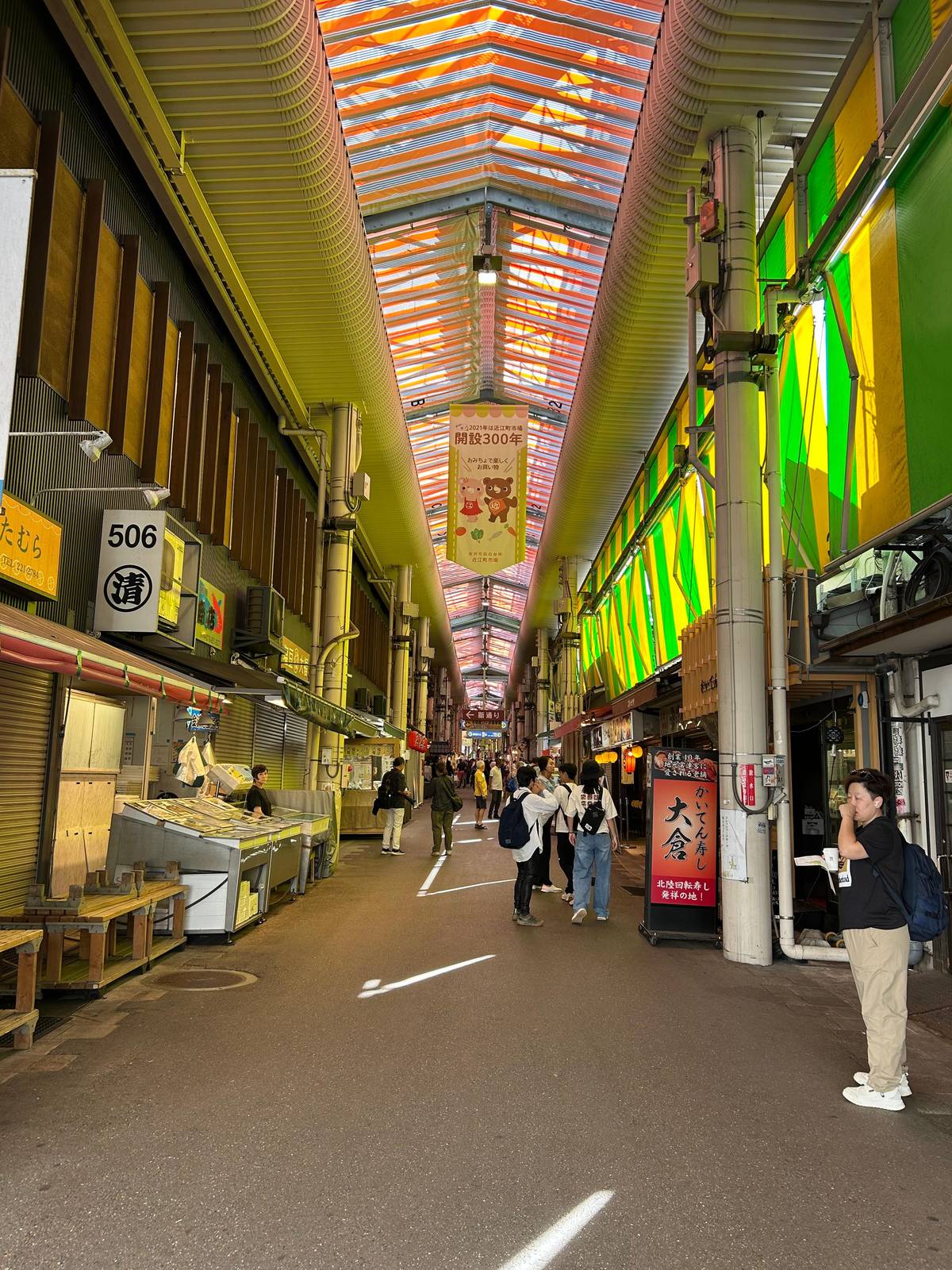
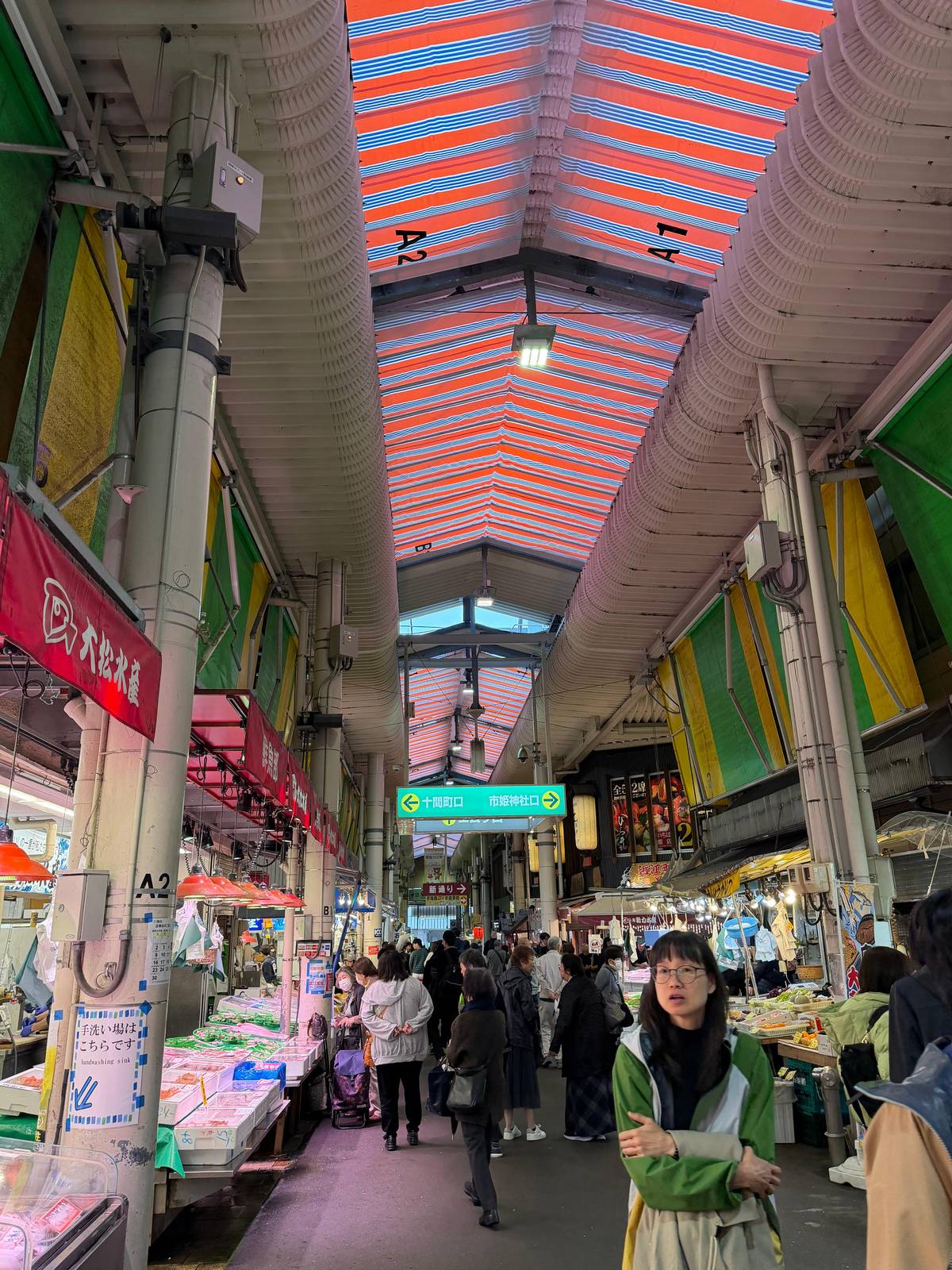
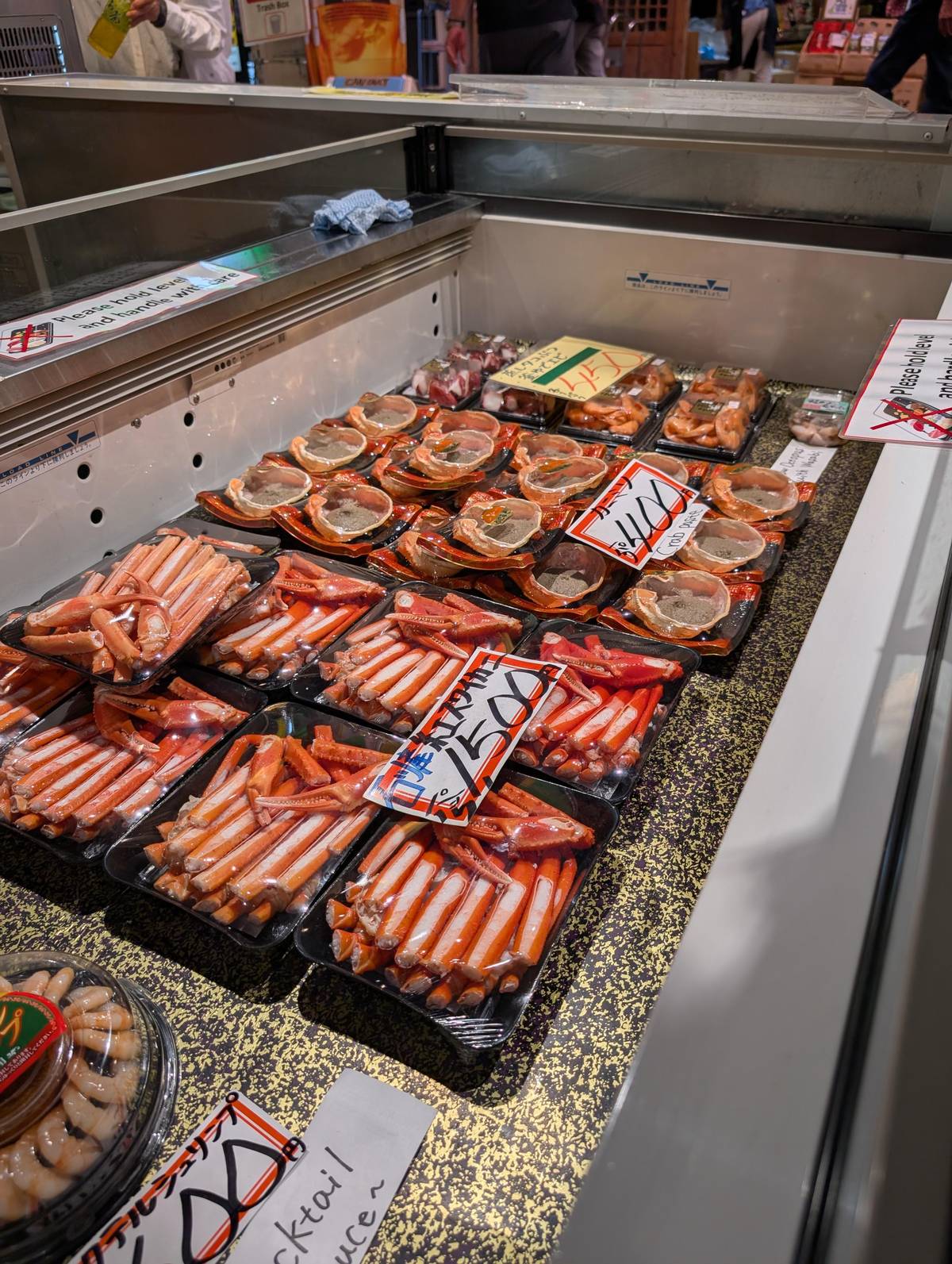
Kanazawa's seafood follows the calendar. In Ishikawa the crab fishing ban lifts on 6 November, and red crabs line the shop fronts of Omicho Market.3 The male snow crab is called zuwaigani here, and the smaller female kobakogani.29 Mature yellowtail follows late in November, and buri daikon, yellowtail simmered with radish, is the dish to order.13
Yellowtail has always been prized. JNTO says it was once a luxury presented to feudal lords, said to be worth one yellowtail, one bale of rice.30 It also names kanburi, winter yellowtail, and nodoguro, the blackthroat seaperch, as the delicacies of Ishikawa's waters.31 Nodoguro is caught all year but best eaten in winter.32
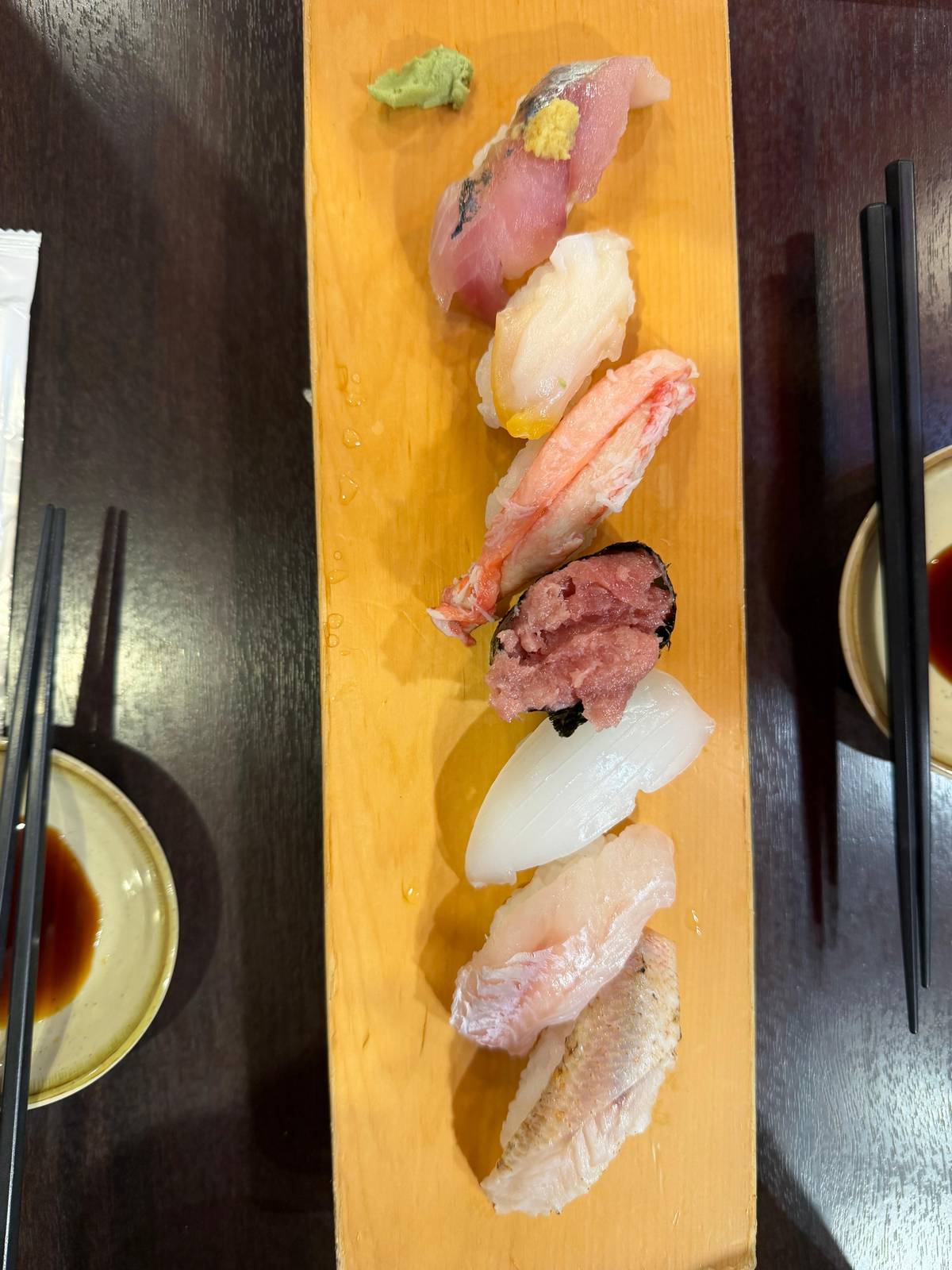
Outside the crab weeks there is still plenty. The tourism association lists snow crab, amberjack, sea bream, pufferfish, sweet shrimp, oysters, squid and rosy sea bass among the seafood the seasons bring.33 Kaga cuisine marks spring with sweet shrimp and summer with rock oysters.12 Ask what came in today; that is the real menu.
The strangest-sounding specialty is kabura-zushi. Despite the name it is not a roll of rice and raw fish: it is a fillet of yellowtail wrapped in pickled turnip and marinated in koji rice malt, the same malt used for sake.4 The tourism association calls it a specialty of Kanazawa, pickled with a mixture of rice and rice malt.34
It is a winter food, and you can even make it. Shijimaya-Honpo, a shop founded in 1875, runs a kabura-zushi workshop in winter, in November and from January to March.15 Participants prepare their own turnip and yellowtail and take it home, a souvenir that tastes of the city long after the trip.
Braver eaters can go further. Pufferfish roe is normally poisonous, but in Kanazawa it is pickled in rice bran for over two years, which makes it safe to eat.35 Kaga miso, made with an especially high share of rice malt, is the base of many soups and was once a preserved food for the samurai army.36 Sample these as small plates with sake rather than as a meal. A small pack of pickles travels well if you want to take a flavor of the city home; ask the shop how long it keeps.
Not everything is ancient. Hanton rice is an omelet over rice topped with fried prawns, ketchup and tartar sauce.19 The tourism association says the authentic version is hard to find outside Kanazawa's restaurants.37 One theory, told by the owner of a well-known Hanton rice restaurant, traces it to a dish a Japanese chef ate while staying in Hungary.38
Kanazawa curry is the other modern classic. It is dark, almost chocolate-colored and thicker than most Japanese curries, and usually comes with a pork cutlet, a big serving of rice and shredded cabbage.2021 The market's own restaurant list includes a branch of Curry no Champion inside Omicho, a handy stop for a fast lunch.39
Both are filling and quick, good fuel between sights. If you are traveling with children or picky eaters, these plates are a safe bet when raw fish is not. Our guide to Kanazawa curry covers the style in more detail.
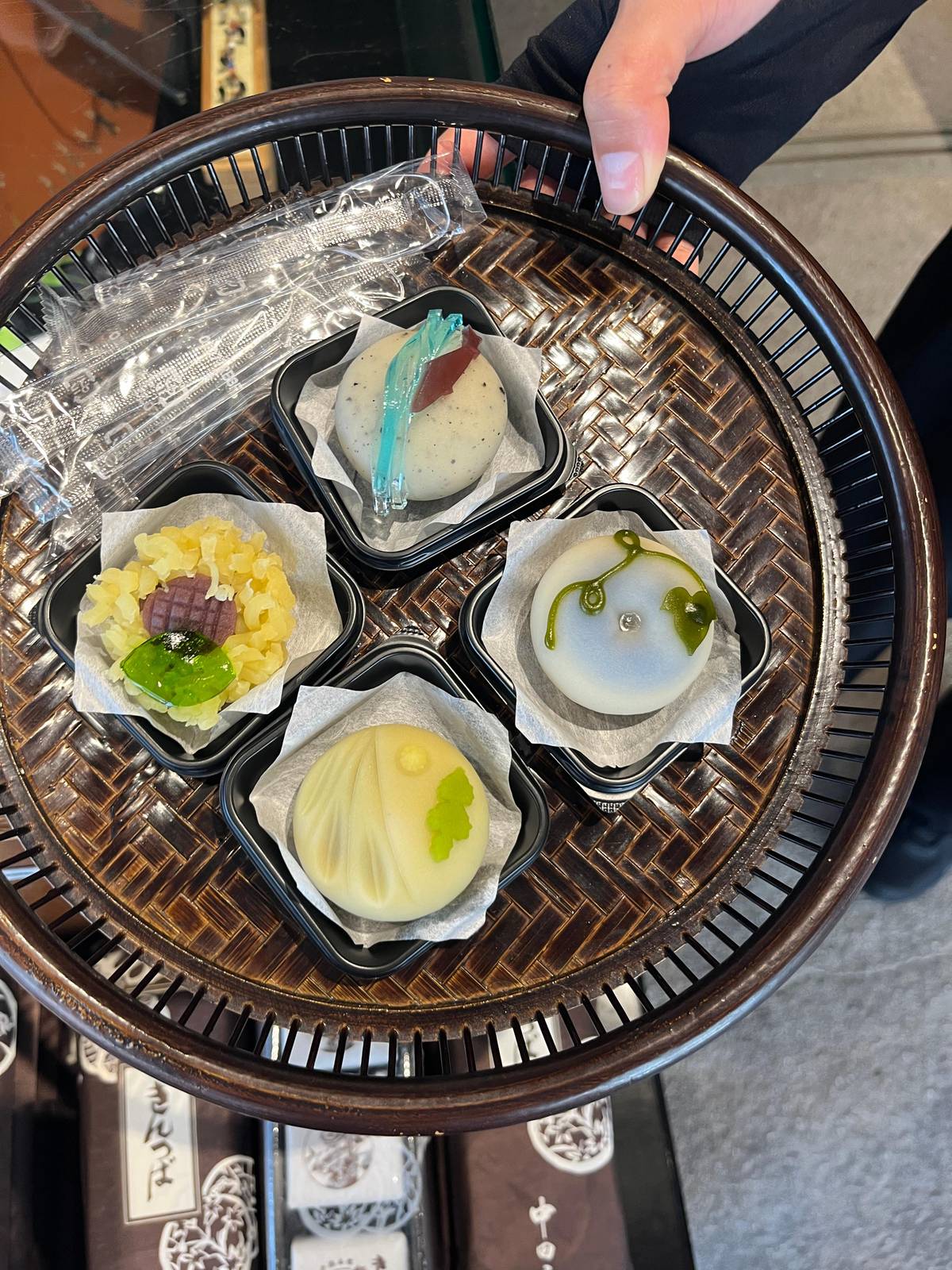
Kanazawa takes its sweets seriously. The tourism association names Kanazawa, Kyoto and Matsue as the three great places of Japanese confectionery, and links it to the Maeda family's support for the tea ceremony.5 It also says Kanazawa has the highest household consumption of traditional sweets in Japan.40
Pair wagashi with the local tea. Kaga bocha is made by roasting the best stems of the tea plant, giving a fragrant, naturally sweet cup.41 A Kanazawa tea merchant developed the method in 1902.42 Buy a few seasonal sweets at a confectioner and drink the tea at your hotel, or find both in a teahouse in Higashi Chaya. Fresh wagashi keep only briefly; buy them for the afternoon rather than for the flight home.
Finally, look for Kaga vegetables. Kanazawa City officially recognizes 15 of them.43 Kinjiso, a leafy green, and a red Japanese pumpkin are unique to the city, says the tourism association.44 Hasumushi, grated Kaga lotus root steamed with fish or shrimp, is a vegetable dish worth ordering when you see it.45
Hungry yet?
Pick a date, meet at M'ZA and cancel free up to 24 hours before.
Jibuni, a duck stew. The tourism association calls it traditional Kaga cuisine: duck coated with wheat in a thick soup.1
From 6 November. The crab fishing ban lifts that day in Ishikawa; snow crab is a cold-season food.346
The broth and the pieces. Kombu and bonito broth with Ono soy sauce, plus kuruma-fu and, in winter, female snow crab.2223
No. It is yellowtail wrapped in pickled turnip and marinated in koji rice malt.4
An omelet rice with prawns. Omelet over rice topped with fried prawns, ketchup and tartar sauce.19
Yes, in some restaurants. The tourism association lists vegan and vegetarian friendly restaurants and a barrier-free food map.47
Omicho Market. Our food walk spends 1 hour there with a guide recommending what to eat.
Sources
Keep reading