Wine tasting4.8(83)
From Takayama · 30 to 45 min
Takayama: Authentic Sake Tasting at a Historic Brewery
- Private or small groups available
from $51
View tourGuides
Language
EnglishCurrency
US dollar · $On GetYourGuide you see prices in this currency.
Two and a half hours on foot with a local guide: sushi and street food at Omicho Market, then gold leaf, sweets and sake in Higashi Chaya.
Typically booked up 6 days in advanceReserve now, pay later
Quick · the walk
This Kanazawa food tour is a guided walk through the two places where the city eats and shops. You meet outside the Starbucks at Kanazawa M'ZA, where the guide comes to greet you, and walk 5 minutes into Omicho Market. For the next hour you move through the covered lanes with a photo stop, a guided tour and time to shop and taste.
Then you walk 15 minutes across town to the Higashi Chaya District, the old teahouse quarter, for 45 minutes of strolling, a break, shops and a final tasting. The whole walk lasts 2.5 hours, and your guide shapes the route around what you want to eat and see.
What makes it different from a tasting menu is choice. The listing names the foods its guide points you toward, from sushi and croquettes to gold-leaf ice cream and sake, but food and drink costs are not included: you pay for what you pick. Eat a little or a lot; the guide's job is to make every choice a good one.
Why this walk
This walk meets outside the Starbucks at Kanazawa M'ZA, spends 1 hour in Omicho Market and 45 minutes in the Higashi Chaya District, and lasts 2.5 hours. It has 92 reviews with a 4.73 rating and starts from $45; the food and drinks you choose are paid separately, as you go.
Free cancellation up to 24 hrs before
Quick · a city that eats
Food in Kanazawa is a point of pride. The Kanazawa City Tourism Association calls it the city of gourmet foods, and says Kanazawans have more restaurants per resident, and eat more ice cream per head, than anyone else in Japan. Kaga cuisine, the cooking of the old Kaga domain, was recognized as a National Intangible Cultural Property of Japan in December 2025.
The ingredients explain a lot. The city draws on rice from the Kaga Plain, Kaga vegetables, water from the Hakusan Mountains and fish and shellfish from the Sea of Japan. Ishikawa's waters are known for kanburi, the winter yellowtail, and nodoguro, the blackthroat seaperch.
Add centuries of crafts and you get food that looks as good as it tastes. The city makes 99% of Japan's gold leaf, and Kaga cuisine is served on Kutani porcelain, Wajima lacquerware and Yamanaka woodwork. A walk through the market and the teahouse lanes shows you both sides in one morning.
Reviews
 5.0
My guide had energy and charm and knew Japanese food and culture deeply. She explained the dishes, suggested what to try and made sure everyone in the group felt included.”
 KerenJuly 2026, traveling solo · GetYourGuide
Verified
 5.0
The tour felt made for me. My guide pointed out kinds of seafood and produce, and recommended shops and restaurants worth visiting after the walk. A perfect score from me.”
 EmilyJuly 2026, traveling solo · GetYourGuide
Verified
 5.0
Our guide gave great tips on what to taste and where to go in the market, and knew a lot about the geisha district. I would ask for her again.”
 TessJuly 2026, with kids · GetYourGuide
Verified
 5.0
We were lucky to have our guide for the market and the geisha district. Even as a first-time sushi eater I loved the restaurant he chose, and he answered every question.”
 Anna-LynnMarch 2026 · GetYourGuide
Verified
 5.0
We were not very brave with food at the market, but our guide found us great souvenir shops, a sake tasting and plenty of Kanazawa history. Worth the price.”
 CarrieApril 2026 · GetYourGuide
Verified
 5.0
Our guide was flexible and kept our small group happy, using slides on a tablet to explain the sites. Ideal if your time in Kanazawa is short and you want the history.”
 ElizabethApril 2026 · GetYourGuide
Verified
Quick · guest stories
The reviews are mostly about people. Guests name their guides again and again, praising energy, warmth and patience, and calling them genuine, friendly and accommodating. One guest notes that a guide still learning English had prepared slides on a tablet to explain the sights, and another that her guide gave attention to everyone in the group.
Food comes next. Reviewers mention guides who explained different kinds of seafood and produce and suggested what to try, a sushi restaurant that pleased even a first-timer, and many tastings along the way. One guest admits her group was not adventurous at the market, but loved the souvenir shops, the sake tasting and the history.
A few honest notes appear too. One guest who booked alone found herself with a private tour, and several mention the geisha district as a highlight alongside the market. The tone is consistent: a friendly, personal walk rather than a scripted show.
Compare
Further in Kanazawa
More experiences in and around Kanazawa and the surrounding area: live prices, free cancellation.
From Takayama · 30 to 45 min
from $51
View tour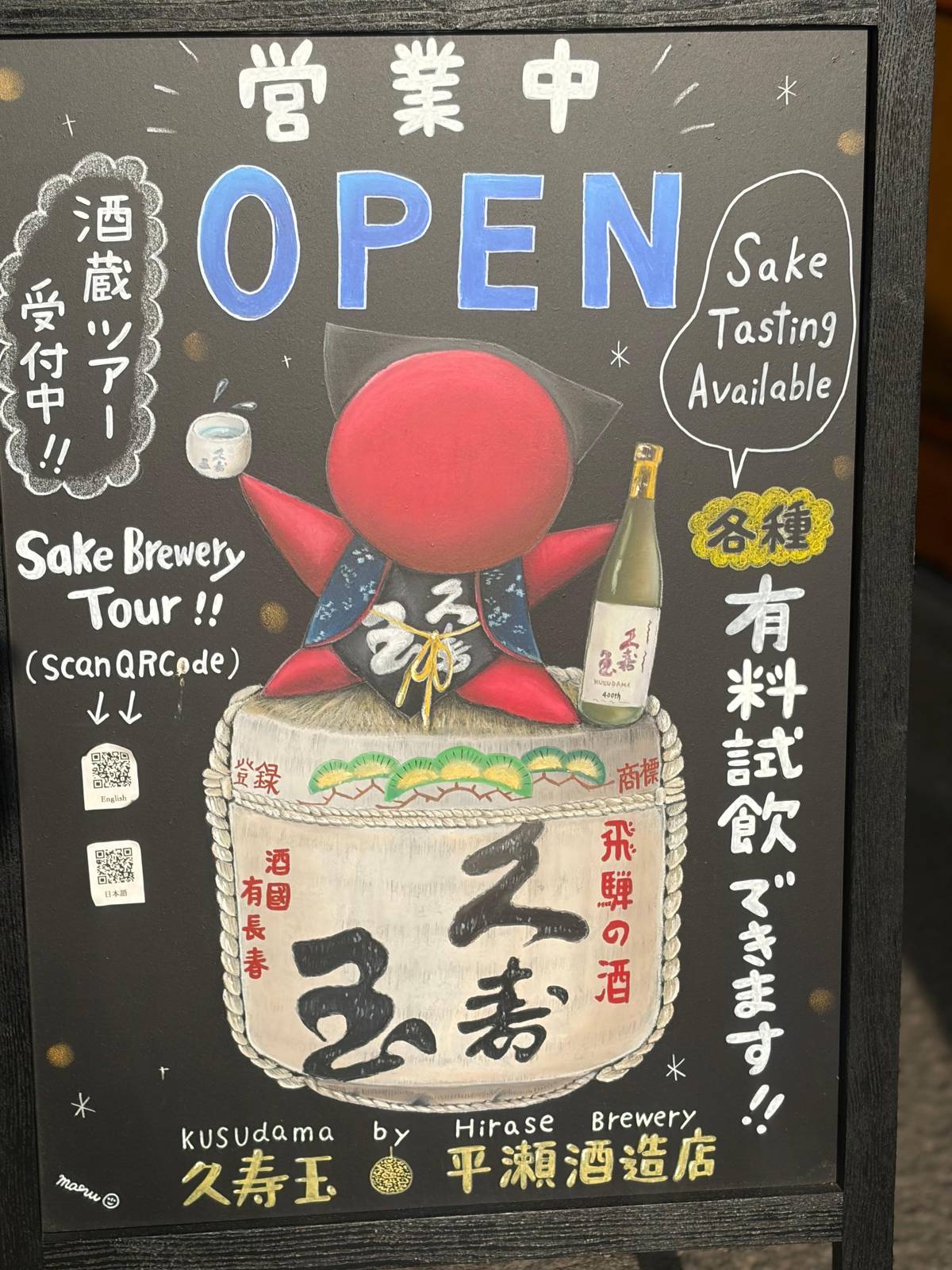
From Takayama · 2.5 hrs
from $115
View tour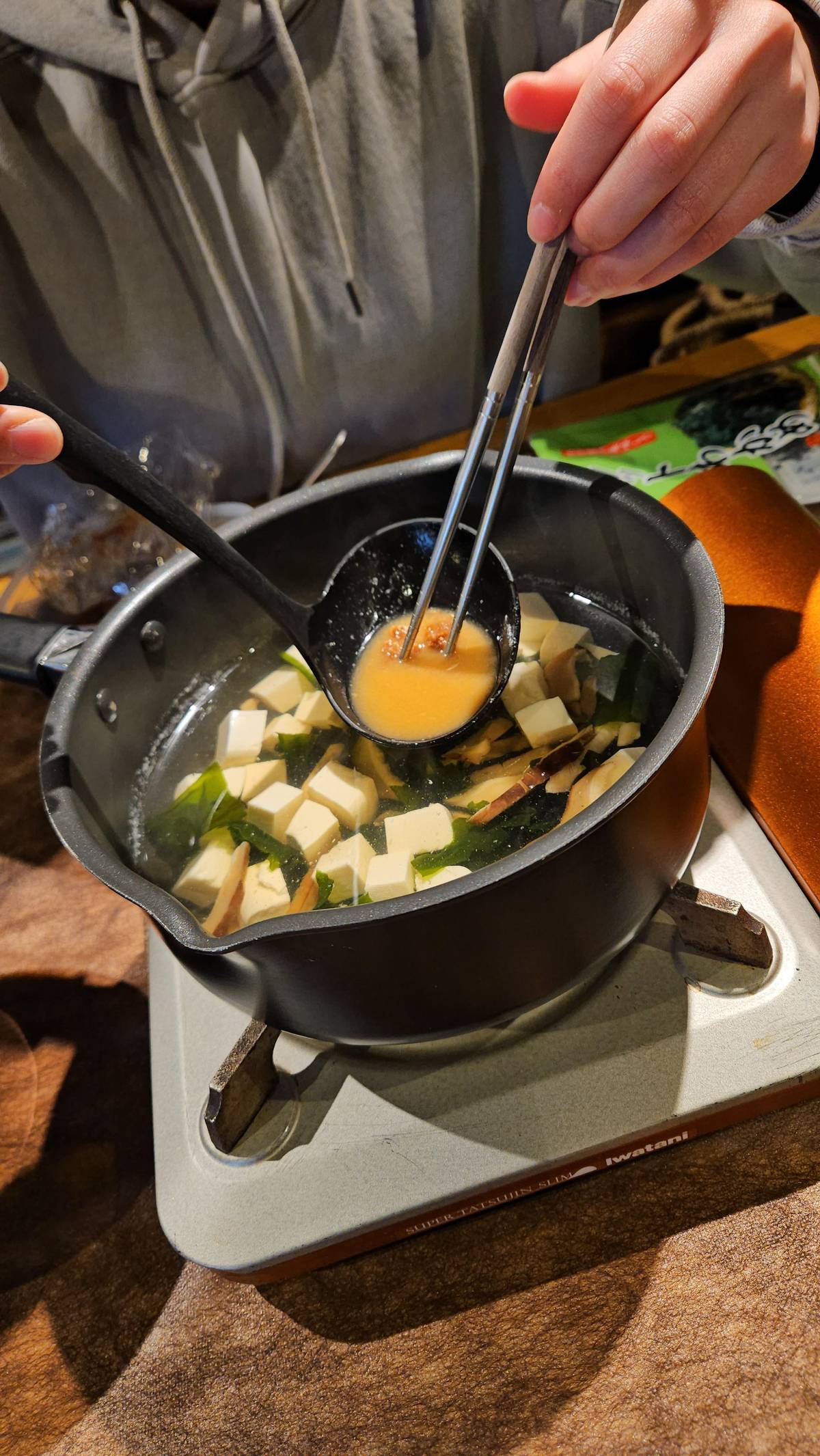
From Takayama · 1.5 hrs
from $39
View tour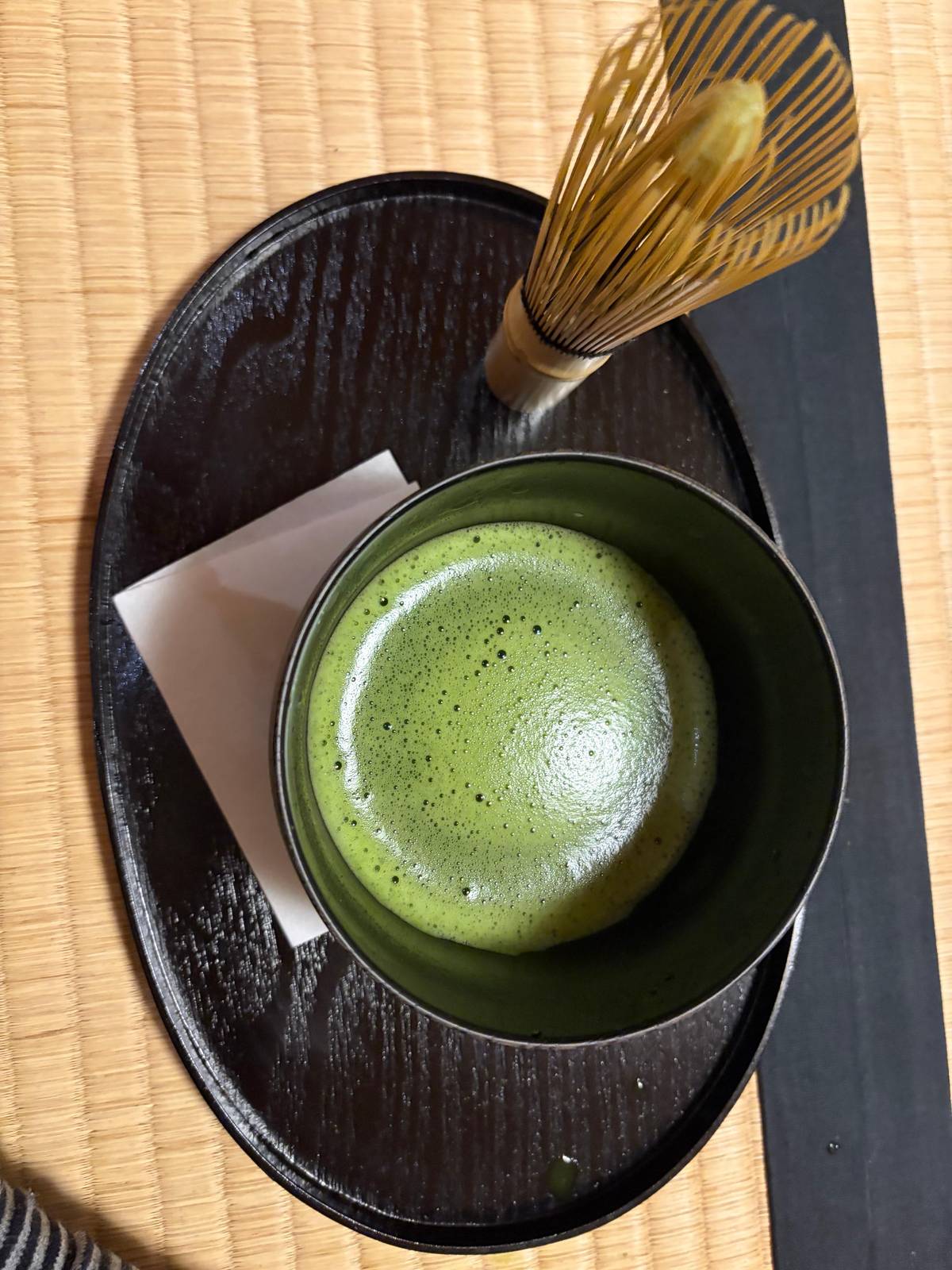
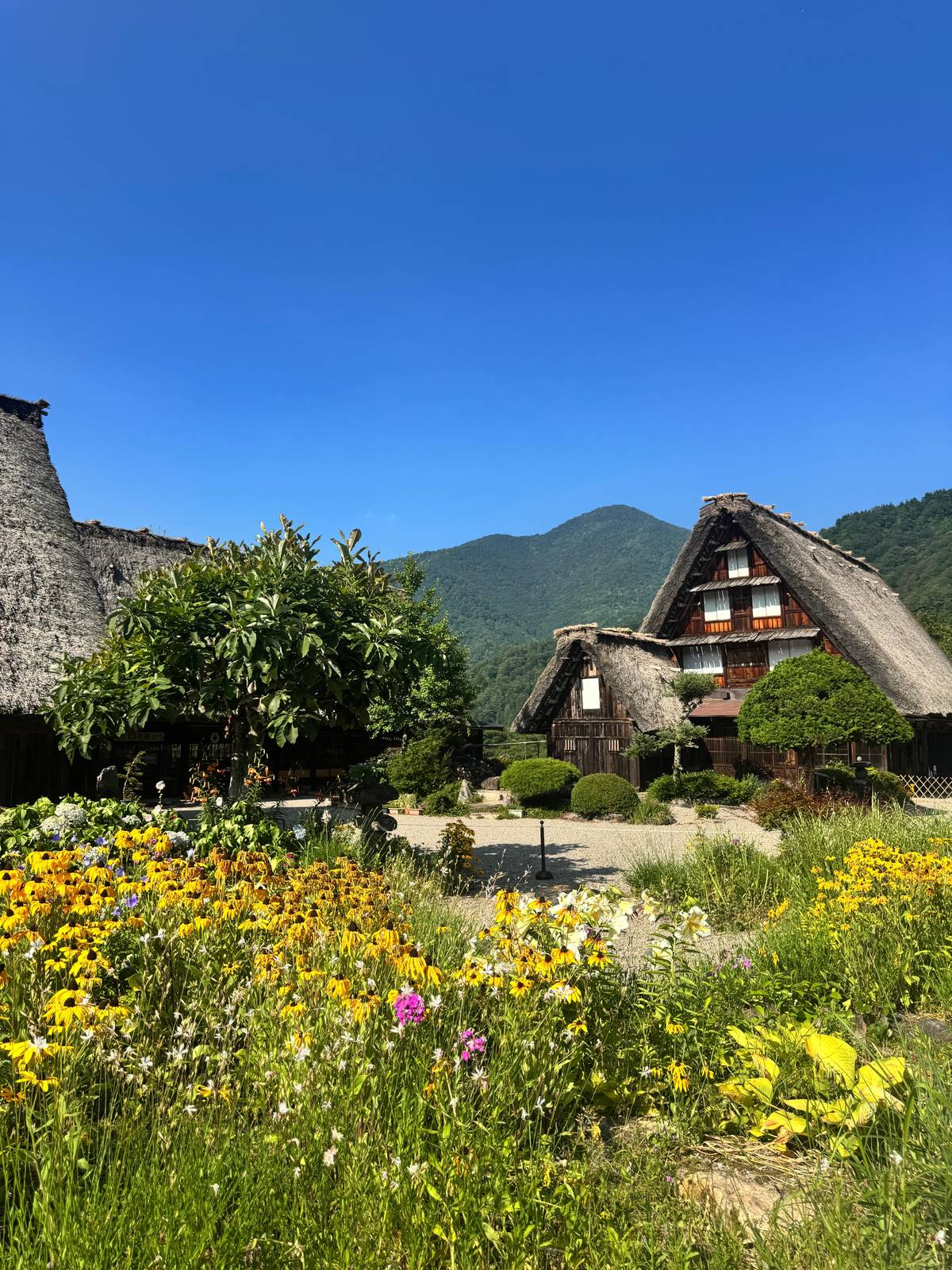
From Kanazawa · 4 hrs
from $71
View tour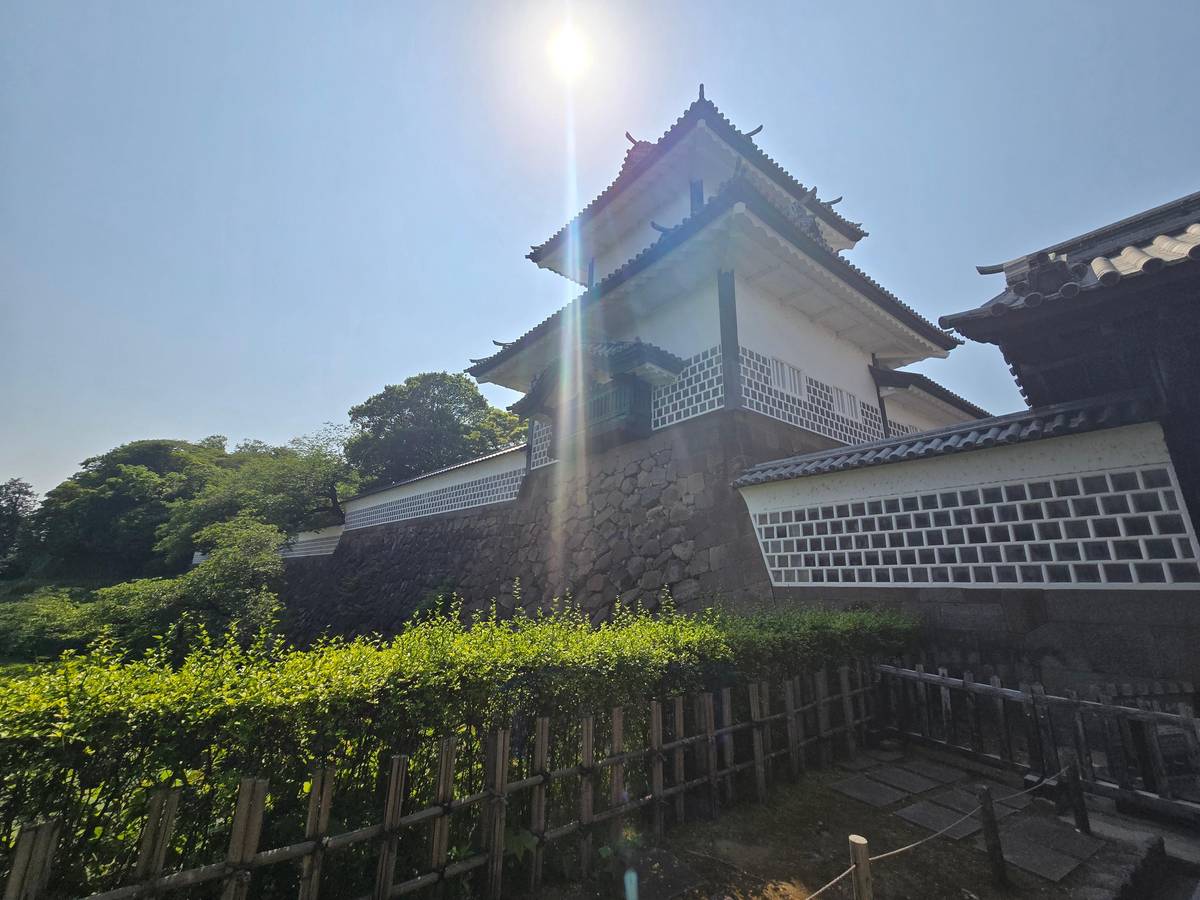
From Kanazawa · 2.5 to 3 hrs
from $61
View tour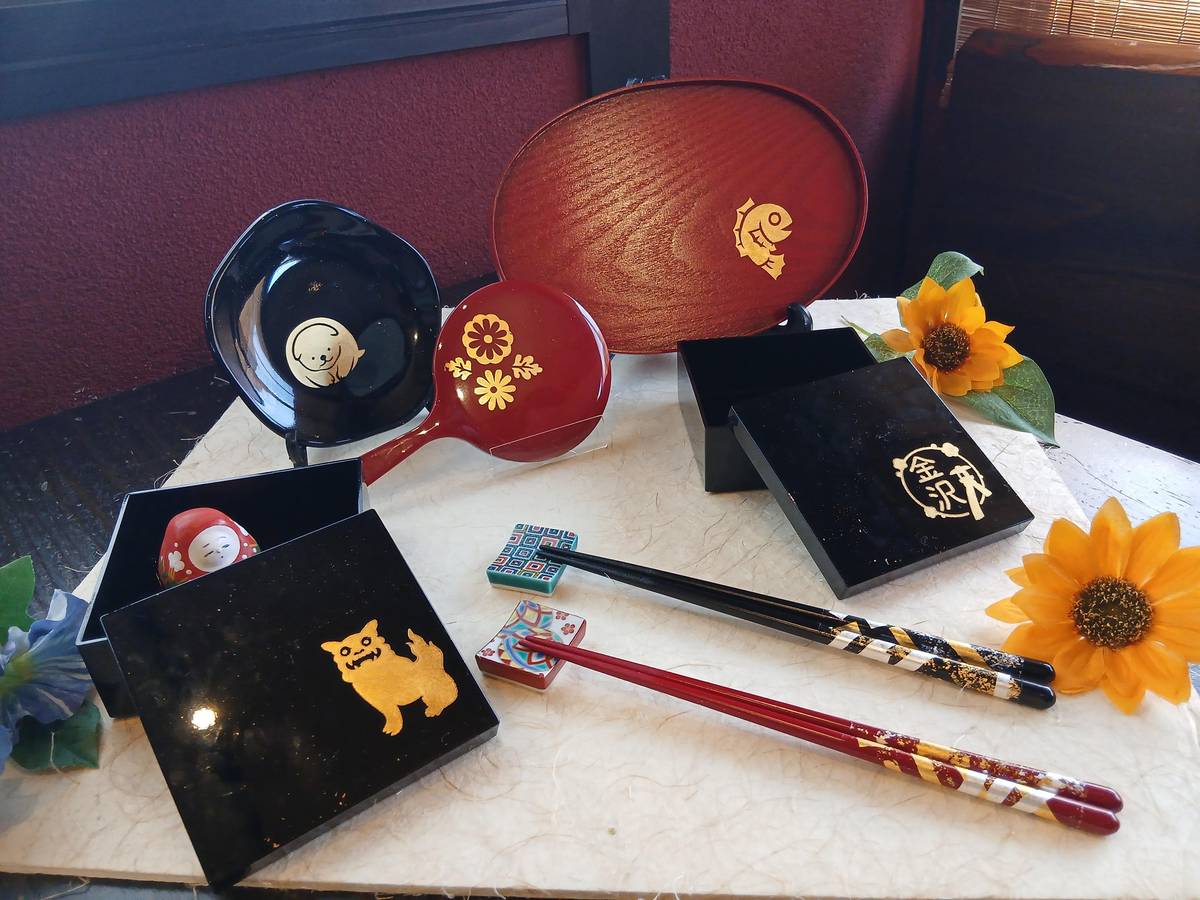
From Kanazawa · 1 hour
from $32
View tour
From Kanazawa · 1 day
from $848
View tourQuick · the market hour
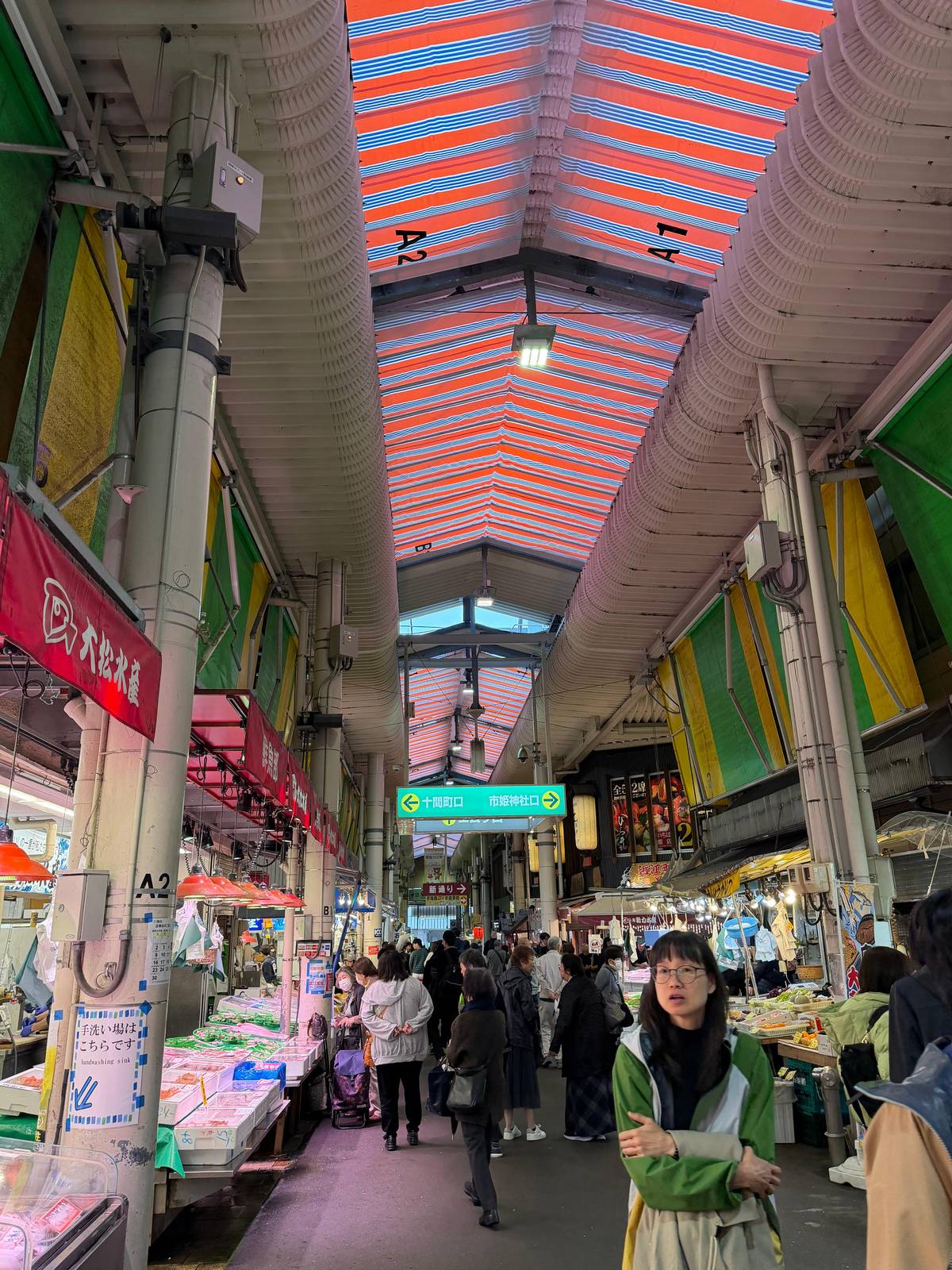
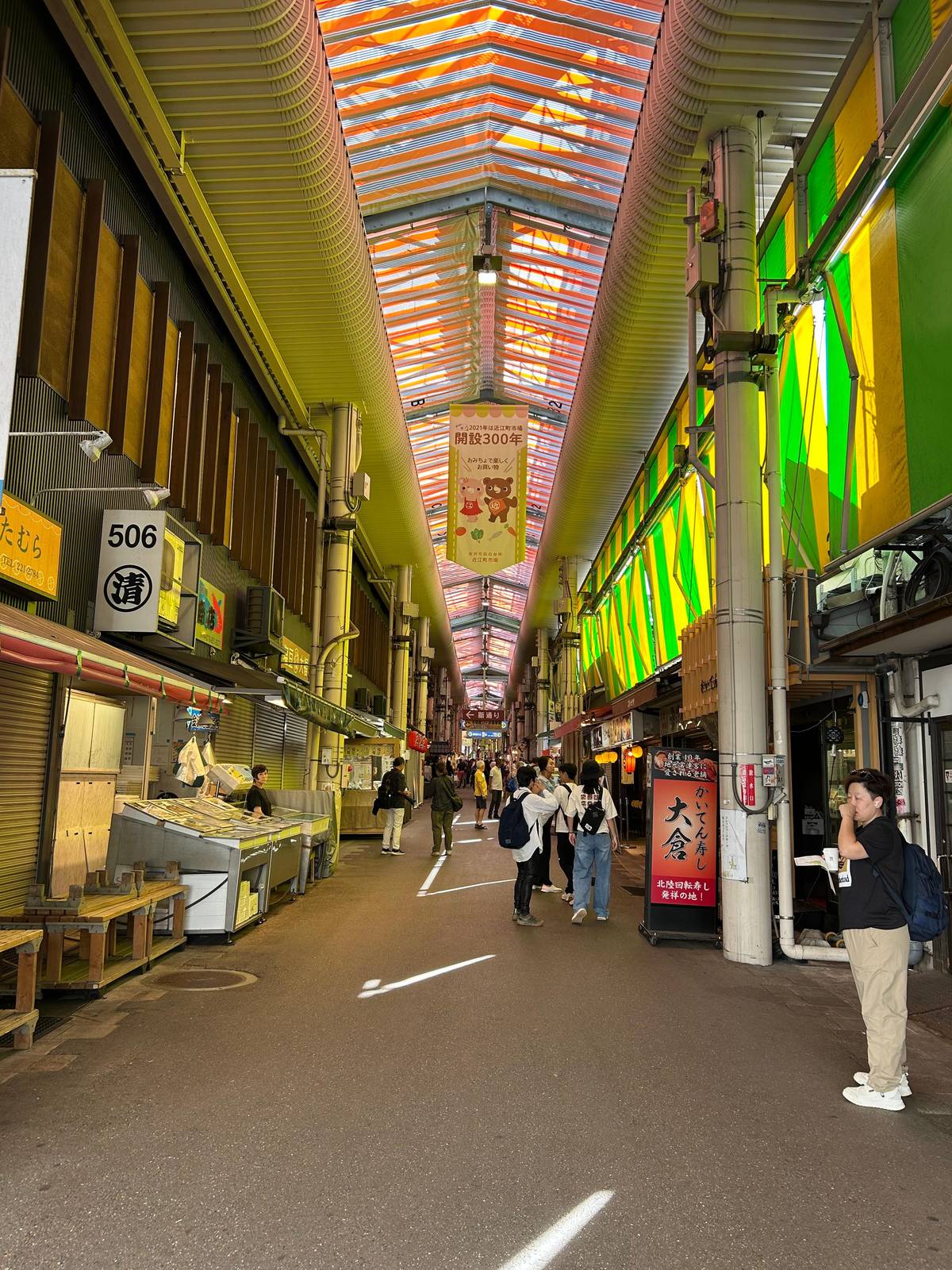
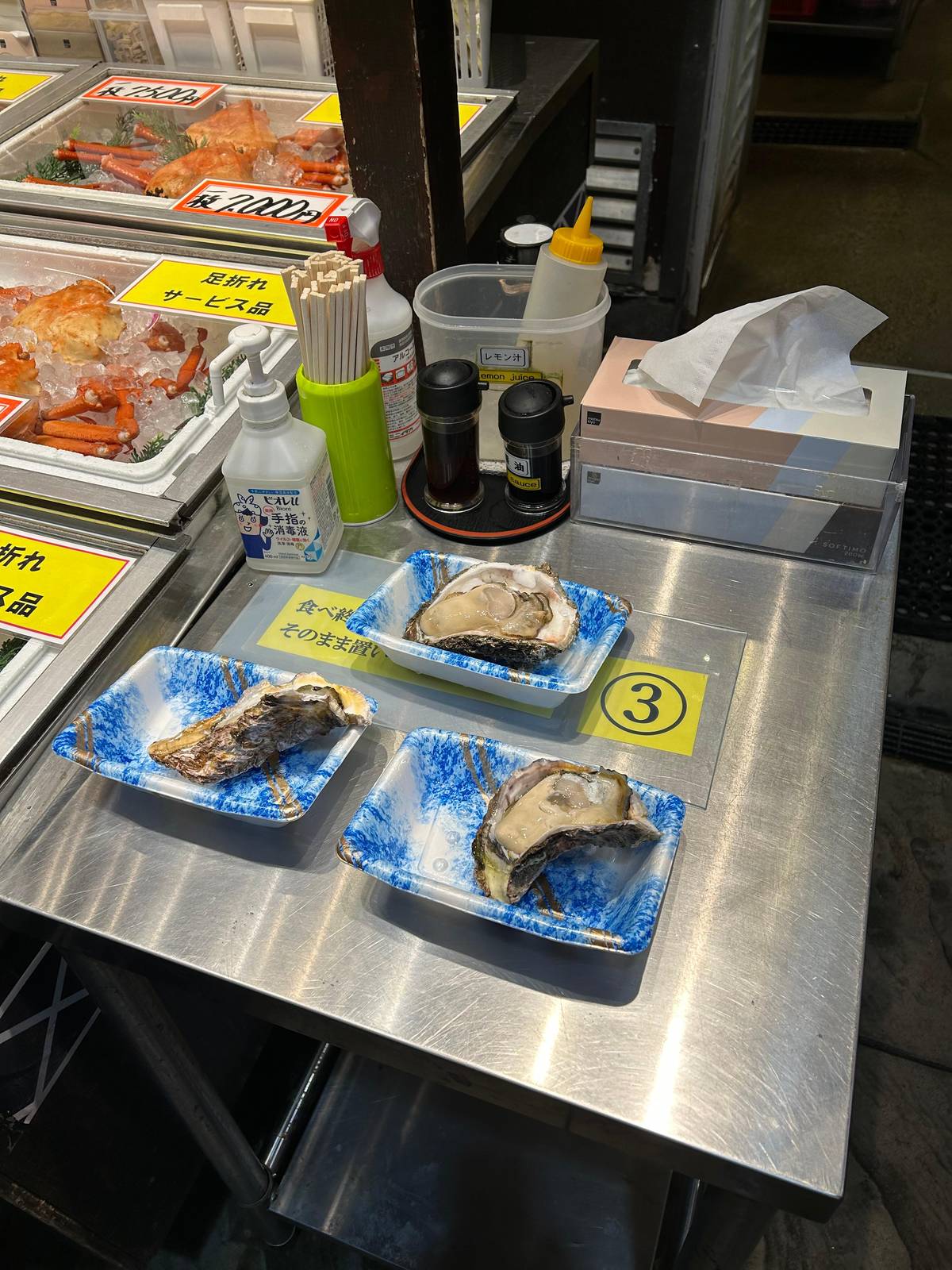
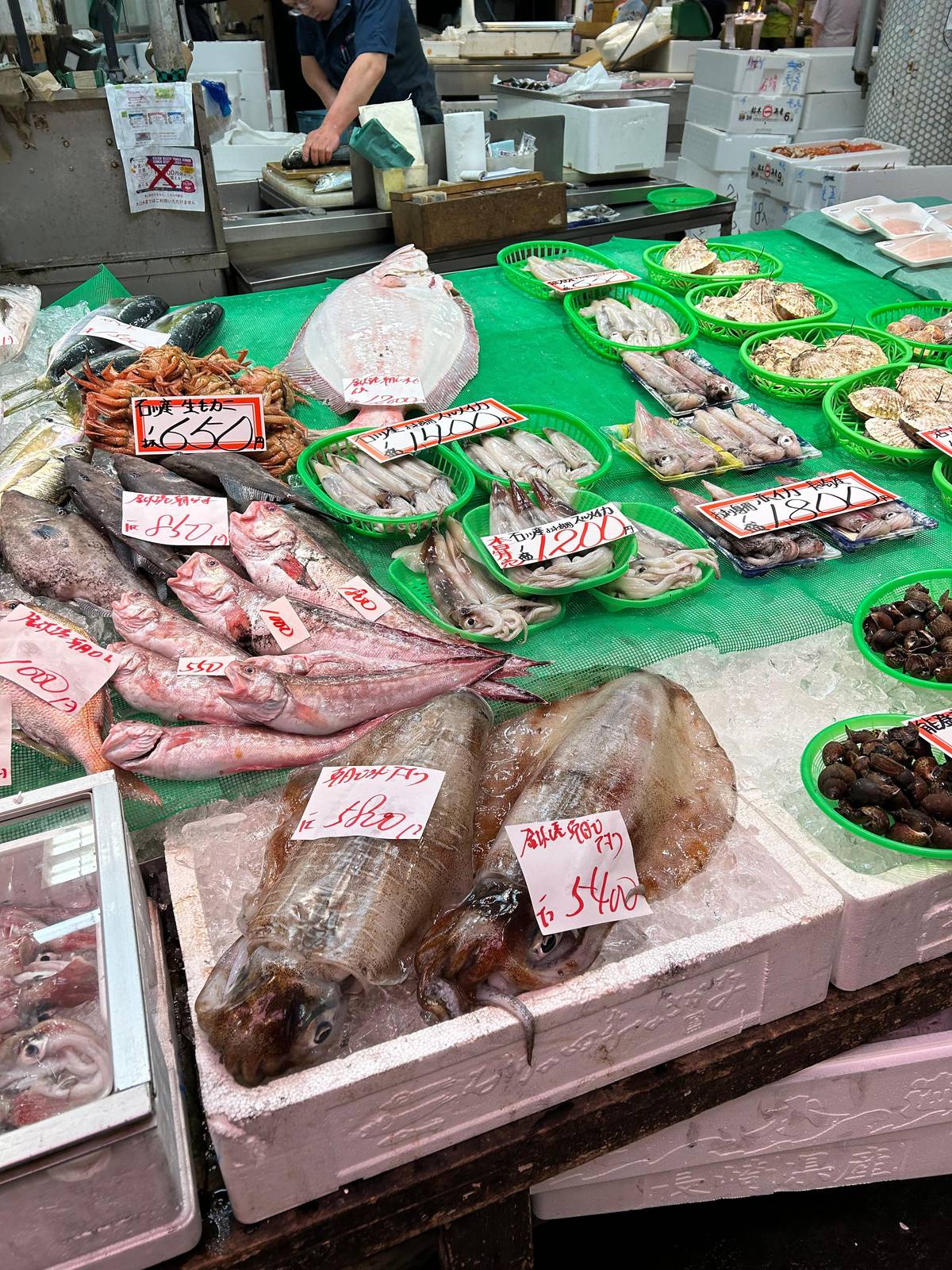
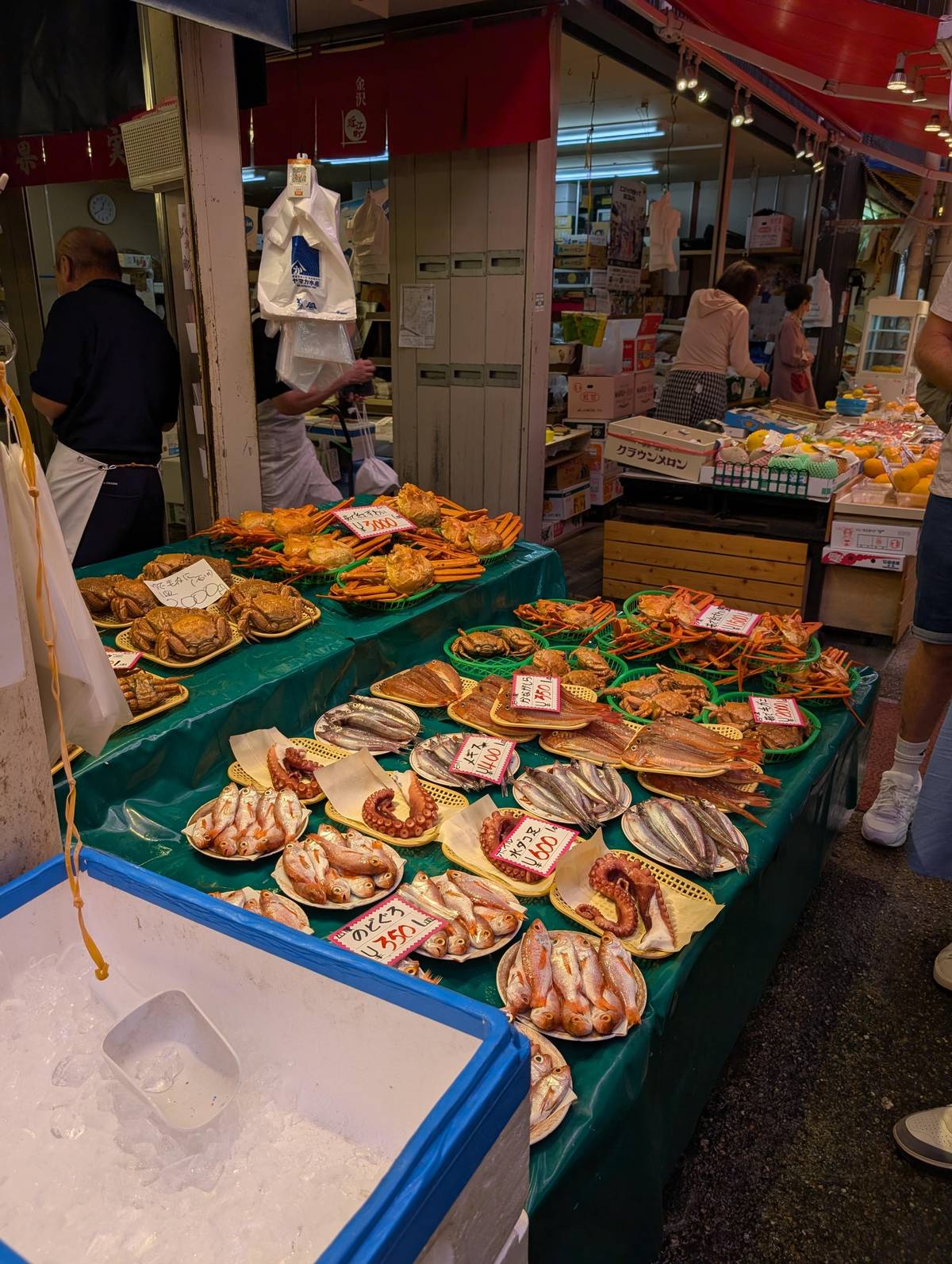
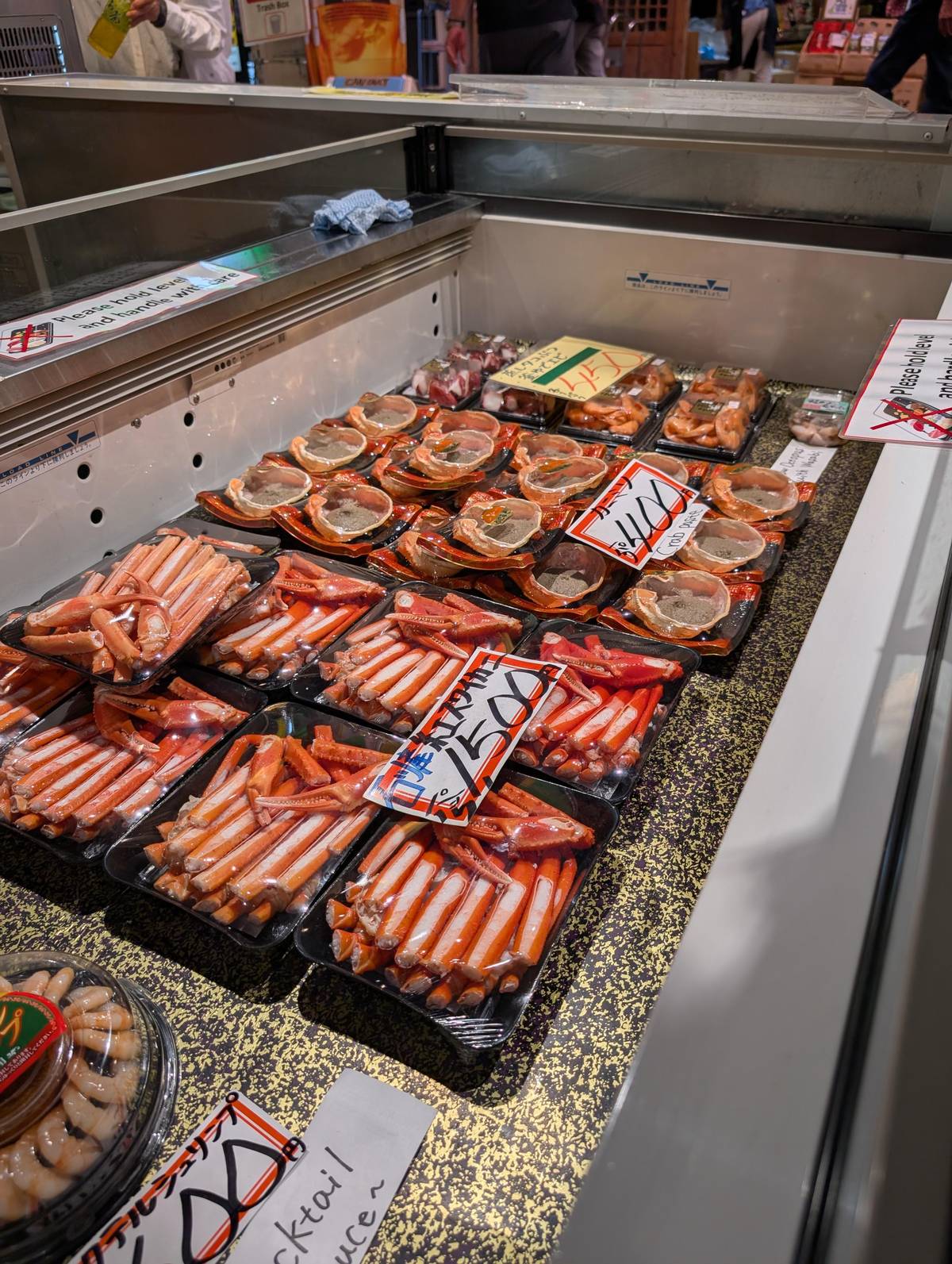
Omicho Market has fed Kanazawa for more than 300 years, since the Edo period, and calls itself the kitchen of the city's people. More than 170 stores fill its lanes, many of them fishmongers with seafood from the Sea of Japan, alongside produce stalls, grocers and restaurants.
On the walk, your guide points you to what is good that day. The listing names crisp croquettes, Noto beef steak skewers, grilled eel skewers and seasonal sashimi among the market bites. Bring cash: an operator of another market tour notes that most vendors accept cash only.
If you want more than a snack, a seafood bowl is the classic market meal. The tourism association calls kaisen-don, raw seafood over hot rice, one of the best ways to enjoy Kanazawa's fish, and many restaurants in and around the market serve it. Our guide to Omicho covers the hours and the seasons in detail.
Gallery
Quick · the sushi stop
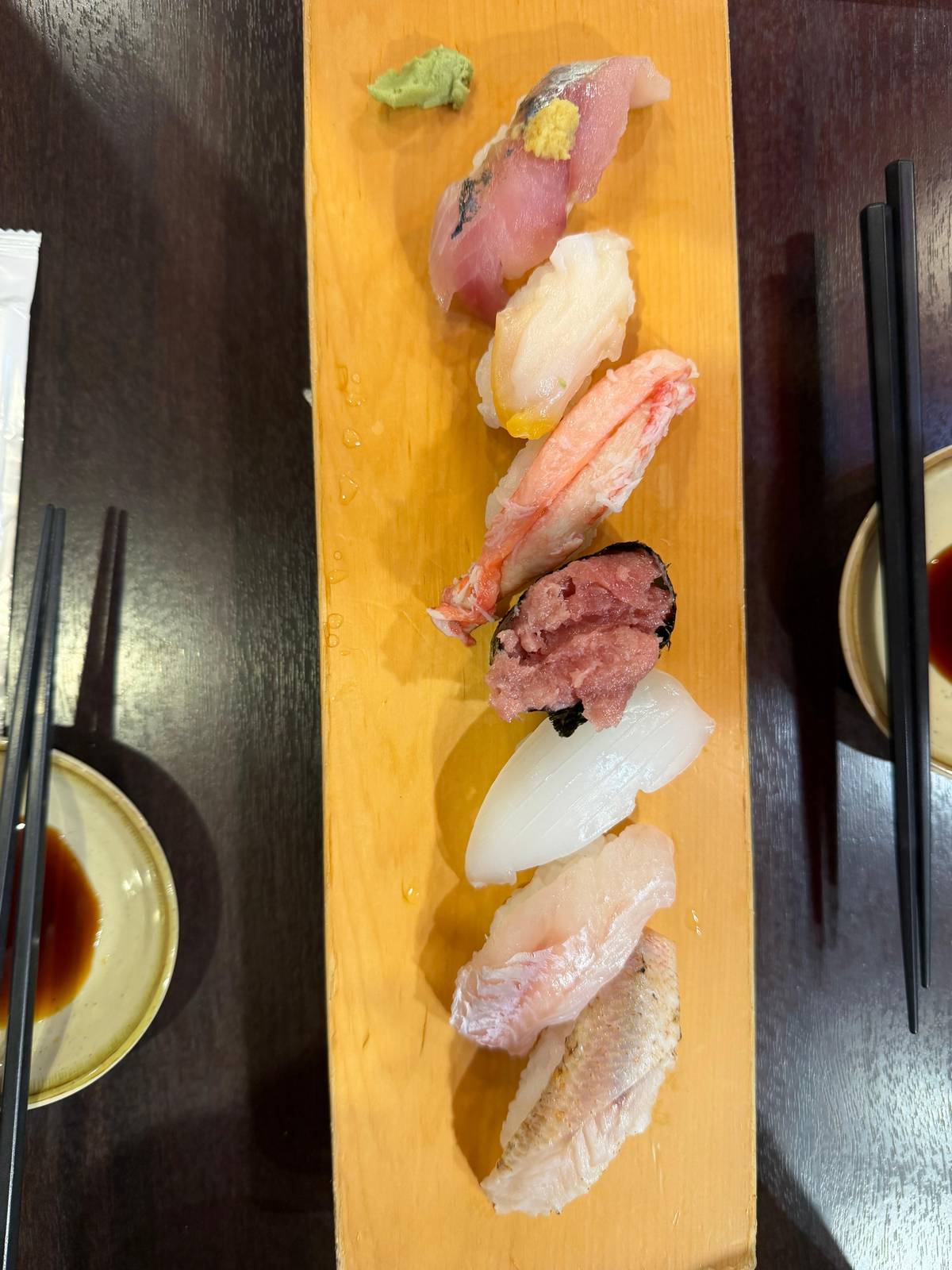
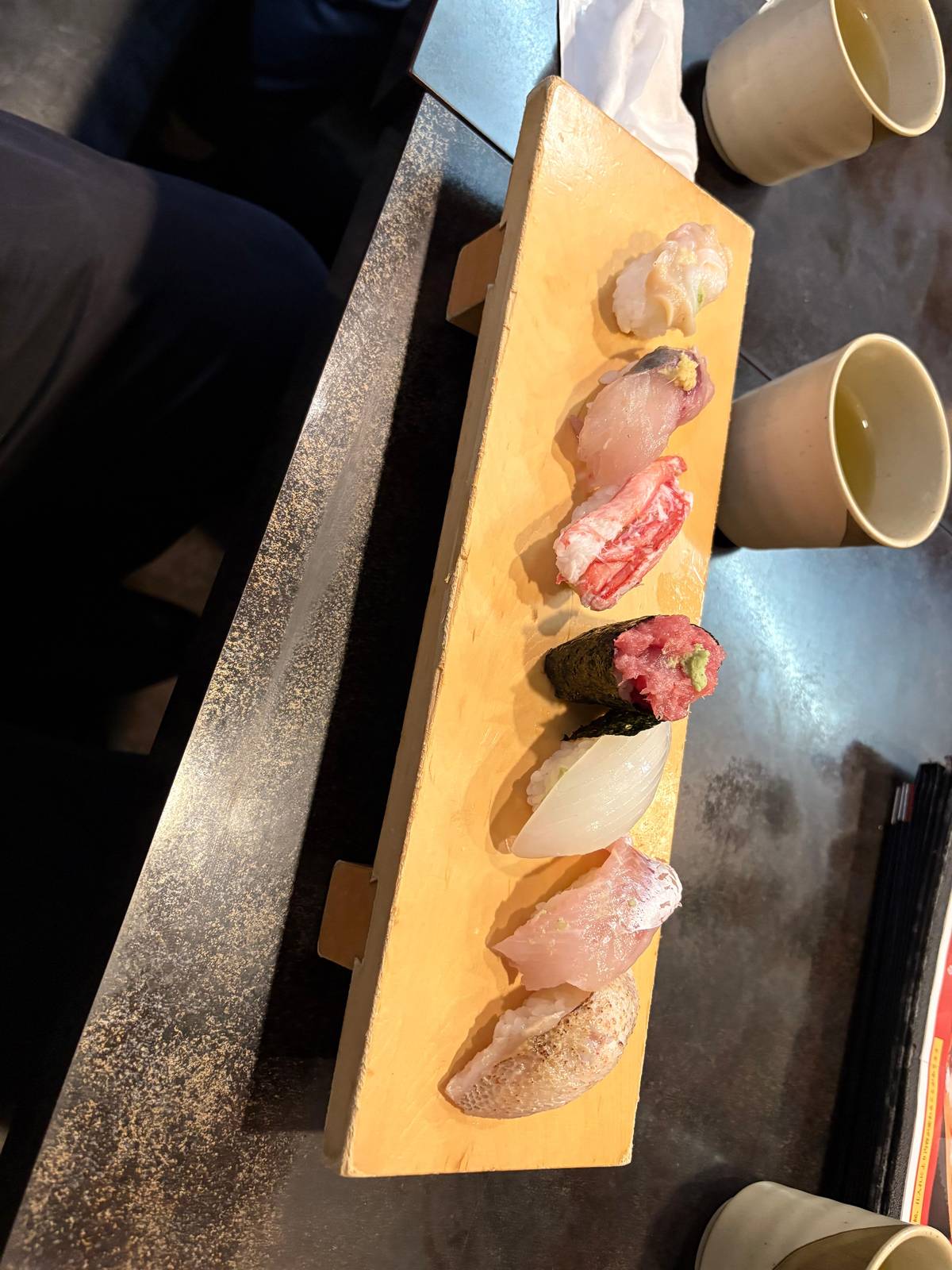
The listing names a local sushi restaurant as a stop, and your guide's food recommendations are part of the walk. The fish it names are Kanazawa's own: nodoguro, sweet amaebi shrimp, baigai shellfish and seasonal white fish.
Nodoguro is the one to try if your budget allows. JNTO calls it one of the most expensive and sought-after fish, caught all year but best eaten in winter. Restaurants near the market buy their fish directly from it, sometimes up to twice a day, JNTO adds.
Kanazawa takes sushi seriously. The tourism association says residents rank among the top spenders in Japan on eating out for sushi. You do not need to order a full set: a few pieces of local fish are enough to understand why, and leave room for the rest of the walk.
Hungry yet?
Pick a date, meet at M'ZA and cancel free up to 24 hours before.
Quick · gold and sake
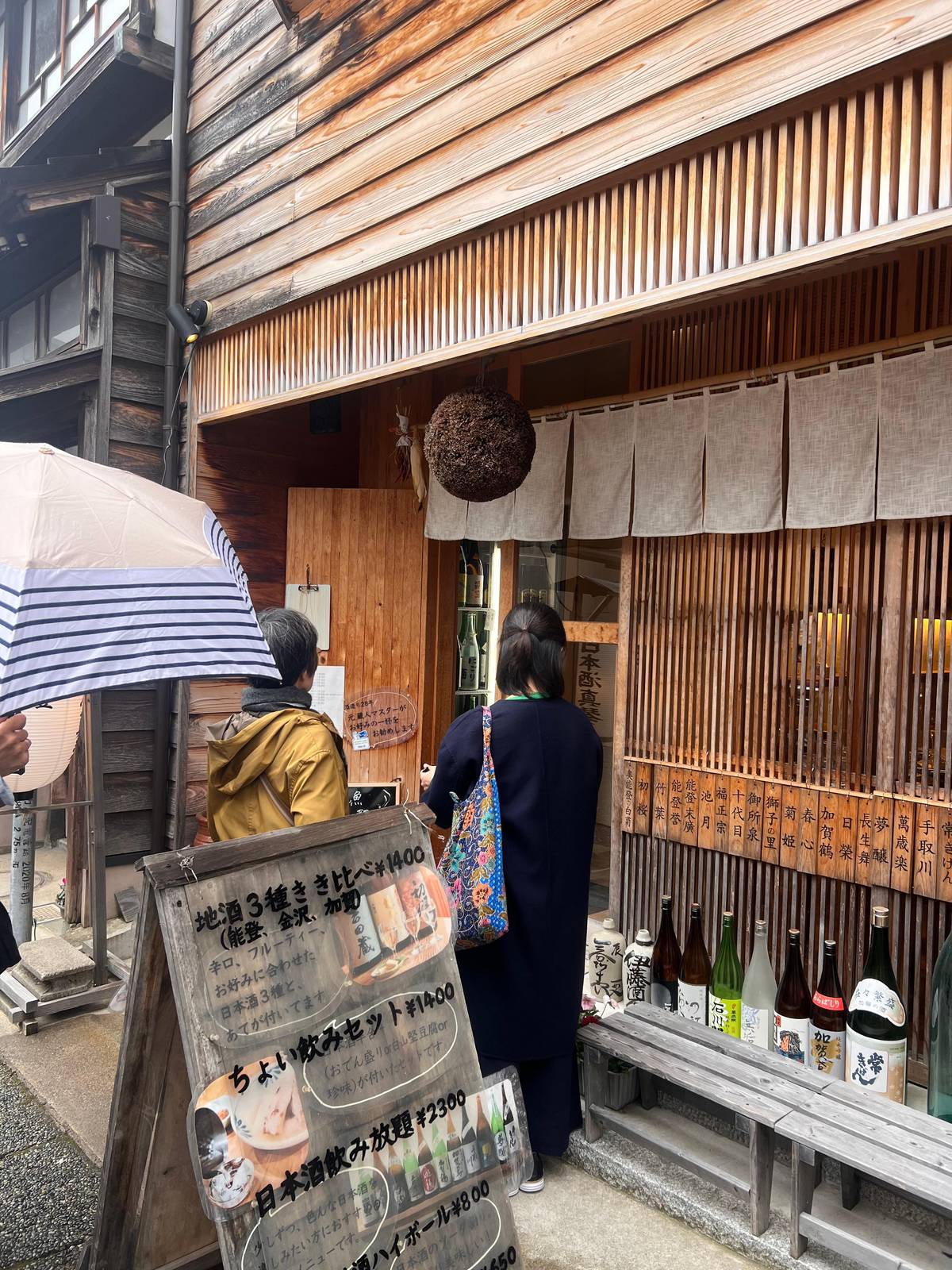
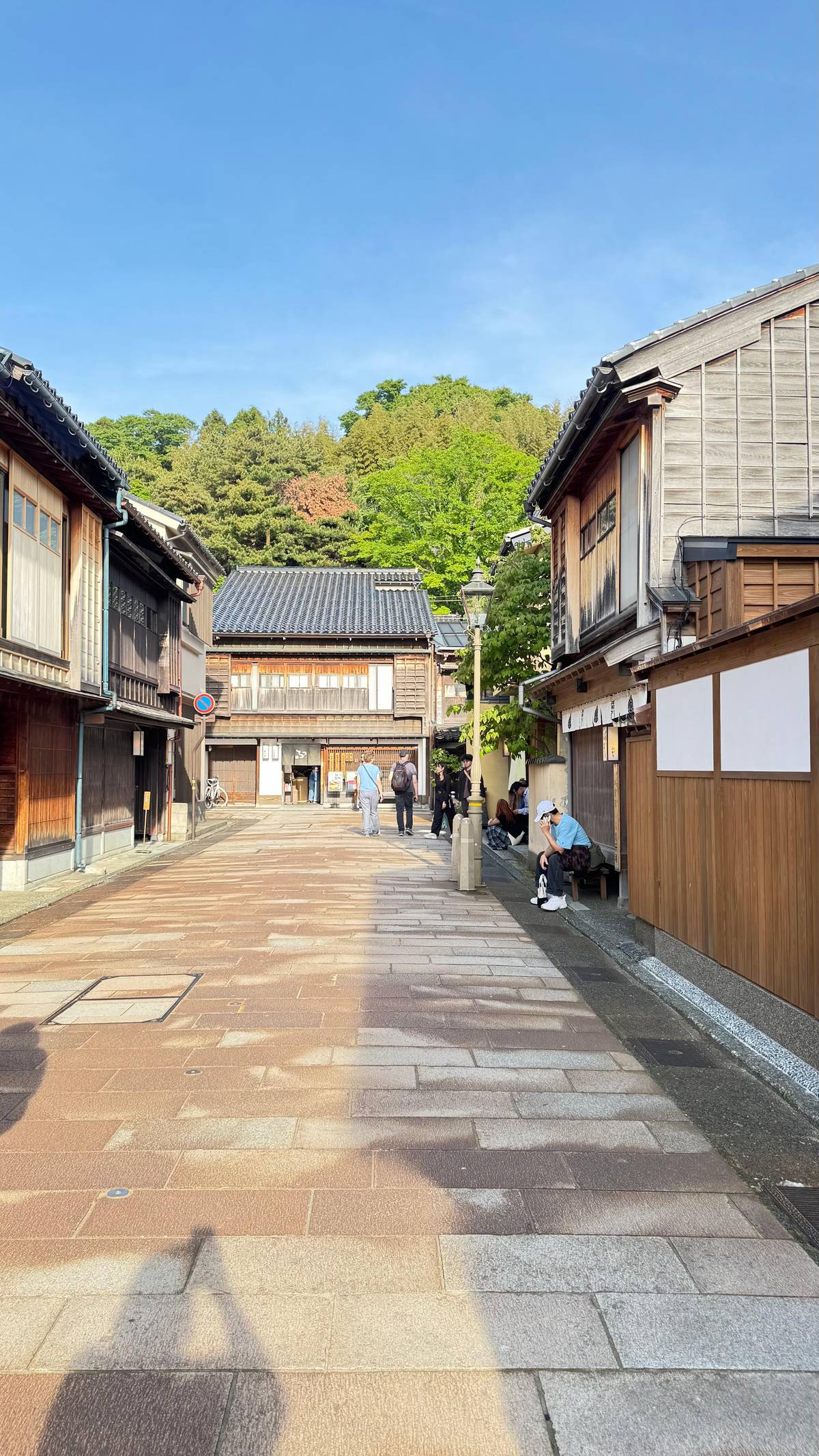
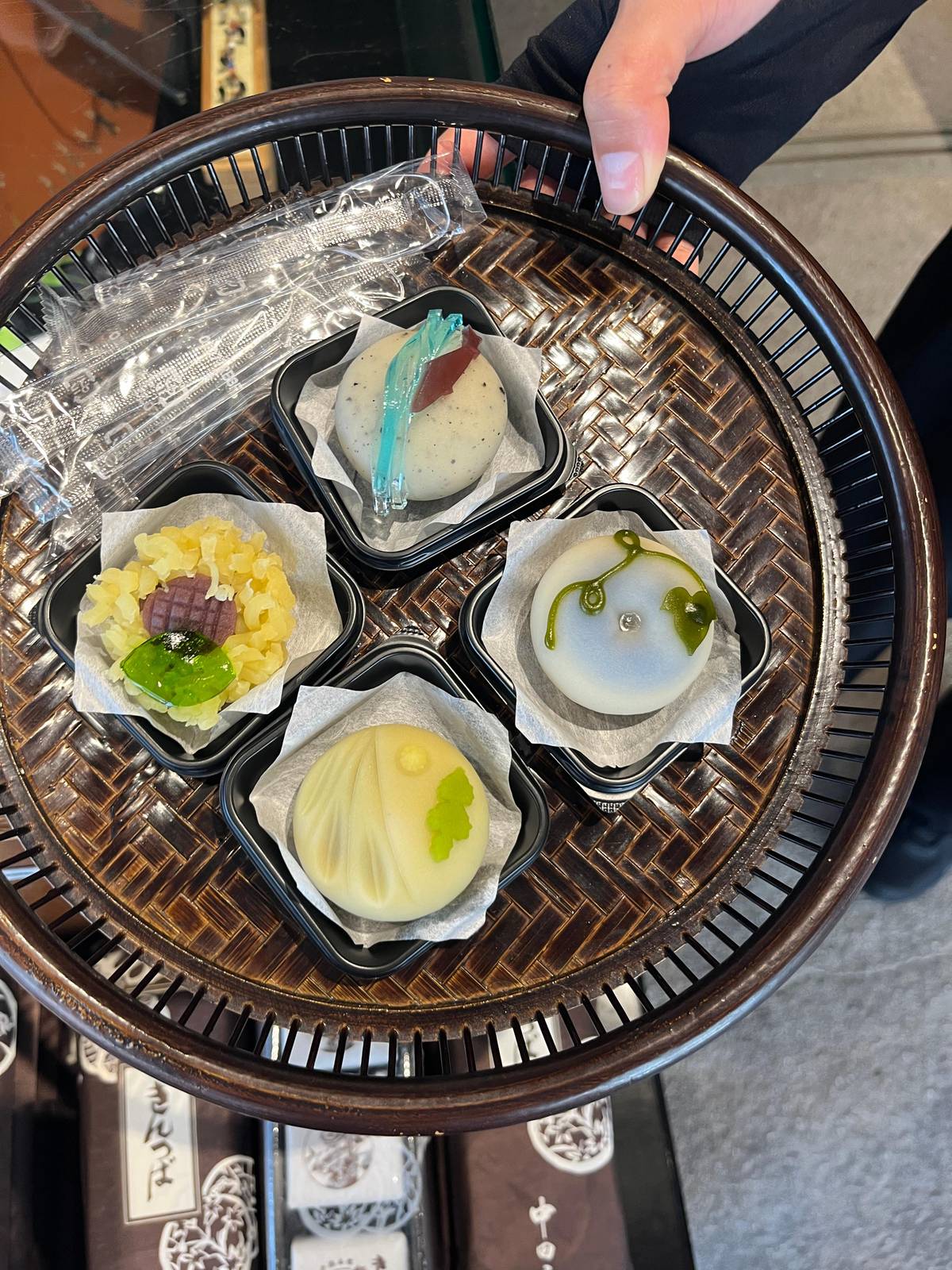
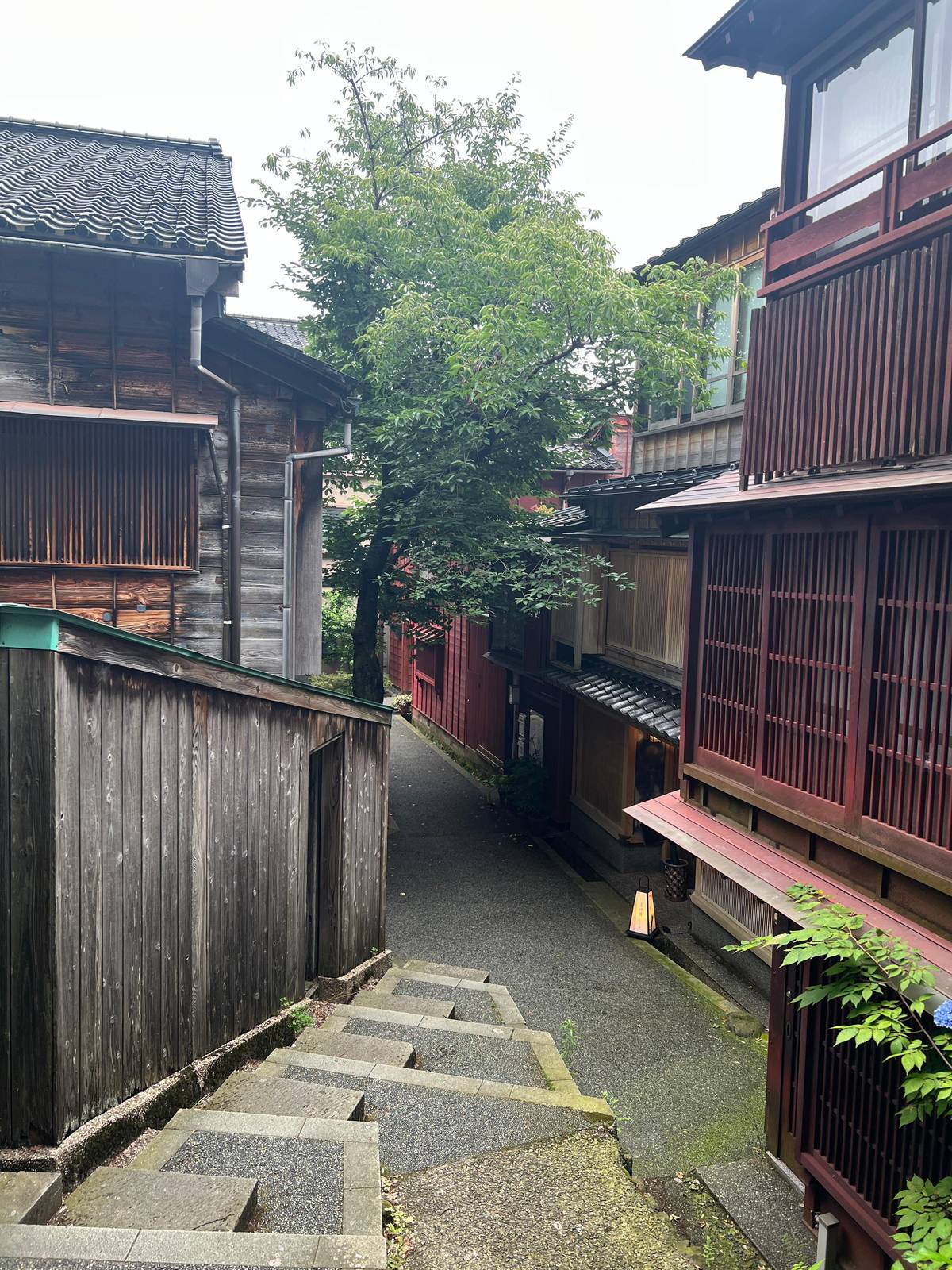
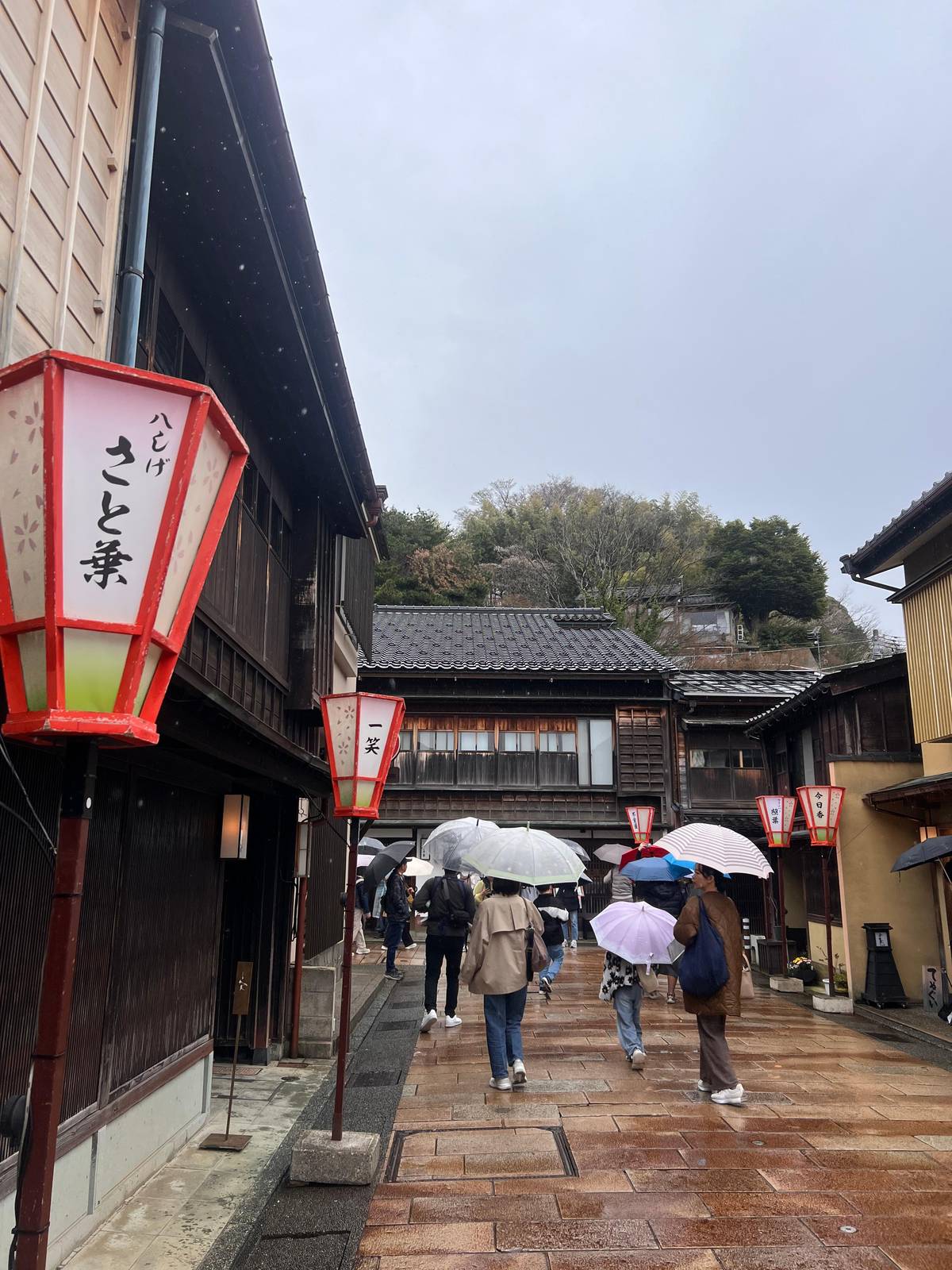
The second half of the walk moves to the Higashi Chaya District, an Edo-period street of two-story wooden teahouses, inns, shops and cafes. The tourism association says it is the largest of the city's three historical geisha districts. Here the listing names gold leaf shops, craft boutiques and a sake tasting bar.
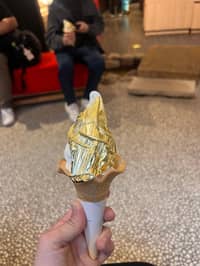
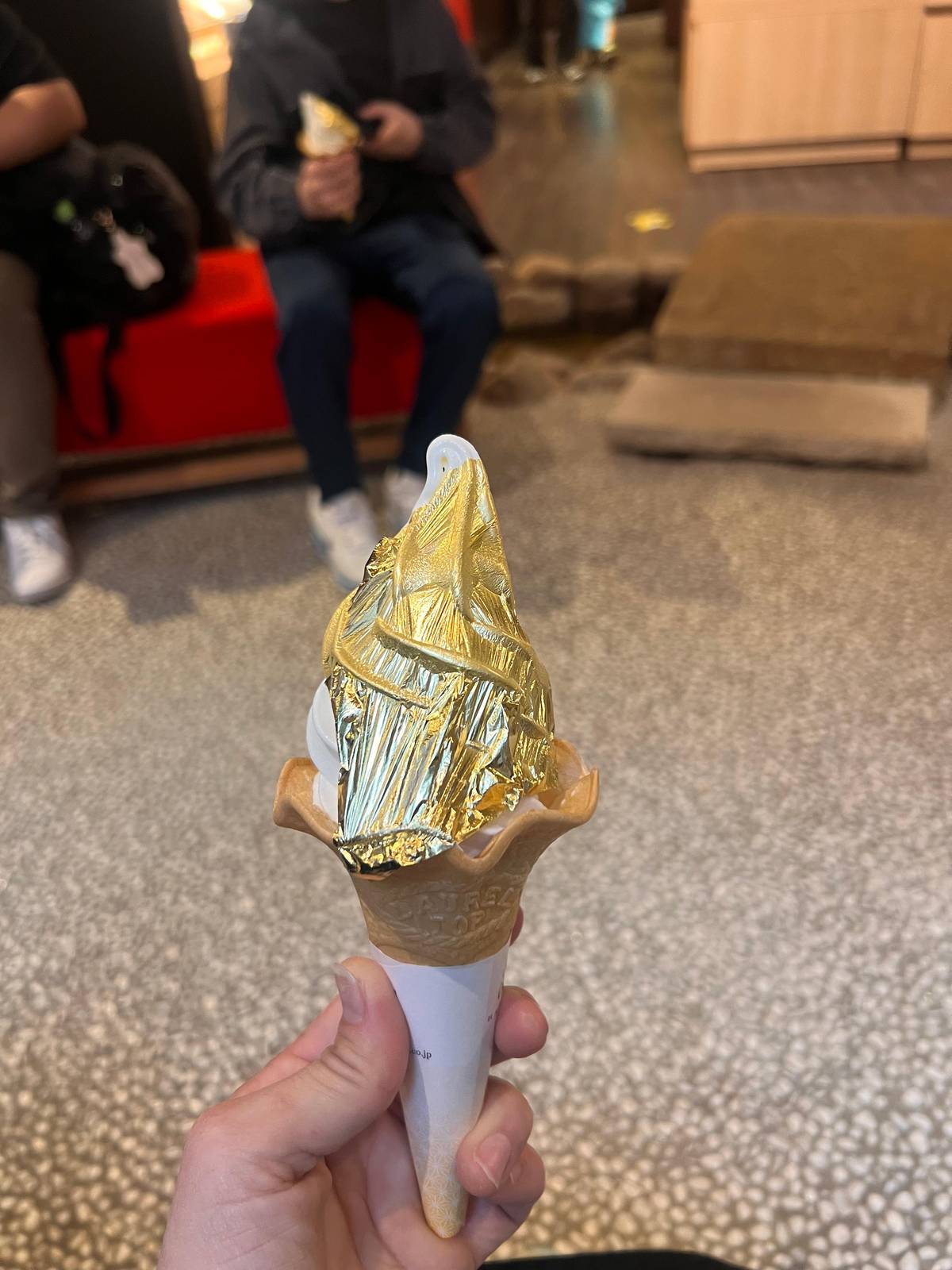
Gold is the local specialty in every sense. Kanazawa makes 99% of Japan's gold leaf, and soft-serve wrapped in a whole sheet of it is unique to the city. The leaf is beaten so thin, 1/10,000 of a millimeter, that you can neither taste nor feel it.
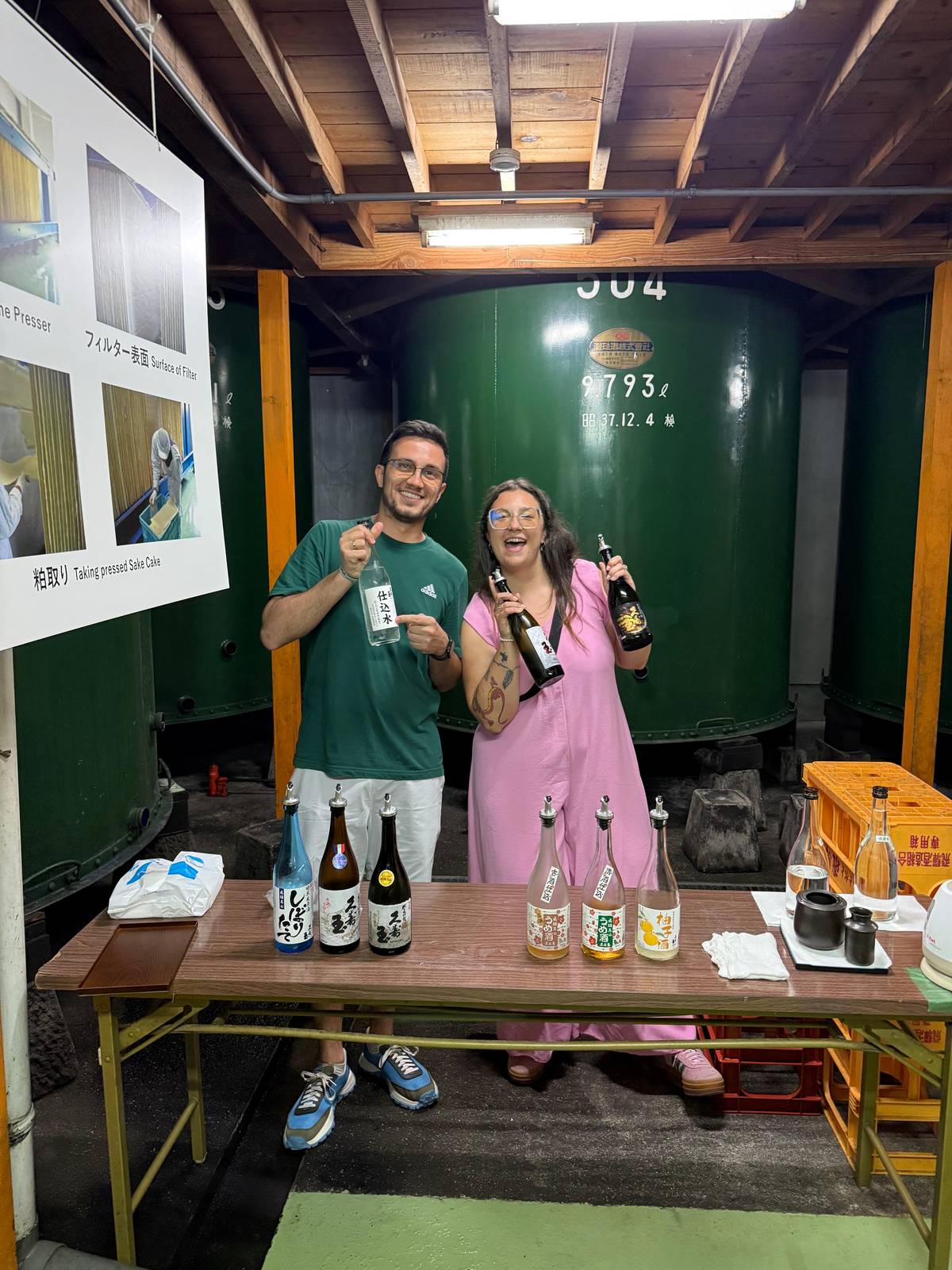
The walk ends with Ishikawa sake. At a local sake shop you taste well-known brands such as Tengumai, Kagatobi and Fukumasamune, and non-alcoholic options are available. Sake has been brewed in Kanazawa for 400 years, from Kaga Plain rice and river water.
Weather
Highs, lows and rainy days are Japan Meteorological Agency normals for its Kanazawa station, 1991 to 2020; day length is our calculation.Highs, lows and rainy days are Japan Meteorological Agency normals for its Kanazawa station, 1991 to 2020; day length is our calculation.
Quick · paying as you go
Read this before you book. The listing excludes food and drink costs, and says tips for the guide are appreciated but optional. What you pay for is the guide, the route and the help: you buy your own sushi, snacks, ice cream and sake as you go, which lets you eat as much or as little as you like.
The guide brings a lot to the walk. The listing includes voice AI language support, photos and videos taken by the guide during the tour, hidden local spots and photo stops, food and souvenir recommendations, a personalized route, local tips for the rest of your trip and help with restaurant reservations afterwards.
Live guiding is offered in English, Japanese, Spanish, Russian, Korean, French and Chinese, and a private group option is available. You can reserve now and pay later, and cancel free up to 24 hours before.
Gold on the menu
Kanazawa makes 99% of all the gold leaf produced in Japan.
The leaf is beaten to 1/10,000 of a millimeter, too thin to taste, and the city wraps soft-serve in it; you can buy a cone on this walk.
Quick · the seasons
The market changes with the sea. In Ishikawa the crab fishing ban lifts on 6 November, and red crabs appear at the shop fronts of Omicho. Mature yellowtail arrives late in November, when the cold sets in and winter thunder rolls.
Kaga cuisine marks the other seasons with seafood too: sweet shrimp in spring and rock oysters in summer. The tourism association warns that the market is crowded with tourists and locals around November, when crab, yellowtail and shrimp are at their most prized.
In summer, browse the fruit and vegetable stalls too. Winter brings the richest fish, including nodoguro, best eaten in the cold months. Whenever you come, ask your guide what is in season that week.
The practical part
Quick · temperature
Kanazawa is a wet city in winter. Japan Meteorological Agency normals for its Kanazawa station show 23 rainy days of 1 mm or more in January and in December, with daytime highs of 7.1°C and 10.2°C. Bring an umbrella and shoes that cope with wet stone.
August is the hot, sticky month, with an average daily high of 31.3°C, the warmest of the year, and 9 rainy days. Spring and autumn are milder: April averages 17.3°C and October 21.8°C at their daily peak.
The market lanes are covered, but the walk to Higashi Chaya is not. The listing asks you to wear comfortable shoes for walking. Dress in layers in the cool months, and carry water in summer; ice cream helps too.
Outside the Starbucks at M'ZA. Wait in front of the Starbucks Coffee at Kanazawa M'ZA; the guide comes to greet you.
2.5 hours. About 1 hour in Omicho Market and 45 minutes in the Higashi Chaya District, with short walks between.
No. Food and drink costs are excluded; you pay for what you choose to eat and drink.
Your choice of market food. The listing names sushi, croquettes, beef and eel skewers, sashimi, gold-leaf ice cream and sake.
Yes, at a local sake shop. With Ishikawa brands such as Tengumai, Kagatobi and Fukumasamune; non-alcoholic options exist.
Several, English included. English, Japanese, Spanish, Russian, Korean, French and Chinese, with voice AI support.
Yes. The listing offers a private group option, and the route is already shaped around your interests.
Yes, says the listing. It is listed as wheelchair accessible; tell the operator about any needs when you book.
From 6 November. The crab fishing ban lifts that day in Ishikawa, and crabs appear at Omicho's shop fronts.
The market is covered; bring an umbrella. Kanazawa sees 23 rainy days in January and December; free cancellation runs up to 24 hours before.
Quick · getting there
The walk meets outside the Starbucks Coffee at Kanazawa M'ZA, 5 minutes on foot from Omicho Market; wait in front and the guide will find you. Starting times are shown on the availability check when you book.
From Kanazawa Station, the market area is a 15 to 20 minute walk or a short bus ride toward Korinbo, to the Musashigatsuji/Omicho Market stop. Several bus lines stop a minute from the market.
Kanazawa itself is about 2 hours 30 minutes from Tokyo Station on the JR Hokuriku Shinkansen. A morning walk works well on your first full day: the guide's tips for the rest of your stay are part of the deal.
Book now, cancel for free →Book now
GetYourGuide sends these dates and prices live to the page; nobody here types them in.
Typically booked up 6 days in advance
Quick · who it suits
It suits curious eaters who want to understand what they are eating, first-time visitors who want a friendly start in the city, and anyone who would rather choose their own food than follow a fixed tasting. It is wheelchair accessible, and a private group can be arranged.
The caveats are worth knowing. Food and drink are not in the price, so the total depends on your appetite. Guides are local, and reviewers mention a guide still learning English; the listing includes voice AI language support for anything that gets lost in translation.
If you would rather follow a planned tasting route, look at the tasting walk or the private walk compared on our tours page. If you want the market, the teahouses and the freedom to graze, this is the walk to book.
The rating
Excellent
4.7
92 genuine reviews on GetYourGuide
The bars count the 37 newest reviews we store for this walk, and GetYourGuide shows its top marks first; across all 92 reviews the score is 4.7.
Before you go
Hold a date now and settle up later; a day's notice is all a free cancellation needs. Live dates and prices come straight from GetYourGuide.
Typically booked up 6 days in advance