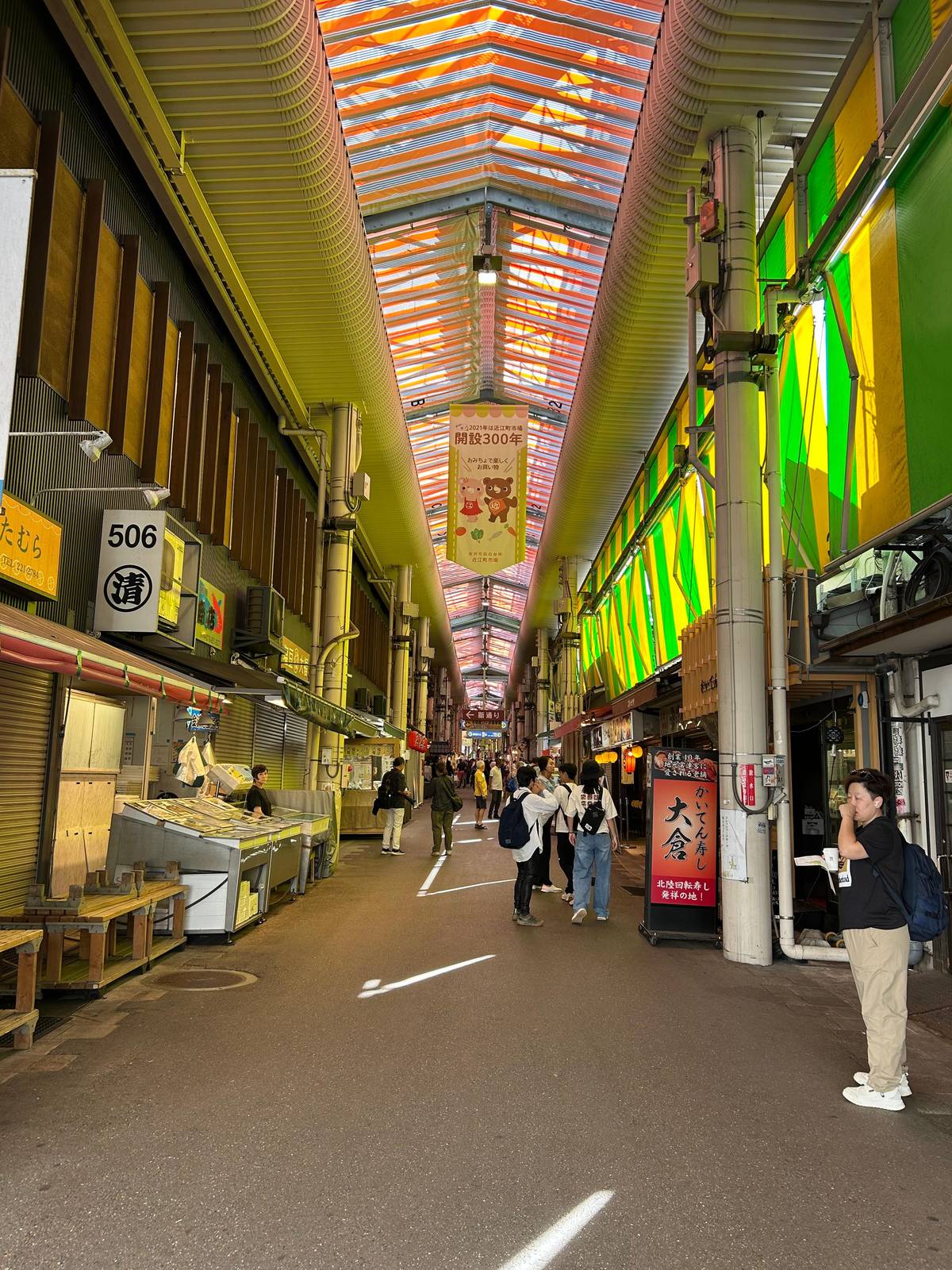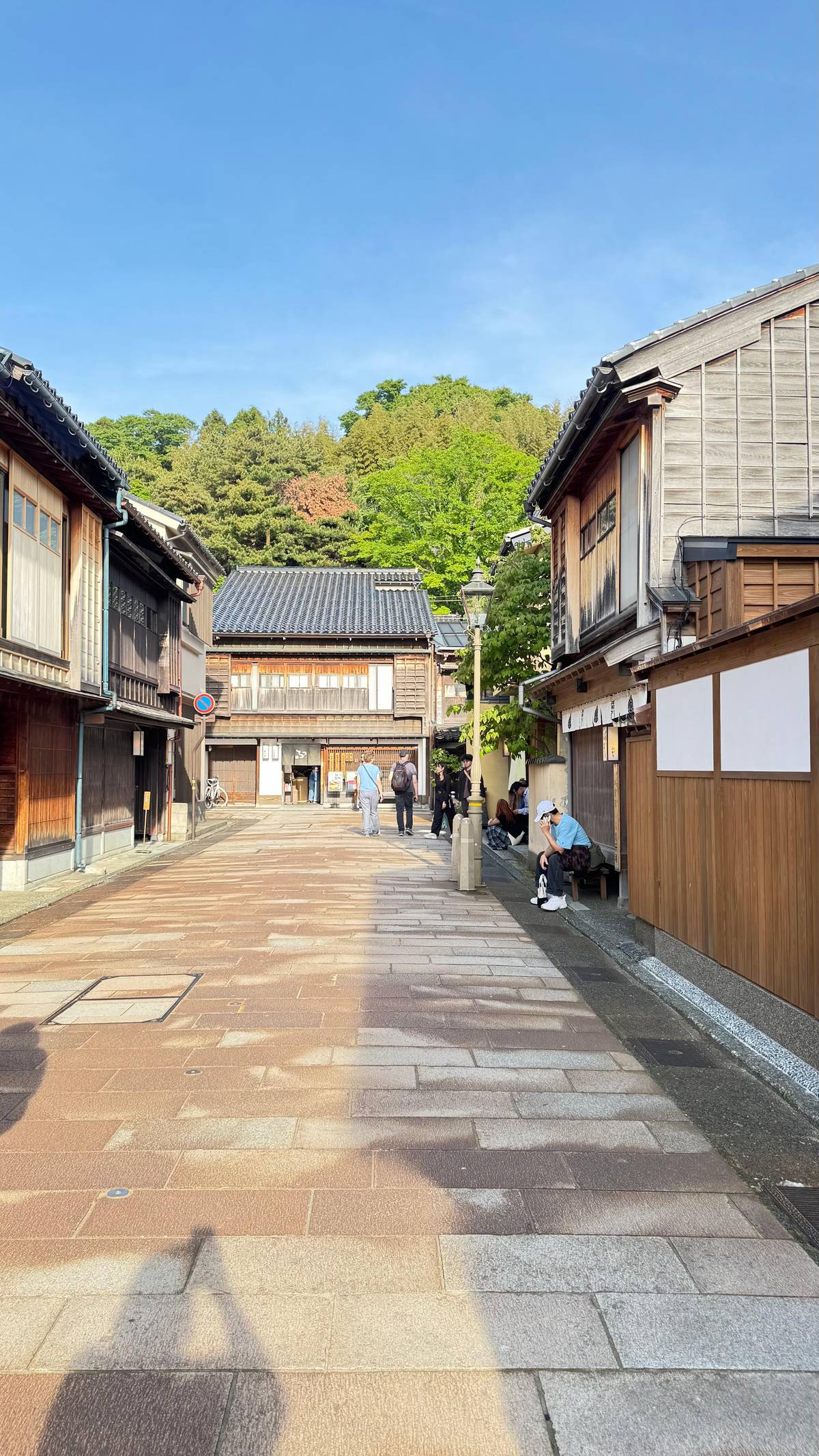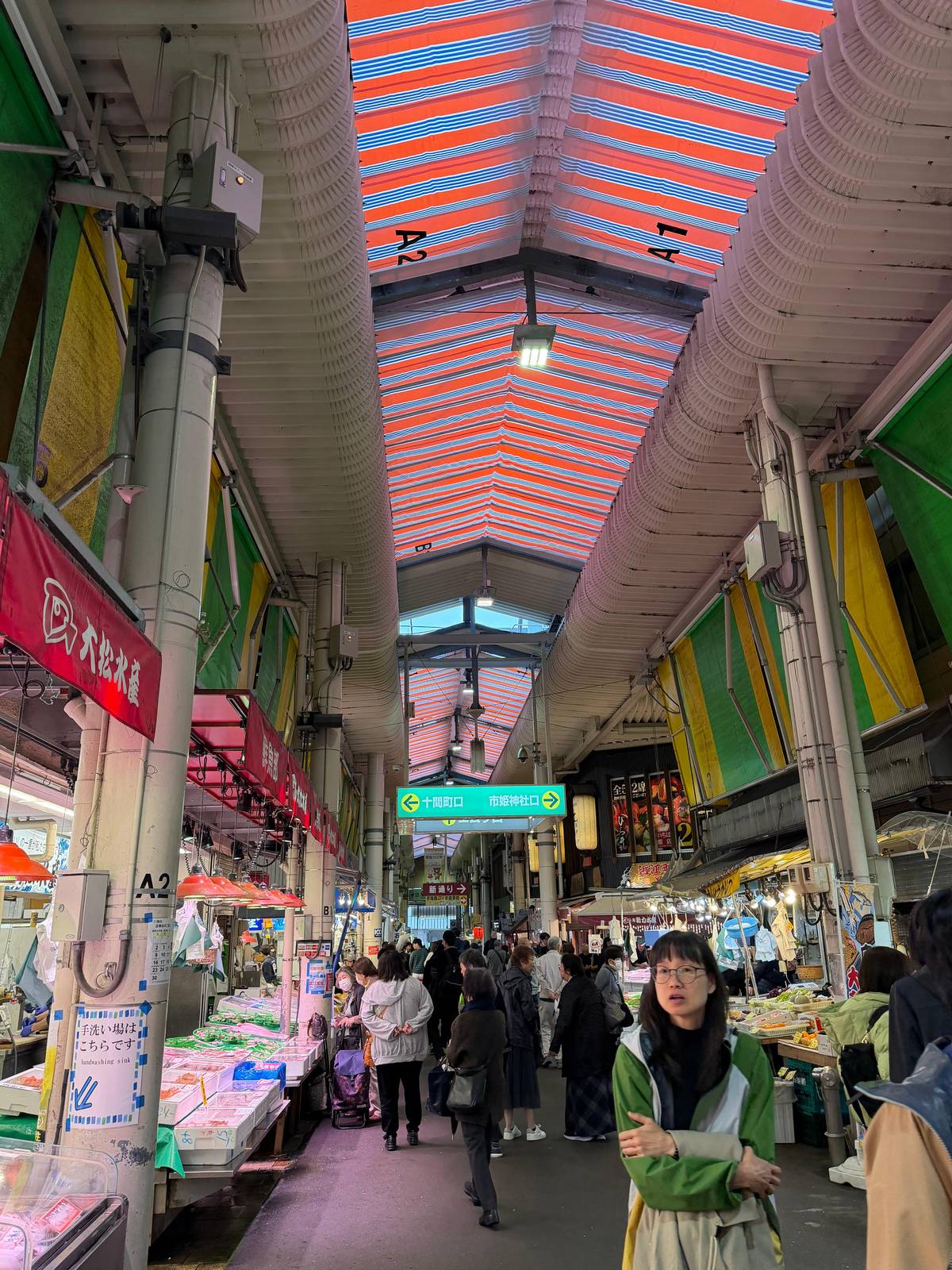
 In the market
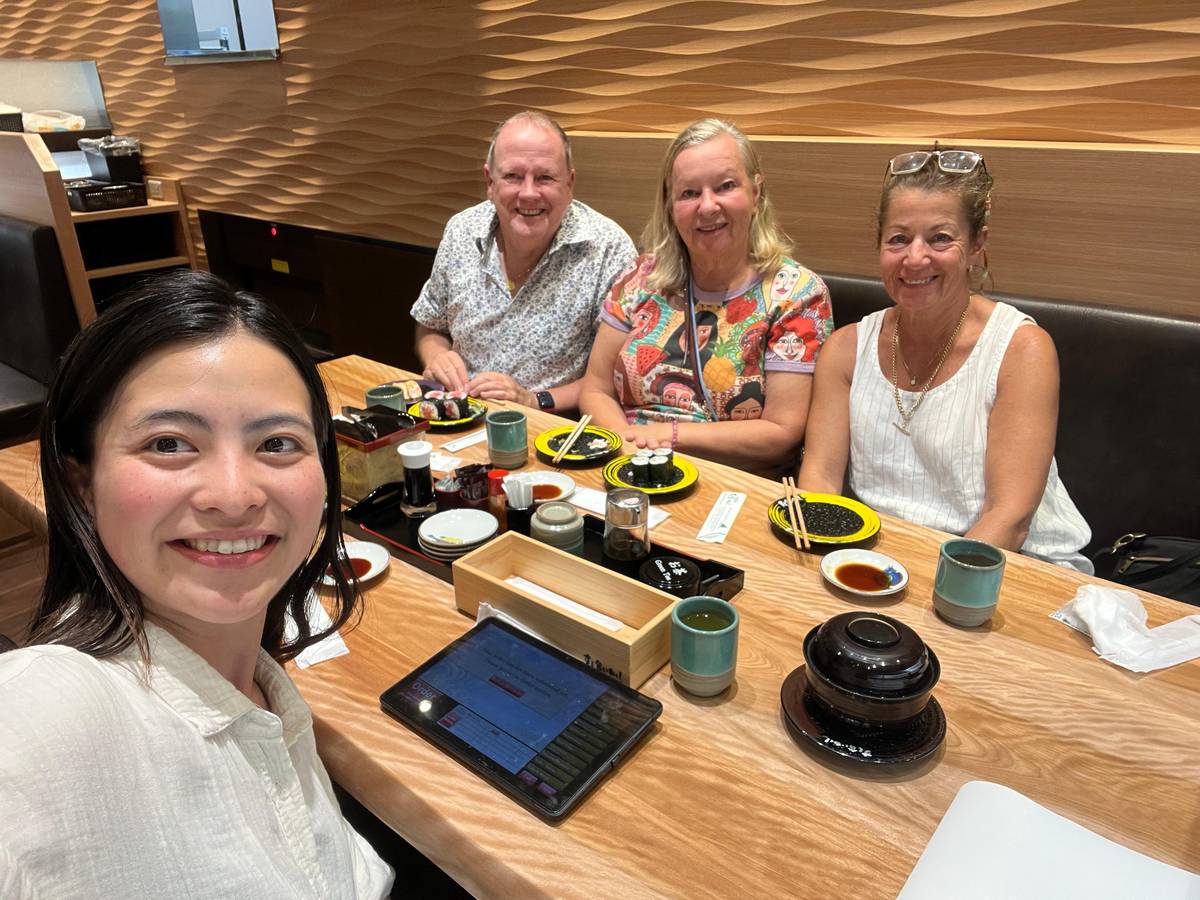
Omicho sushi class
At Sushi Enome
- Length
- 2 hours
- You make
- Nigiri, gunkan, roll
- Price
- from $71
Guides
Language
EnglishCurrency
US dollar · $On GetYourGuide you see prices in this currency.
Guide · Sushi
Sushi in Kanazawa is serious business, from market counters to conveyor belts that would pass for good restaurants elsewhere. Here is what to order, where, and how to make your own.
Editorial team, kanazawafoodtour.comUpdated October 25, 2026Reading time about 6 minutes23 sources
Quick answer
Sushi in Kanazawa starts with the sea. The tourism association says its quality comes not only from freshness but from the many sushi artisans who excel at preparing it.5 It adds that the city's sushi has earned a high reputation nationwide.6
Locals vote with their wallets. The tourism association says Kanazawa residents rank among the top spenders in Japan on eating out for sushi.1 That shows on the street: sushi restaurants range from Michelin-starred counters to casual conveyor-belt places, and both ends of that range are part of everyday life here.7
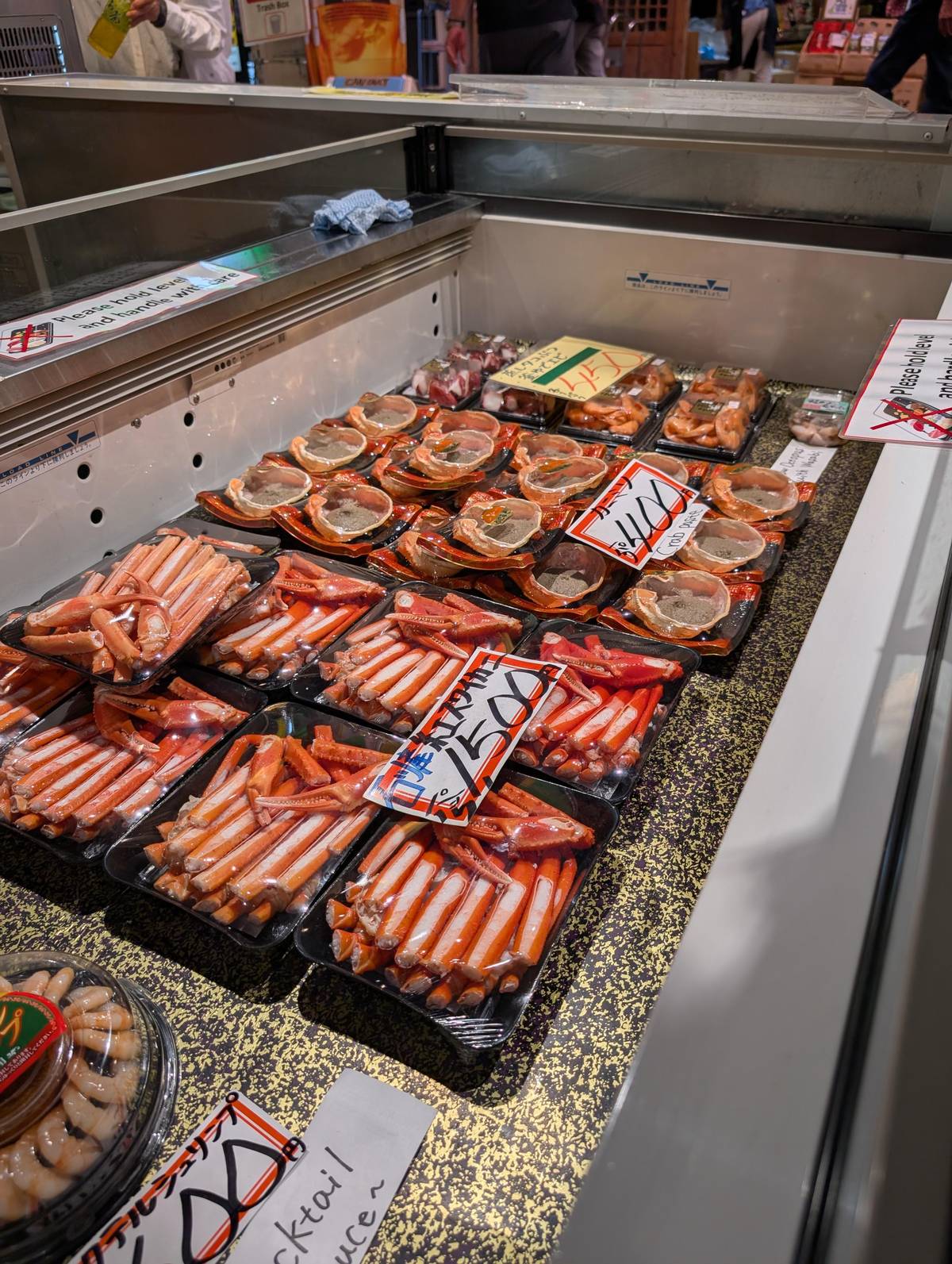
The other reason is the market. JNTO says sushi restaurants near Omicho Market buy their fish directly from it, sometimes up to twice a day.3 When the fish travels only a short walk from stall to counter, even a modest restaurant can serve something remarkable. Come hungry, and plan at least a pair of sushi meals rather than a single one.
A sushi class at Omicho
Arrival
Enter at the M'ZA side and turn right.
10 minutes early
The class asks you to arrive early.
The lesson
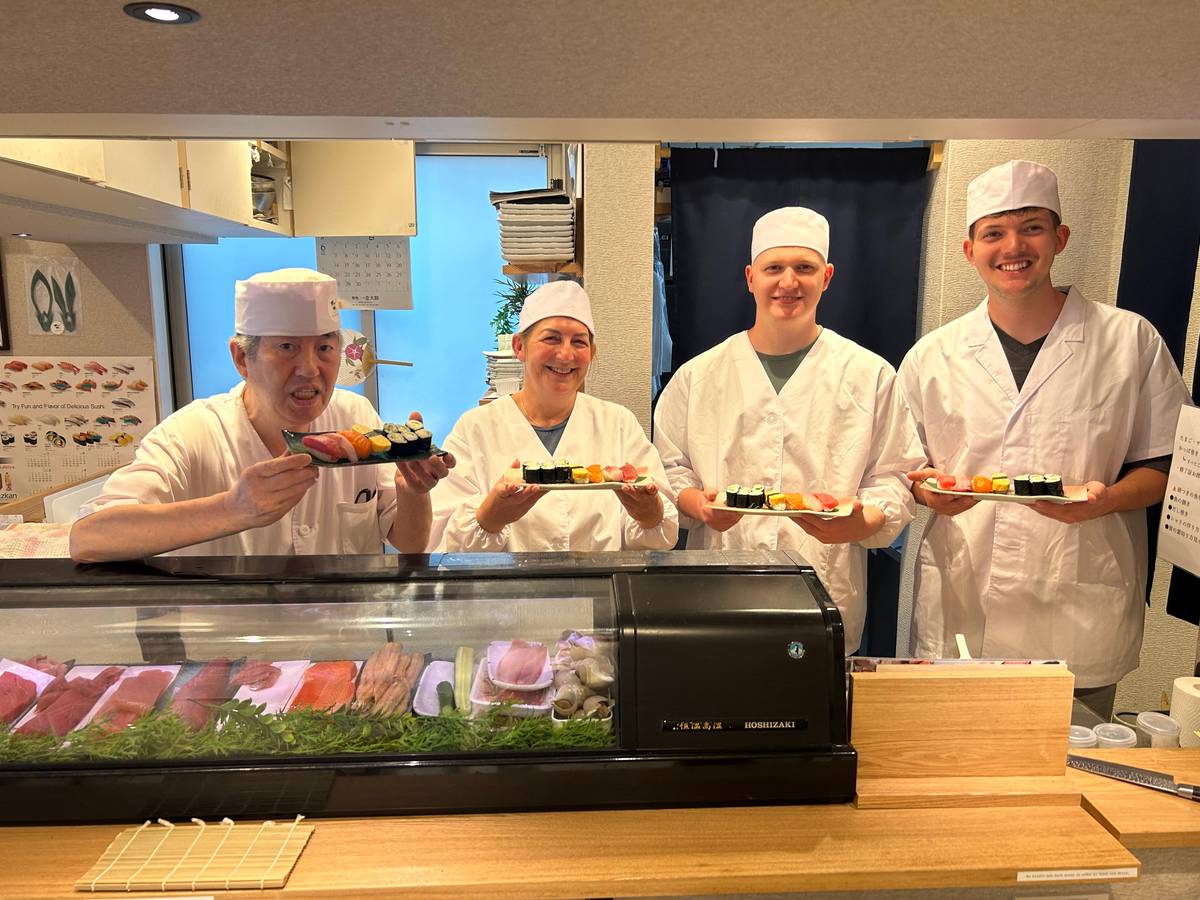
A professional sushi chef shows you how.
Hands on
You shape every piece yourself.
The end
The pieces you made are your meal.
The listing for our food walk reads like a menu of local favorites: at a local sushi restaurant its guide suggests nodoguro, sweet amaebi shrimp, baigai shellfish and seasonal white fish. Nodoguro is the one to splurge on. JNTO calls it one of the most expensive and sought-after fish, a white fish caught all year but best eaten in winter.2
Amaebi, the sweet shrimp, are said to be best in the cold season.8 JNTO names nodoguro and kanburi, the winter yellowtail, as the delicacies of Ishikawa's waters.9 Baigai is a conical sea snail with a crunchy texture and its own sweetness, eaten raw as sashimi as well as simmered.10
Seasons change the board. The tourism association lists snow crab, amberjack, sea bream, pufferfish, sweet shrimp, oysters, squid and rosy sea bass among the seafood the year brings.11 In winter, look for crab and yellowtail; mature yellowtail reaches the market late in November.12 Ask the chef what is best today and let the answer decide your order.
What you make
Where to eat sushi
| Format | What it is like | Good for |
|---|---|---|
| Conveyor belt | Plates pass on a belt | Tasting many fish |
| Counter | Chef serves piece by piece | A special evening |
| Market bowl | Seafood on hot rice | Breakfast & lunch |
| Sushi class | You shape your own | Curious cooks |
Formats from JNTO and the tourism association; the class from a GetYourGuide listing.31314
Learn or taste
In the marketAt Sushi Enome
 Master chef
 Low price
Decision helper
Choose by budget, time and curiosity
These restaurants buy directly from the market.3
The chef serves piece by piece, often on Kanazawa ceramics.13
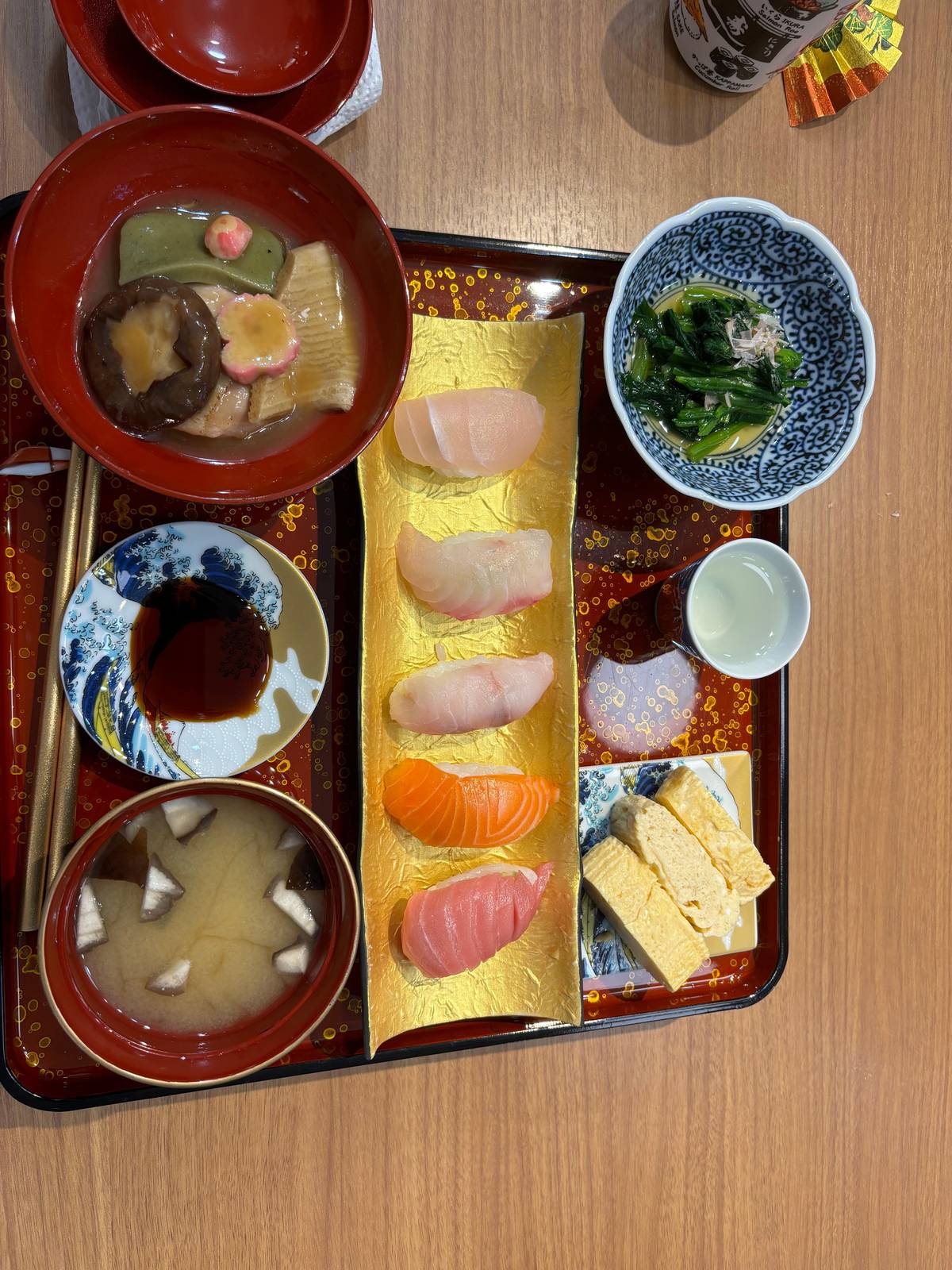
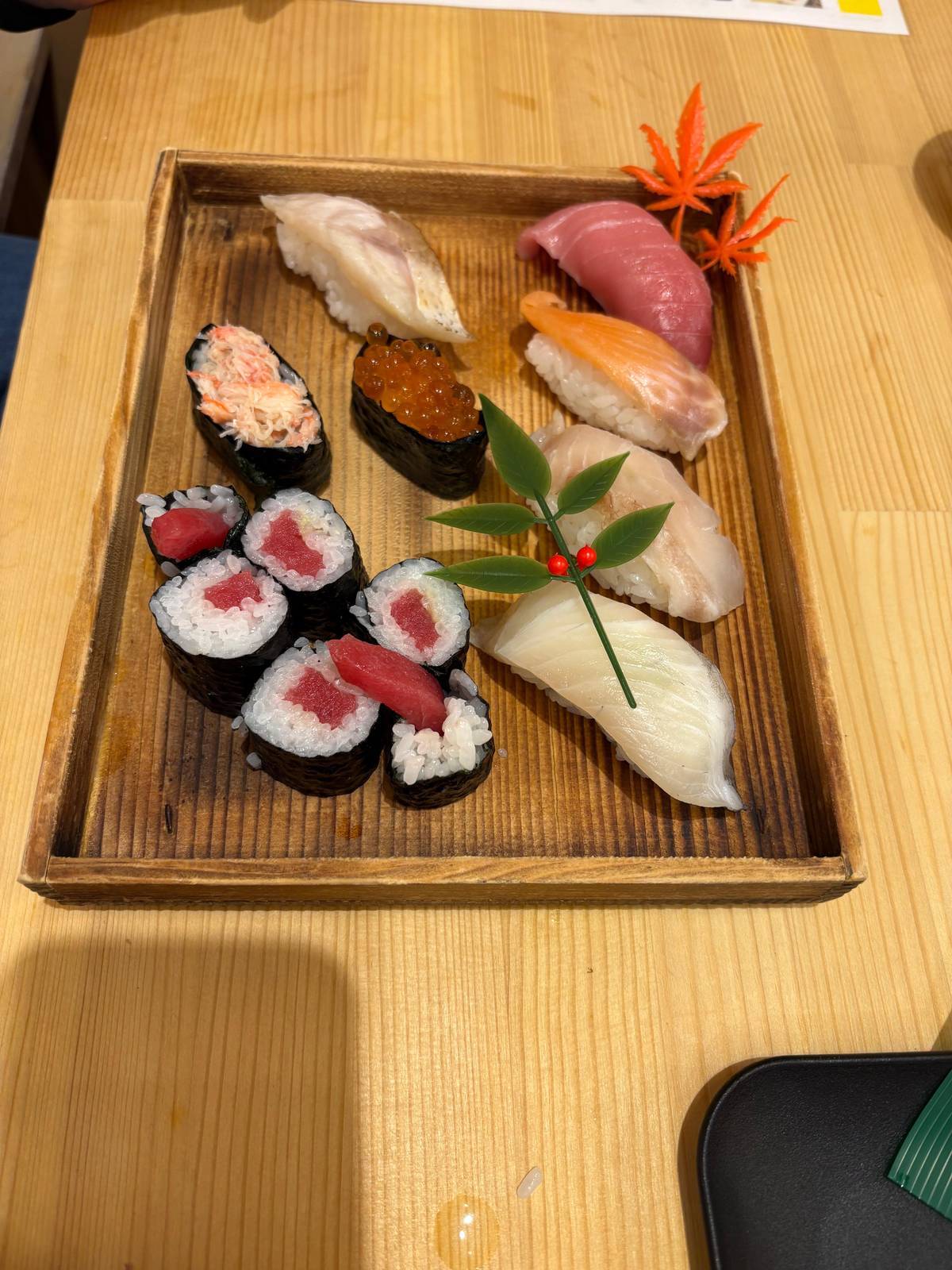
5 nigiri, 2 gunkan and 1 roll with a professional chef.
The guide helps you order at a neighborhood restaurant.
It includes a local sushi restaurant in its hour at Omicho.
it's no surprise that residents of Kanazawa rank among the top spenders nationwide when it comes to dining out for sushi.
Do not dismiss the conveyor belt. JNTO places inexpensive kaiten zushi alongside top-end counters near the market, all buying from the same stalls.3 In Kanazawa a conveyor-belt meal is a way to taste many fish cheaply and quickly, and you can order specific plates from the staff rather than waiting for them to pass.
A name you will hear is Mori Mori Sushi, and the market's own restaurant list includes 2 of its branches, one at the Fureaikan and one simply called the Omicho branch.15 Popular conveyor-belt restaurants can have a queue at lunch. Go at an odd hour, mid-afternoon or right at opening, and you will sit down sooner.
A counter is a different evening. You sit in front of the chef, who makes each piece and places it in front of you, often on traditional Kanazawa ceramic tableware.13 Prices are higher and reservations matter more. If you are unsure how to book, our food walk includes help with restaurant reservations after the tour.
Checklist
Cost calculator
Enter your group size to compare the sushi options.
Total from$141
from, per person $71
Check availabilityfree cancellationTotals: the cheapest GetYourGuide price of each listing, multiplied by your head count and converted with the ECB's euro reference rate for today; only checkout is binding.
Video
The player loads on your tap, not before.
Omicho Market is a convenient place to eat sushi in town. Its own restaurant list includes Sushi Enome, along with seafood bowl shops and the Mori Mori branches.415 The tourism association says many restaurants in and around the market serve kaisen-don, raw seafood over a hot bowl of rice.14
Time it right. The market's stores run about 9:00-16:00, each to its own hours, and JNTO notes that many shops close on Wednesdays and Sundays.1617 A nodoguro rice restaurant at the market draws a queue before its 7 a.m. opening, a sign of how early seafood breakfast starts here.18
Our recommended walk includes a stop at a local sushi restaurant during its 1 hour in the market, with the guide helping you choose. Reviewers mention a sushi restaurant that pleased even a first-time sushi eater, and one called the sushi next level. The bill is yours: food and drink costs are excluded from the tour price.
The best sushi in Kanazawa is the one that matches your budget and your appetite for ceremony. For a first taste, a conveyor-belt restaurant near the market is fast and flexible.3 For a special night, book a counter and let the chef choose. In between sit casual restaurants loved by locals, the kind the tourism association lists alongside its upscale names.7
Match the visit to the season. The crab fishing ban lifts on 6 November in Ishikawa, and from then on crab joins the sushi boards, followed by fat yellowtail.19 Snow crab is available only for a limited time in the cold season for conservation reasons, the tourism association says.8 Summer visitors still eat very well, just differently.
Etiquette is simple. Say if you cannot eat something before the chef starts, eat each piece soon after it is placed, and dip the fish rather than the rice. At a conveyor belt, take plates from the belt or order from the staff, and stack your empty plates; they are how the bill is counted.
For a quieter sushi lunch, head to the coast. The Ono and Kanaiwa port districts are about 15 minutes by car from Kanazawa Station, an old shipping quarter that still lives from the sea.20 Ono Port, a corner of Kanazawa Port, is where fish caught in nearby seas are unloaded, a scene worth seeing before you eat.21
There is a market here too, on a smaller scale. The Kanazawa Port Iki-iki Uoichi fish market has six stores, run mainly by fishermen and people in the fishing trade, selling fresh fish, dried fish and seafood bowls.22 It is the opposite of Omicho's crowds: fewer stalls, more locals, and a good chance of a chat about what came in that morning.
Ono is also the soy sauce town of Kanazawa, which makes it easy to combine sushi with a fermentation visit. The district is known as one of Japan's five major soy sauce producing areas, and its soy sauce is mellow and slightly sweet.23 Taste your sushi with a drop of it and you will notice that mellow sweetness at once.
If you want to learn, you can make sushi at the market itself. A 2-hour class at the Sushi Enome restaurant inside Omicho has you make 5 pieces of nigiri, 2 of gunkan-maki and 1 roll with a professional chef, then eat them. It starts from $71, with 14 reviews and a 4.89 rating.
Another class is taught by a chef with 50 years' experience: a 1-hour beginner course or a 2-hour master course that adds sushi made by the master, tempura or sukiyaki and a drink. Classes begin at 11:00 or 14:00 and start from $63, with 30 reviews and a 4.92 rating. A cooking school near the station adds jibuni and rolled omelette to its sushi lesson.
For an evening with someone who knows the menu, a sushi night takes you to a neighborhood sushi restaurant for 100 minutes, with the guide helping you order. It starts from $26. Check what the price covers before you book, and bring cash for the meal if it is not included.
Hungry yet?
Pick a date, meet at M'ZA and cancel free up to 24 hours before.
It is highly rated nationwide. The tourism association says Kanazawa's sushi has earned a high reputation across Japan.6
Nodoguro, amaebi, baigai. Nodoguro is caught all year but best in winter; sweet shrimp are said to be best when it is cold.28
Yes, it buys from the market. JNTO says restaurants near Omicho, from kaiten zushi to top counters, buy fish directly from it.3
Yes, with 2 branches. The market's restaurant list includes 2 branches of Mori Mori Sushi, at the Fureaikan and the Omicho branch.15
Yes, at several classes. A 2-hour class at Omicho has you make 5 nigiri, 2 gunkan and 1 roll.
From 6 November. That is when the crab fishing ban lifts in Ishikawa; snow crab is a limited cold-season catch.198
No. Food and drink costs are excluded; the guide helps you choose at a local sushi restaurant.
Sources
Keep reading