 Hands on
Guides
Language
EnglishCurrency
US dollar · $On GetYourGuide you see prices in this currency.
Guide · Gold leaf
Gold leaf in Kanazawa: the gold leaf ice cream and the 99 percent
Gold leaf in Kanazawa is not a gimmick invented for visitors: the city makes almost all of Japan's. Here is the craft behind the shiny soft-serve, and where to eat or make your own.
Check availabilityfrom $45 · cancel at no cost
Editorial team, kanazawafoodtour.comUpdated October 25, 2026Reading time about 6 minutes17 sources
Why the city is covered in gold
Gold leaf in Kanazawa is a matter of scale. JNTO says the city produces 99% of all gold leaf made in Japan, from the leaf on temple halls to the gilding on lacquer boxes.1 It adds that top-quality gold leaf has been made in Kanazawa for over 400 years, since the age of the samurai.4
Even the name fits. The tourism association says Kanazawa literally translates to marsh of gold, and that gold leaf crafting has been a specialty of the city for centuries.5 In 2009 UNESCO designated Kanazawa a City of Crafts and Folk Art in its Creative Cities Network, and gold leaf is among the crafts behind that title.6
For a food lover, the point is that gold has escaped the workshop. It turns up on sweets, on sake cups and, of course, on ice cream. Seeing it in a shop window is easy; understanding how thin it is, and why it does not change the taste, makes the treat far more interesting than a quick photo.
Four centuries of gold
How gold leaf became Kanazawa's craft
-
Late 16th century
Production begins
The Maeda family invites artisans to the region.7
-
Edo period
Beating is restricted
The shogunate limits gold beating to a few places.7
-
Late 19th century
A public revival
Production returns openly to Kanazawa.7
-
2009
UNESCO creative city
Kanazawa joins as a City of Crafts and Folk Art.6
-
Today
99% of Japan's gold leaf
Plus all of its silver and platinum leaf.8
From a coin to a sheet the size of a table
The numbers are hard to believe. JNTO says a piece of gold the size of a coin can make a sheet of gold leaf the size of a dining table.9 The tourism association explains the process: gold mixed with a little silver and copper is rolled and beaten to 1/1,000 of a millimeter, then beaten again between special paper to reach 1/10,000 of a millimeter.10
Those last steps are where the craft lies: the leaf is beaten between sheets of special paper until it reaches that final thinness.10 Hold a finished sheet up to a window and light glows through it, a sign of how little metal is left.
History explains why it settled here. The tourism association says gold leaf production started in Kanazawa at the end of the 16th century, under the Maeda family who invited artisans to the region, and that after restrictions in the Edo period it was revived publicly in the second half of the 19th century.7 Today the city's leaf is a designated traditional handicraft, known as Kanazawa haku.8
Kanazawa haku
Kanazawa's share of Japan's leaf, in percent
%
Four ways to meet the gold
Eat it, make it, learn it or buy it
Book a golden hour
A workshop, a gold and matcha walk, or our food walk
Hands on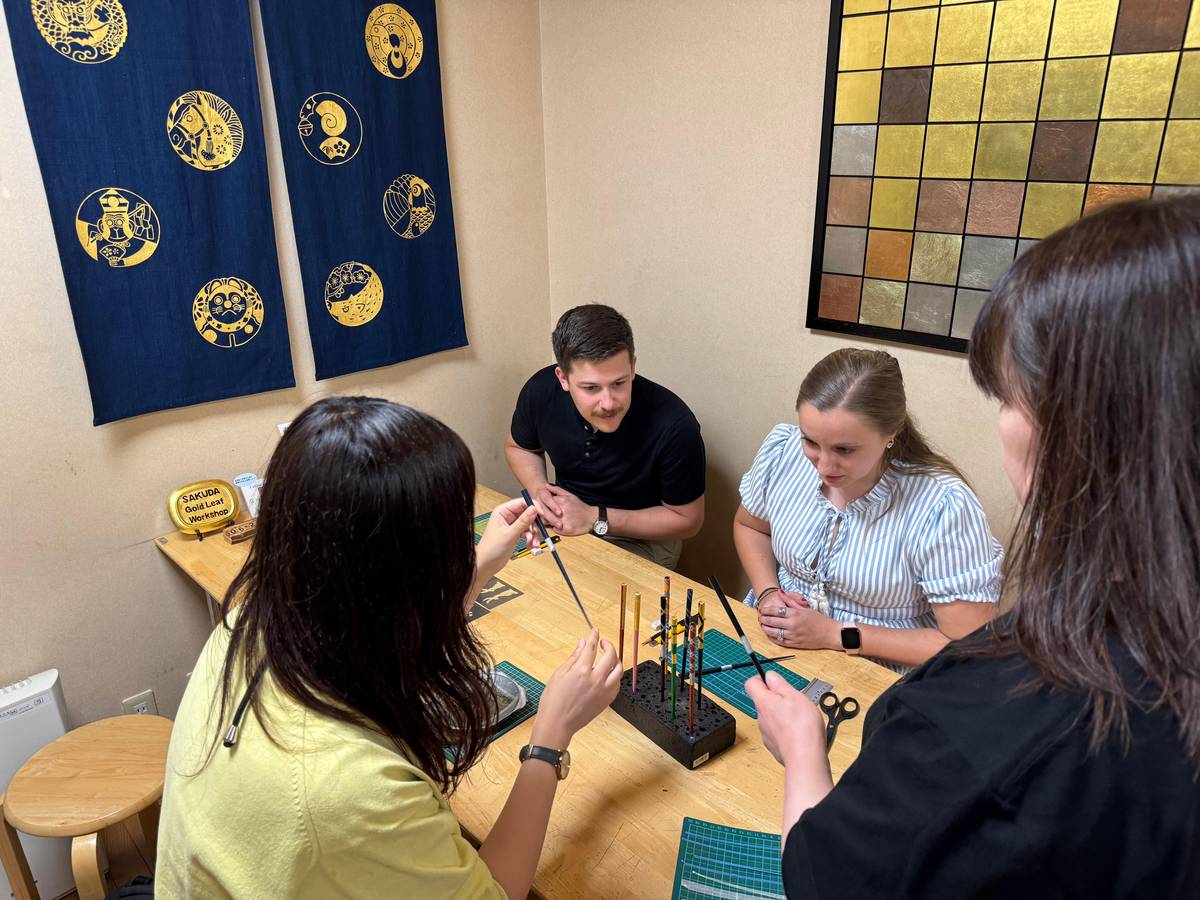 Low price
Gold, geisha, matcha
Guided in Japanese
- Length
- 2.5 hours
- Includes
- Gold leaf experience
- Price
- from $29
 Eat the gold
Decision helper
How do you want your gold?
Pick the experience that suits your day
Gold soft-serve
Unique to Kanazawa, wrapped in a whole sheet.2
The 1-hour workshop
No experience needed, in a Higashi Chaya townhouse.
The Yasue museum
A short walk from the Higashi Chaya district.11
Our food walk
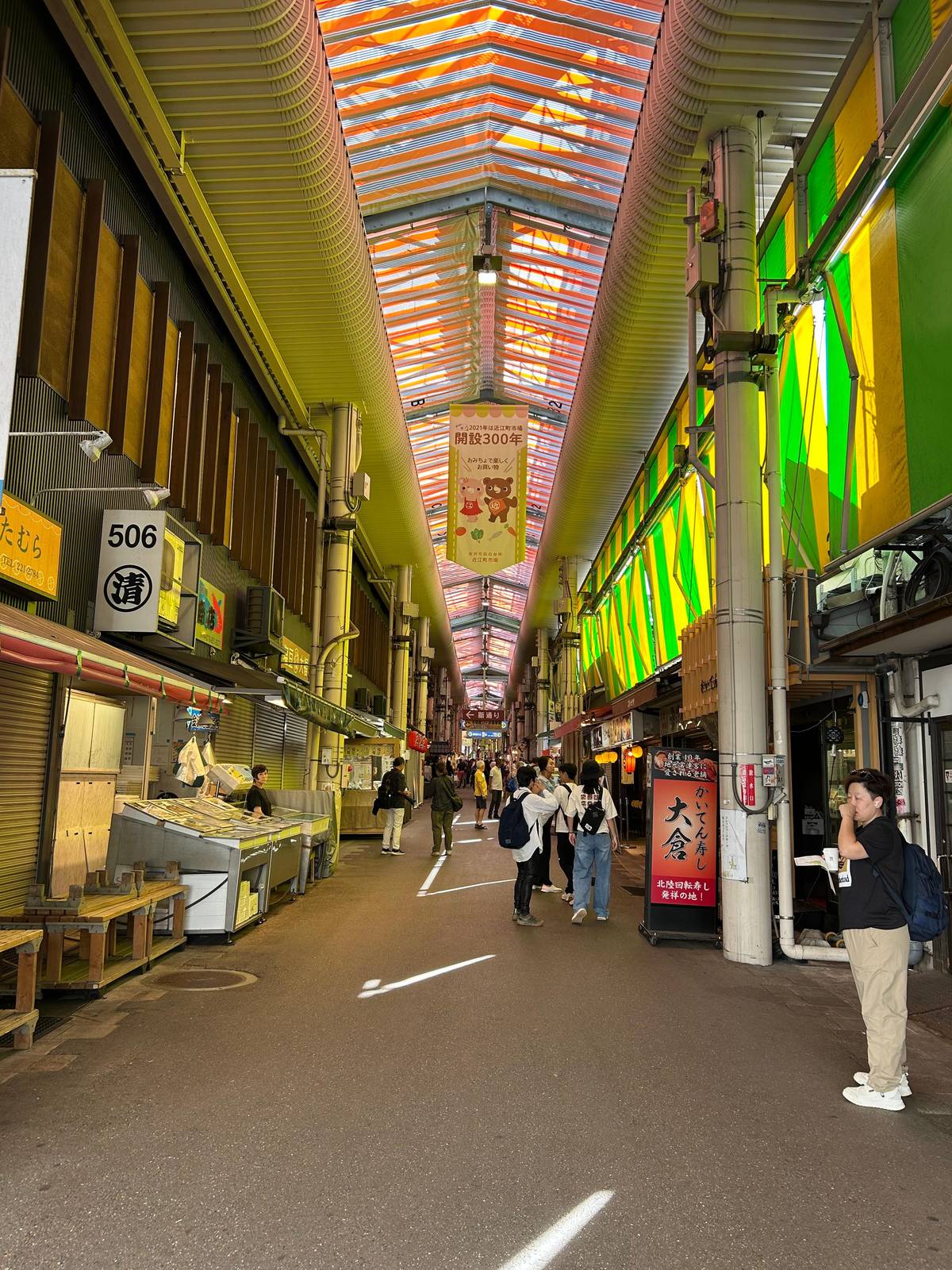
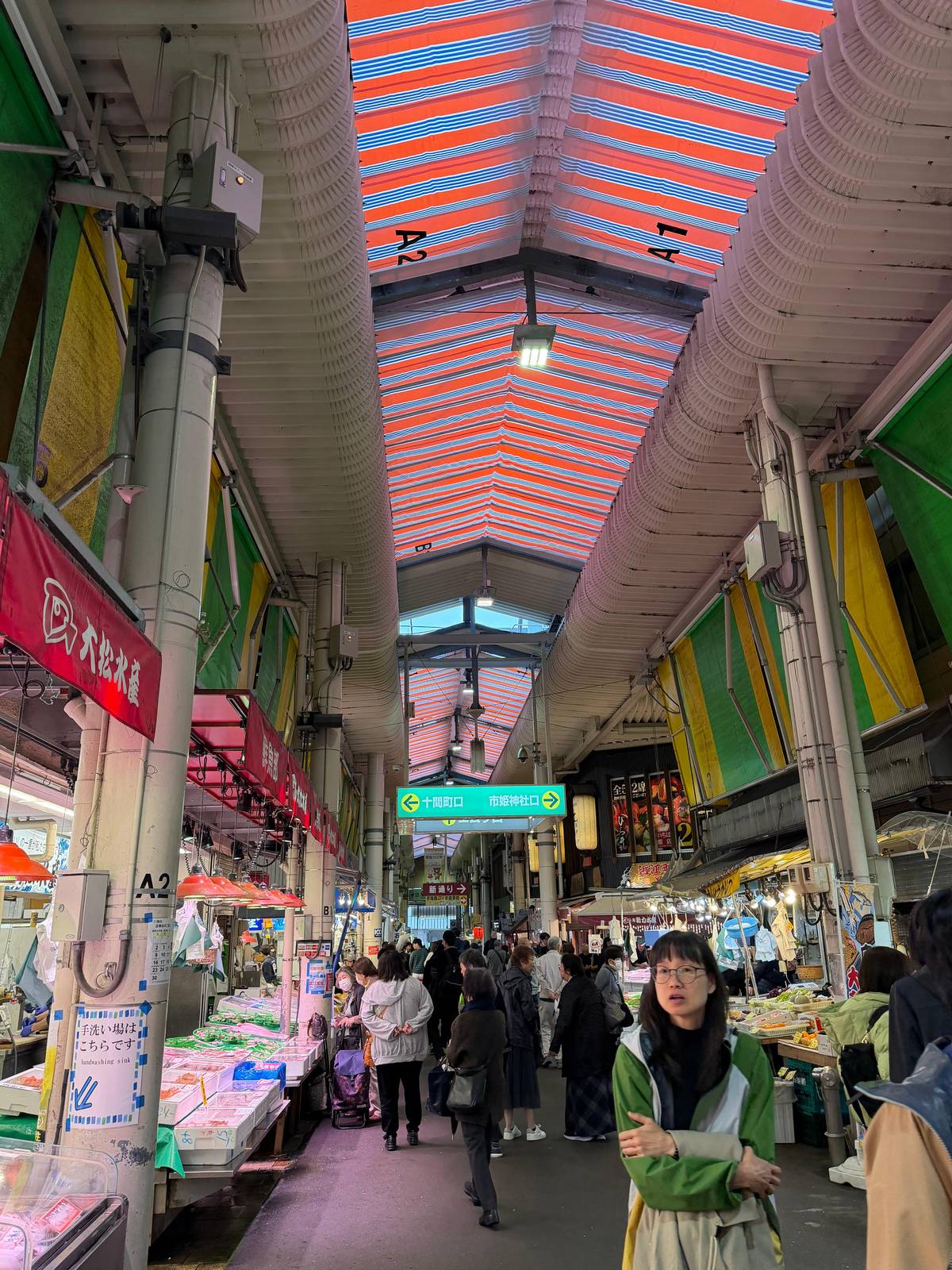
Omicho Market, then gold leaf shops in Higashi Chaya.
A small leafed object
Plates, cases, mirrors or chopsticks from a workshop.12
A piece of gold the size of a coin will make a dining-table-sized sheet of gold leaf.
The ice cream: soft-serve wrapped in gold
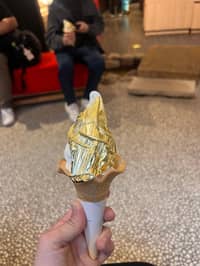
Gold leaf ice cream is the treat most visitors come for. The tourism association says soft-serve wrapped in a whole sheet of gold leaf is unique to Kanazawa, part of a wider move of gold into cooking and sweets.2 JNTO calls it a must-try.13 Expect a cone of plain soft-serve, then a sheet of gold laid over it until the whole swirl shines.
Ask which version you are buying before you pay: the whole sheet is the one meant when people talk about the treat, and it is the one the tourism association describes.2 Whichever you choose, eat it quickly: the leaf clings to the cold cream, and in summer heat the soft-serve melts from beneath the gold faster than you expect.
Ice cream is a serious habit here anyway. The tourism association says Kanazawans eat more ice cream per capita than anywhere else in Japan.14 If a golden cone is more show than you want, order a plain or seasonal flavor instead: the gold changes the look, not the taste.3
Checklist
Before you buy or make gold
01
Eat
- Find shade; soft-serve melts fast
- Camera ready before the leaf goes on
- Decide between flakes and a full sheet
02
Make
- Allow about an hour for a workshop
- Choose a small, practical object
- Ask how to clean the finished piece
Cost calculator
Price a gold leaf experience for your group
Enter your group size to compare the options.
People
Total from$64
from, per person $32
Check availabilityfree cancellationTotals: the cheapest GetYourGuide price of each listing, multiplied by your head count and converted with the ECB's euro reference rate for today; only checkout is binding.
Video
Old streets and golden food in Kanazawa
The player loads on your tap, not before.
Can you taste it, and is it worth it?
You cannot taste the gold. The tourism association says artisans hammer it to 1/10,000 of a millimeter, so thin that it can neither be tasted nor felt in the mouth.3 What you pay for is the look and the story: a craft the city has practiced for centuries, applied to the most casual dessert there is.
Is it worth it? If you enjoy the theater of food, yes, once. Buy it where you can sit or stand out of the wind, have your camera ready before the sheet goes on, and share it if you are watching your budget. If you only care about flavor, a plain soft-serve or a scoop of a seasonal flavor will make you just as happy.
The walk this site recommends gives you the choice on the spot. Its listing names gold-leaf soft-serve and gold leaf shops among the stops in the Higashi Chaya District, and food and drink costs are paid separately, so you buy one only if you want it. The guide's tips help you choose where.
Where to find it in Higashi Chaya
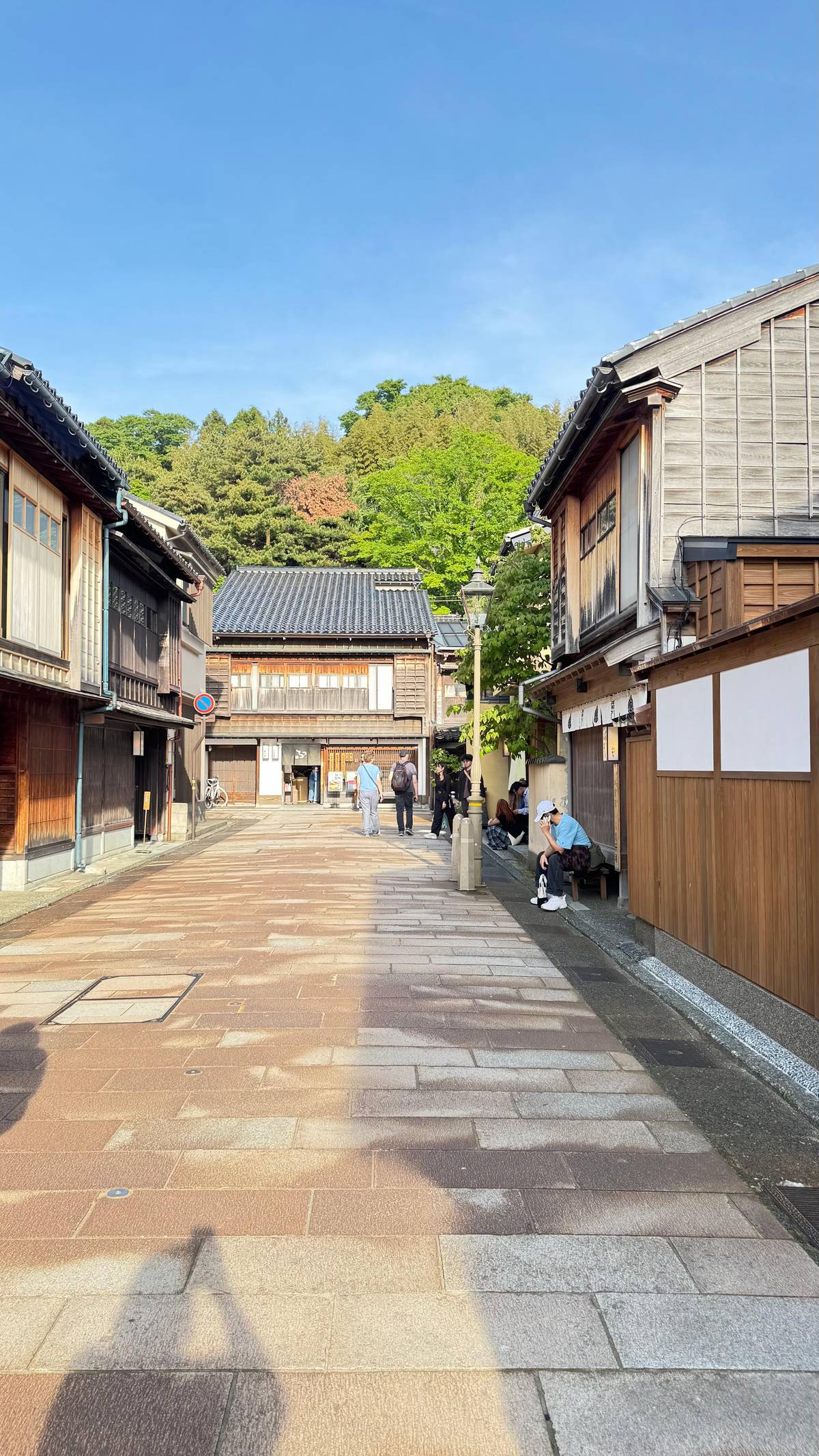
The teahouse district is the natural setting. The Higashi Chaya District dates from the Edo period, a street of two-story wooden teahouses, inns, shops and cafes.15 Our food walk spends 45 minutes there after its hour in Omicho Market, with time for gold leaf shops, craft boutiques and a sake tasting.
To learn more before you buy, visit the Kanazawa Yasue Gold Leaf Museum, a short walk from the Higashi Chaya district.11 The museum shows how the leaf is made and how it has been used on lacquer, ceramics and screens, a quick and useful primer before you start comparing shops and prices.
Timing matters here. After 5:00 p.m. many cafes and shops in the district close as the gas lamps come on.16 Late morning, after the market and before the lunch crowds, is a comfortable time to find a counter, order a cone and eat it in peace.
Making something at a gold leaf workshop
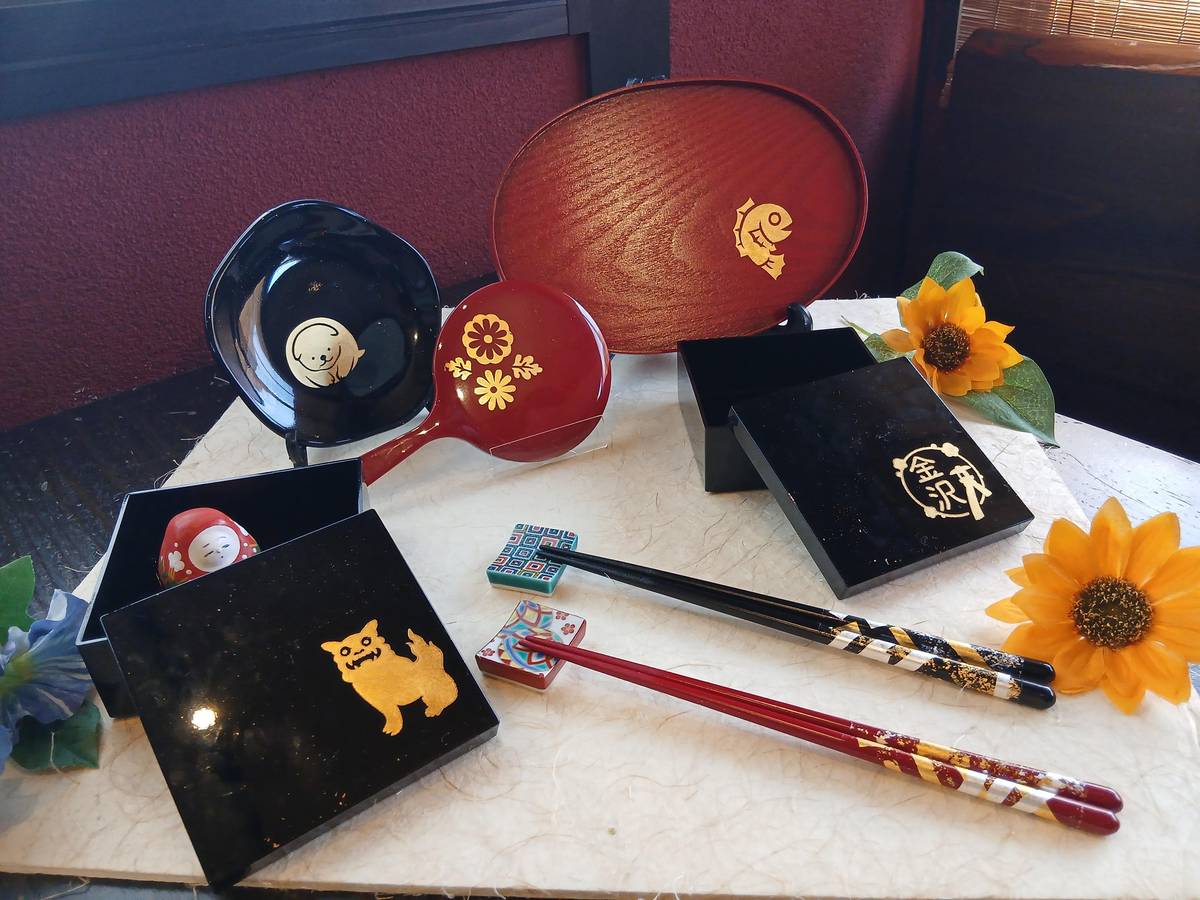
Eating gold is one thing; applying it is another. The tourism association says several specialty shops run short workshops where you apply gold leaf to small plates, accessory cases, hand mirrors or chopsticks, and that most items can be made and taken home immediately.12 JNTO also mentions decoration workshops at gold leaf shops in the city.13
On GetYourGuide, a 1-hour gold leaf workshop takes place on the second floor of a traditional townhouse with red walls in the Higashi Chaya District, above a local craft shop. No experience is needed, the instructor speaks English and Japanese, and it has 128 reviews with a 4.70 rating, from $32.
A 2.5-hour walk combines a gold leaf experience with the geisha district and matcha, guided in Japanese, from $29. Pair either with lunch at the market and you have a full Kanazawa day: fish in the morning, gold in the afternoon, and something golden to take home in your bag.
Gold beyond the cone: silver, platinum and lacquer
Gold is only part of the story. The tourism association says Kanazawa produces 99% of Japan's gold leaf and all of its silver and platinum leaf, products sold together as Kanazawa haku.8 Look for silver and platinum on lacquerware and ceramics in the craft shops: they read quieter than gold and suit everyday use.
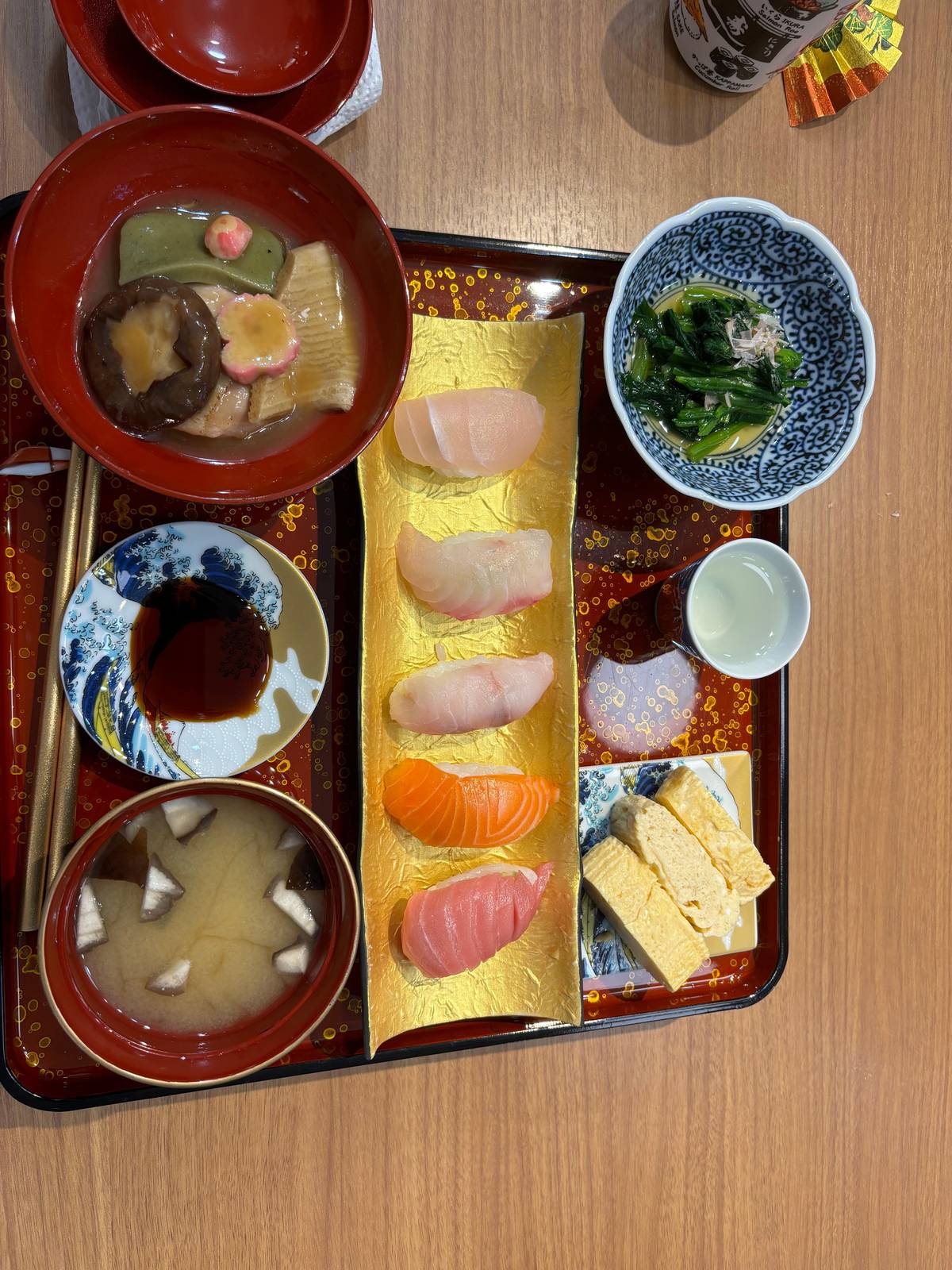
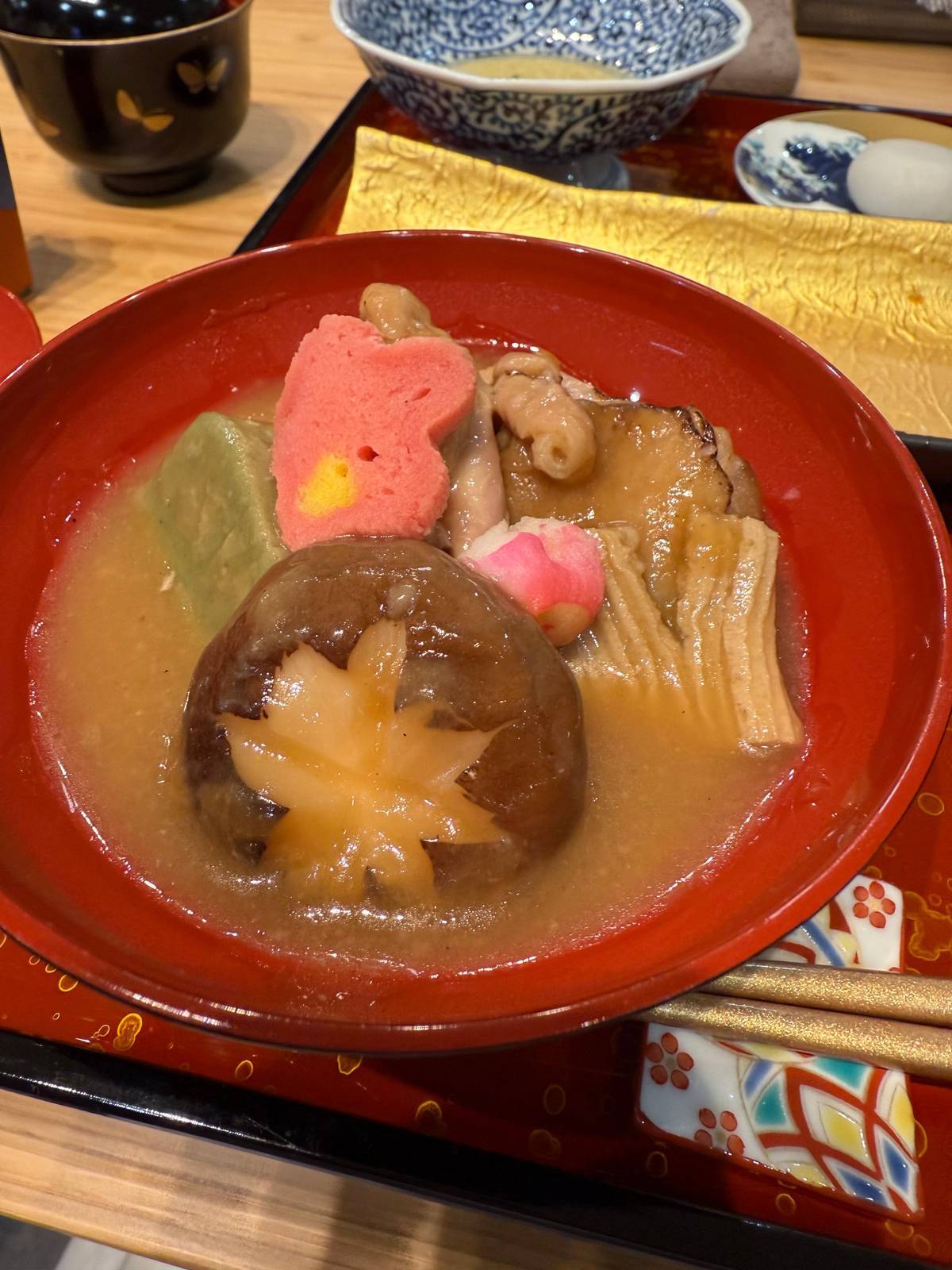
Leaf also shows up at the table. Kaga cuisine is served on Kutani porcelain, Wajima lacquerware and Yamanaka woodwork, and gilded lacquer is a familiar sight on such tables.17 A tasting walk on GetYourGuide includes an explanation of how gold leaf is manufactured, between its market tastings and tea.
If you want a souvenir that lasts longer than ice cream, choose something small and practical, a pair of chopsticks or a dish, rather than flakes in a jar. Ask how the leaf is fixed and how to clean it, and keep it out of the dishwasher: the leaf is beaten thin enough to wear away under a rough sponge.
Hungry yet?
Taste Kanazawa with a local guide.
Pick a date, meet at M'ZA and cancel free up to 24 hours before.


You ask,we answer.
How much of Japan's gold leaf comes from Kanazawa?
99%. JNTO and the tourism association both give the 99% share; the city also makes all of Japan's silver and platinum leaf.18
Can you taste gold leaf on ice cream?
No. It is beaten to 1/10,000 of a millimeter, too thin to taste or feel in the mouth.3
Is the gold soft-serve only in Kanazawa?
In this form, yes. The tourism association says soft-serve wrapped in a whole sheet of gold leaf is unique to Kanazawa.2
Where can I buy it?
Gold leaf shops in Higashi Chaya. Our food walk lists gold-leaf soft-serve and gold leaf shops among its Higashi Chaya stops.
How long does a workshop take?
About 1 hour. The GetYourGuide workshop in Higashi Chaya lasts 1 hour and needs no experience.
Can I take my piece home the same day?
Usually, yes. The tourism association says most workshop items can be made and taken home immediately.12
How old is the craft?
Over 400 years. JNTO says top-quality gold leaf has been produced in Kanazawa for over 400 years.4
Sources
The sources for this guide
- 1Japan National Tourism OrganizationKanazawa Gold Leaf Crafting and Activities↩
- 2Kanazawa City Tourism Association (Visit Kanazawa)Gold leaf application, a must-try when you come to Kanazawa↩
- 3Kanazawa City Tourism Association (Visit Kanazawa)The Cuisine of Kanazawa↩
- 4Japan National Tourism OrganizationKanazawa Gold Leaf Crafting and Activities↩
- 5Kanazawa City Tourism Association (Visit Kanazawa)The Cuisine of Kanazawa↩
- 6Kanazawa City Tourism Association (Visit Kanazawa)The Epicenter of Traditional Japanese Crafts↩
- 7Kanazawa City Tourism Association (Visit Kanazawa)The Epicenter of Traditional Japanese Crafts↩
- 8Kanazawa City Tourism Association (Visit Kanazawa)The Epicenter of Traditional Japanese Crafts↩
- 9Japan National Tourism OrganizationKanazawa Gold Leaf Crafting and Activities↩
- 10Kanazawa City Tourism Association (Visit Kanazawa)Kanazawa Gold Leaf: a tradition unique to Kanazawa↩
- 11Kanazawa City Tourism Association (Visit Kanazawa)Kanazawa Gold Leaf: a tradition unique to Kanazawa↩
- 12Kanazawa City Tourism Association (Visit Kanazawa)Gold leaf application, a must-try when you come to Kanazawa↩
- 13Japan National Tourism OrganizationKanazawa Gold Leaf Crafting and Activities↩
- 14Kanazawa City Tourism Association (Visit Kanazawa)Kanazawa: a food city unlike any other↩
- 15Kanazawa City Tourism Association (Visit Kanazawa)Dine like a samurai lord at this authentic geisha teahouse in Kanazawa↩
- 16Kanazawa City Tourism Association (Visit Kanazawa)See Kanazawa By Night! Recommended night spots and walking areas↩
- 17Kanazawa City Tourism Association (Visit Kanazawa)Kaga Cuisine: a culinary tradition filled with seasonal blessings and aesthetic sensibility↩
Keep reading